

Ghana’s Tree Crops Development Authority (TCDA) has signed two separate partnership agreements aimed at diversifying farmer incomes, integrating beekeeping into tree crop systems, and restoring degraded agricultural land through a new rubber plantation pilot.
The agreements were concluded with Pan-African Business Developers (PABD) and Save Our Lands Projects LBG (SOL), and represent the latest in a series of strategic moves by the TCDA to deliver tangible value chain outcomes following the ambitious growth blueprint unveiled at the Ghana Tree Crops Investment Summit earlier this year.
Under the first Memorandum of Understanding, TCDA and PABD will implement the Bees for Income and Nutrition (BEEIN) Project, designed to embed beekeeping within tree crop farming systems across the country. Beyond honey production, the initiative is expected to improve pollination across tree crop farms, support biodiversity, and create supplementary income sources for rural communities already navigating climate and market pressures. TCDA said the project aligns directly with its strategic priorities around production enhancement, value chain development, and environmental sustainability.
The second agreement, signed with SOL, establishes a 10-hectare pilot land reclamation rubber plantation project. Its primary objective is to rehabilitate degraded lands while expanding Ghana’s rubber production base, generating jobs and strengthening economic participation in affected rural communities. TCDA described the initiative as consistent with its broader mandate to expand and transform the tree crops sector through sustainable, inclusive development models.
Both agreements were signed by TCDA Chief Executive Officer Dr. Andy Osei Okrah, alongside PABD Chief Executive Officer Kirk Agyekum and SOL Executive Director Aaron Agyapong respectively.
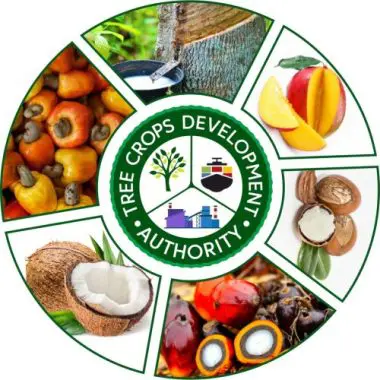
The TCDA has set a target for each of its six regulated value chains, covering cashew, oil palm, shea, coconut, rubber and mango, to generate an average of $2 billion annually by 2030, for a combined contribution of $12 billion per year to Ghana’s economy. The two new partnerships represent early-stage implementation steps toward that target, with practical interventions at the community and farm level rather than pledges made from a conference floor.
The beekeeping integration model is drawing particular interest from agricultural development practitioners, who see it as a cost-effective way to raise farm productivity and household income simultaneously, without requiring significant capital outlays from smallholder farmers.

