

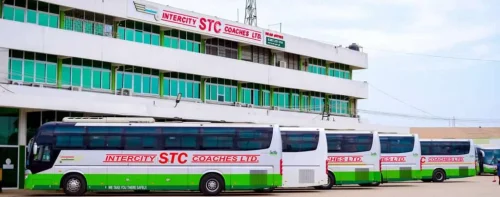
Intercity STC Coaches Limited’s online booking platform has remained inaccessible for months, leaving passengers frustrated and forcing many to revert to in-person and phone-based ticketing at a time when road travel demand is rising sharply.
Customers say the outage, which has persisted throughout 2026, has eliminated one of the most convenient features the state-linked transport operator had offered in recent years. The mobile app and web portal previously allowed passengers to select routes, choose departure times, pick seats, and pay via card or mobile money, all without visiting a terminal.
Industry sources indicated in January 2026 that the disruption was linked to a planned handover of STC’s information technology systems to a new provider, a transition that passengers say was poorly communicated and inadequately managed. STC management had not responded to requests for comment as of the time of this report.
Emmanuel Tetteh, a regular passenger, captured the frustration bluntly: “The whole of this year it has not been working.”
The timing compounds the problem. Rising air travel costs following the Airport Infrastructure Development Charge (AIDC), which took effect on April 1, 2026 and added GH¢100 (approximately US$9.09) to domestic flight costs, have pushed more travellers toward road transport. With demand for intercity bus seats climbing, the inability to book digitally has created additional pressure at STC terminals and driven some customers toward rival operators with functional online platforms.
The current outage is not STC’s first brush with digital service gaps. A May 2025 report by Citi FM documented overbooking incidents despite a working booking portal at the time, pointing to a gap between the digital interface and actual on-the-ground operations.
Founded in 1909 and incorporated in 1965, STC has operated as a key player in Ghana’s road transport network for over a century. The Social Security and National Insurance Trust (SSNIT) holds a majority stake in the company, with the government retaining a minority interest. Its domestic network covers approximately 30 destinations, with international services connecting to Abidjan and Cotonou.
Analysts warn that the extended outage risks eroding customer loyalty in a competitive sector, arguing that digital infrastructure must be backed by consistent management to deliver lasting value.

