

Africa’s ambition to build a fully integrated digital economy is gaining renewed momentum as governments, regulators and industry leaders intensify efforts to harmonise systems, reduce cross-border transaction costs and strengthen digital infrastructure to unlock continental trade.
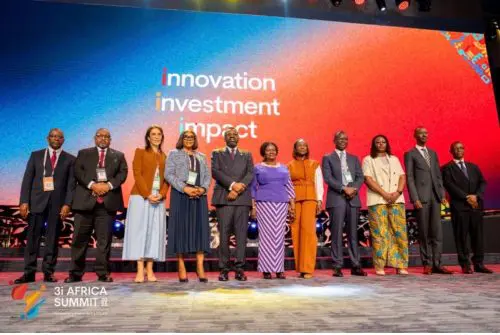
The push for deeper digital integration took centre stage in Accra, where Ghana reaffirmed its position as a key driver of Africa’s digital trade transformation, calling for coordinated action to connect markets, strengthen trust systems and scale innovation across borders.
Ghana Leads Push for Unified Digital Economy Integration
Speaking on behalf of President John Dramani Mahama, Ghana’s Vice President, Naana Jane Opoku-Agyemang, said Africa’s next phase of growth will depend on how effectively countries transition from fragmented digital systems to a unified continental framework.
Addressing a high-level forum in Accra, she stressed that Africa’s economic future lies in integration rather than isolated national progress, noting that digital systems must enable seamless transactions, trusted identities and predictable cross-border trade.
She said Ghana’s role as host of the African Continental Free Trade Area Secretariat reinforces its position as a continental gateway, adding that such a gateway must be defined by efficient systems that support trade, payments and connectivity at scale.
Vice President Calls for Shift from Fragmented Systems to Continental Framework
According to her, Africa has already made significant progress in mobile money, digital identity and fintech innovation, but these developments must now be aligned into a coordinated continental structure to maximise impact.
She outlined four core pillars for digital economic integration: payments, identity, regulation and infrastructure.
Four Pillars Identified to Drive Africa’s Digital Economic Integration
On payments, she said reducing reliance on external financial rails and foreign currencies is critical to improving efficiency in intra-African trade. She highlighted platforms such as the Pan-African Payment and Settlement System and the African Union’s digital trade protocol as key tools for enabling faster and more cost-effective cross-border transactions.
On identity, she emphasized the importance of interoperable digital identification systems, noting that broader access to verifiable identity will strengthen participation in financial and trade systems across borders.
On regulation, she said alignment across jurisdictions is essential to support innovation and reduce operational barriers, pointing to regulatory sandboxes, shared standards and closer institutional cooperation as key enablers of digital trade expansion.
On infrastructure, she highlighted the need for improved broadband connectivity, stronger digital skills development and expanded data hosting capacity to support Africa’s digital sovereignty and system performance.
Ghana to Pilot Cross-Border Digital Trade Systems with Zambia
She noted that Africa’s youthful population and rapid technology adoption position the continent strongly to shape the next phase of global digital growth, particularly in sectors such as agriculture, health, education and public services.
Reaffirming Ghana’s commitment, she said the country is focused on moving from policy dialogue to practical implementation to ensure Africa’s digital integration agenda is delivered across the continent.
She announced that Ghana will collaborate with Zambia and other partners to pilot a continental digital trade programme focused on mobile money interoperability, mutual recognition of digital identities, cross-border KYC systems and harmonised electronic invoicing.
According to her, the success of Africa’s digital transformation will be defined by the systems established today, which will determine how effectively the continent participates in the global digital economy.
She urged stakeholders to prioritise implementation and coordination, noting that Africa already has the foundational tools required to build a fully integrated digital economy at scale.
BoG Pushes Shift from Financial Inclusion to Impact-Driven Digital Finance Growth
Africa’s digital financial ecosystem is entering a new phase where policymakers are increasingly focused on converting expanding access into measurable economic value, as attention shifts toward scaling innovation, improving cross-border connectivity and strengthening regulatory coordination across markets.
The Bank of Ghana has called for a transition from digital financial access to impact-driven growth as Africa seeks to strengthen its position in the global fintech landscape.
Dr Asiama Highlights Next Phase of Fintech Growth and Structural Reforms
Governor of the Bank of Ghana, Johnson Pandit Asiama, made the call at the opening of the 3i Africa Summit in Accra, where he outlined priorities for the next phase of financial sector innovation across the continent.
He said Africa has reached a critical stage in its digital finance journey, where the focus must move beyond expanding access to deepening usage and driving economic transformation through financial technology.
According to him, approximately 49 percent of adults in Sub-Saharan Africa now have access to digital financial accounts, a development largely driven by mobile money expansion and branchless banking models.
Dr Asiama noted that while financial inclusion has improved significantly, the next phase of growth will depend on how effectively digital financial systems translate into productivity gains, business expansion and stronger regional trade linkages.
He identified key growth areas including digital credit, embedded finance, supply chain financing, digital trade platforms and cross-border payment systems, particularly for MSMEs, young people, women and the informal sector.
Regulatory Alignment and Digital Identity Key to Scaling Financial Systems
He explained that the evolution of digital finance is shifting from basic payment systems to higher-value financial services that support broader economic development.
Dr Asiama also pointed to structural challenges within the ecosystem, including fragmentation, high transaction costs and uneven regulatory alignment across jurisdictions, stressing the need for stronger coordination among policymakers and regulators.
He emphasized that regulation must balance financial stability with innovation, noting that both objectives are essential for sustainable sector growth.
Outlining the Bank of Ghana’s policy direction, he said the central bank is implementing reforms including frameworks for virtual assets, digital credit guidelines, open banking initiatives and support for cross-border fintech operations.
He added that regulatory effectiveness will also depend on strengthened institutional systems, improved data infrastructure and more efficient decision-making processes.
Dr Asiama further underscored the importance of robust digital identity systems and KYC frameworks, warning that weak authentication mechanisms increase fraud risk and undermine confidence in digital financial services.
He called for enhanced coordination among institutions and improved data quality to support the scaling of digital financial services across Africa.
The Governor also stressed the need to strengthen indigenous fintech companies, noting that long-term competitiveness will depend on discipline, transparency and innovation capacity.
“A strong financial system is not defined by activity alone, but by discipline, transparency and competitiveness,” he said.
MTN CEO Signals AI-Driven Transformation of Africa’s Digital Finance Landscape
The Chief Executive Officer of MTN Group, Ralph Mupita, said the continent is on the brink of a major leap in financial inclusion, powered by digital platforms that are reshaping payments, credit, remittances and cross-border trade.
Speaking in a virtual fireside chat at the 3i Africa Summit in Accra, Mr. Mupita said the speed of digital transformation, supported by AI and smartphone penetration, is compressing timelines and unlocking opportunities that were previously expected to take a decade or more.
He noted that Africa has already made significant progress through mobile money systems, contributing to global transaction volumes estimated at about $2 trillion.
According to him, the next phase of digital finance will move beyond USSD-based systems to a smartphone-driven ecosystem integrating nano-lending, digital banking, remittances and emerging technologies.
Telco-Led Platforms Positioned as Catalysts for Financial Inclusion
Mr. Mupita said telco-led platforms have played a critical role in expanding access to financial services by lowering the cost of reaching underserved populations.
He stressed that regulatory certainty remains essential to attracting long-term investment, while fraud and digital scams require strong regulatory frameworks to maintain trust.
He added that institutions such as the African Export-Import Bank are laying the foundation for efficient cross-border payments.
He emphasized that AI will enhance innovation but must be deployed responsibly with human oversight.
GhIPSS Strengthens Interoperability Drive in Ghana’s Payments Ecosystem
Ghana is deepening its push toward a fully connected digital financial system anchored on interoperability, innovation and cross-border integration.
The Chief Executive Officer of the Ghana Interbank Payment and Settlement Systems Limited, Clara B. Arthur, reaffirmed Ghana’s commitment to building a resilient digital payments ecosystem.
Clara Arthur Highlights Infrastructure, Innovation and ISO 20022 Transition
She said Ghana’s digital finance journey demonstrates how collaboration between regulators, financial institutions, fintechs and mobile money operators has transformed everyday transactions.
She announced Ghana’s migration to ISO 20022, noting it will improve transaction data, efficiency and global compatibility.
She added that GhIPSS continues to expand interoperability across Africa while supporting innovation in digital assets.
Collaboration Emerges as Foundation for Africa’s Digital Finance Future
Mrs. Arthur concluded that Ghana’s digital payments transformation is driven by collaboration, delivering faster transactions, lower costs and stronger trust.
She urged continued cooperation among stakeholders to sustain innovation and ensure inclusive financial access across Ghana and Africa.

