

Kenya’s listed banks posted broadly strong first-quarter earnings in 2026, with locally owned lenders pulling ahead of their foreign-owned counterparts as higher interest rates, resilient non-funded income and easing loan-loss provisions drove the sector’s performance.
Equity Group Holdings led all banks in absolute profit, recording a 24 percent jump in net earnings to 19 billion Kenyan shillings ($147 million) for the three months ended March 31. The result reinforced the lender’s position as East Africa’s most profitable bank and pushed its total assets past the 2 trillion shilling threshold for the first time.
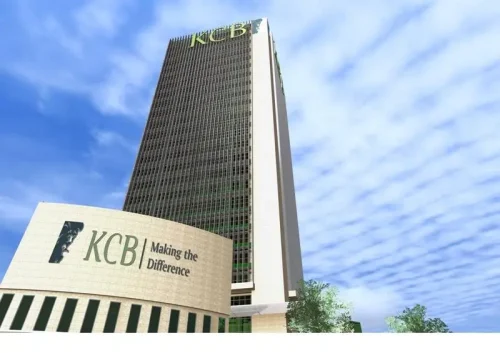
KCB Group, Kenya’s largest lender by asset size, reported a 10 percent rise in after-tax profit to 18.2 billion shillings ($139 million), with pre-tax earnings climbing 15.3 percent to 24.4 billion shillings. Total operating income crossed 50 billion shillings for the first time in the group’s history, supported by loan book growth and a steady rise in non-funded income from fees, foreign exchange and digital channels. The non-performing loan (NPL) ratio fell to 16.6 percent from 19.3 percent a year earlier, marking a fifth consecutive quarterly improvement.
Co-operative Bank of Kenya and NCBA Group also posted solid results. Co-operative Bank grew net profit 21 percent to 8.4 billion shillings ($65 million), while NCBA recorded a 9 percent increase to 6 billion shillings ($46 million), though NCBA’s credit loss provisions rose 56 percent, signaling a more cautious approach to lending risk.
Mid-tier and smaller lenders recorded some of the sharpest percentage gains in the quarter. Family Bank led the entire survey with a 53 percent surge in net profit to 1.6 billion shillings ($12 million), while HF Group posted a 45 percent increase to 475 million shillings ($3.7 million). The outperformance among tier-two lenders reflects the payoff from two years of tighter credit standards and loan book restructuring.
The picture was markedly different for foreign-owned institutions. Absa Bank Kenya reported a 14 percent drop in first-quarter profit to 5.3 billion shillings ($41 million), while Standard Chartered Kenya recorded the steepest decline of any major lender, with net profit falling 26 percent to 3.5 billion shillings ($27 million). The results point to intensifying pressure on margins and operating costs at institutions where lending strategies have been more conservative in a crowded market increasingly shaped by digital and mobile-money competition.
The broader sector continues to benefit from the Central Bank of Kenya’s monetary tightening cycle, which drove banks toward higher-yielding government securities and expanded returns on loans. Analysts caution, however, that softer private-sector credit growth, rising household debt and the risk of margin compression as rates ease represent the key headwinds ahead.
Equity and KCB together accounted for roughly 40 percent of the combined profits reported across the listed banks, underlining the continued dominance of Kenya’s top two lenders even as smaller rivals close the performance gap.

