

Global investors are dangerously underestimating the market risk posed by United States President Donald Trump’s 8pm Eastern Time deadline for Iran to reopen the Strait of Hormuz, the chief executive of one of the world’s largest independent financial advisory firms warned on Tuesday.
Nigel Green, chief executive of the deVere Group, said financial markets are treating the deadline as routine background noise when they should be pricing it as a rare, time-bound binary event with immediate and potentially severe global consequences.
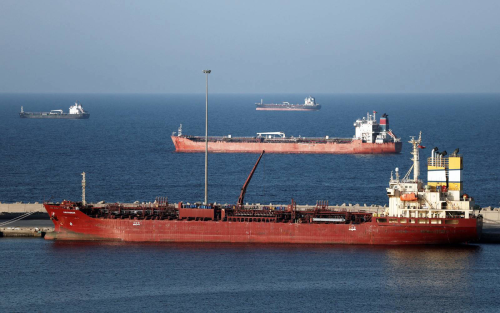
Brent crude has surged to around $109 per barrel, roughly 50 percent higher since the war broke out on February 28, while shipping traffic through the Strait of Hormuz remains 95 percent lower than pre-war levels. Yet Green argues that equity markets and oil prices still do not reflect the full severity of what a breakdown in tonight’s talks could mean.
“Markets are behaving as if this is background noise,” Green said. “A fixed, public deadline from the US president creates a binary outcome within hours either de-escalation or direct strikes on Iranian infrastructure. This is rare and mispriced.”
He added that investors accustomed to open-ended geopolitical tensions are not adequately accounting for a situation that has a precise clock attached to it. “There is a defined moment where the situation either stabilises or escalates sharply,” Green said. “Of course, this changes how risk should be assessed.”
Trump has threatened the complete demolition of Iran’s power plants and bridges if Tehran does not reopen the strait by tonight’s deadline, while Iran’s Islamic Revolutionary Guard Corps (IRGC) has vowed a far more severe and expansive response if strikes proceed. A senior Iranian security source said the strait will not return to its previous condition unless the war is permanently stopped.
Green warned that current oil pricing reflects tension rather than actual disruption. “Markets are not positioned for a scenario where shipping is impaired or where insurers begin to withdraw cover. If that happens, the move in energy prices accelerates fast and feeds directly into inflation expectations.”
Currency markets have begun signalling a more defensive shift even as equity indices hold relatively steady, with analysts noting that even a diplomatic breakthrough may not bring quick relief given the damage already done to supply chains and market confidence.
“The dollar is quietly telling a different story,” Green added. “Capital is starting to move defensively, even if equity indices have not fully adjusted. Currency markets often lead in these moments.”
Iran submitted a 10-point counter-proposal through Pakistan, demanding a permanent end to hostilities, a safe passage protocol for the strait, reconstruction commitments, and the lifting of all sanctions. Trump described the proposal as significant but ultimately insufficient, saying it was not good enough to avert his threatened strikes.
Trump subsequently said he was highly unlikely to postpone the deadline beyond 8pm Washington time on Tuesday.
Green said the asymmetry of risk in this scenario should compel investors to reassess their positioning immediately. “Upside from de-escalation is limited in the short term, while downside from escalation is sharp and immediate. A binary geopolitical event with a known deadline should not be treated as routine.”
He concluded: “This is a potentially huge market event like no other. It is a known unknown with a clock.”

