

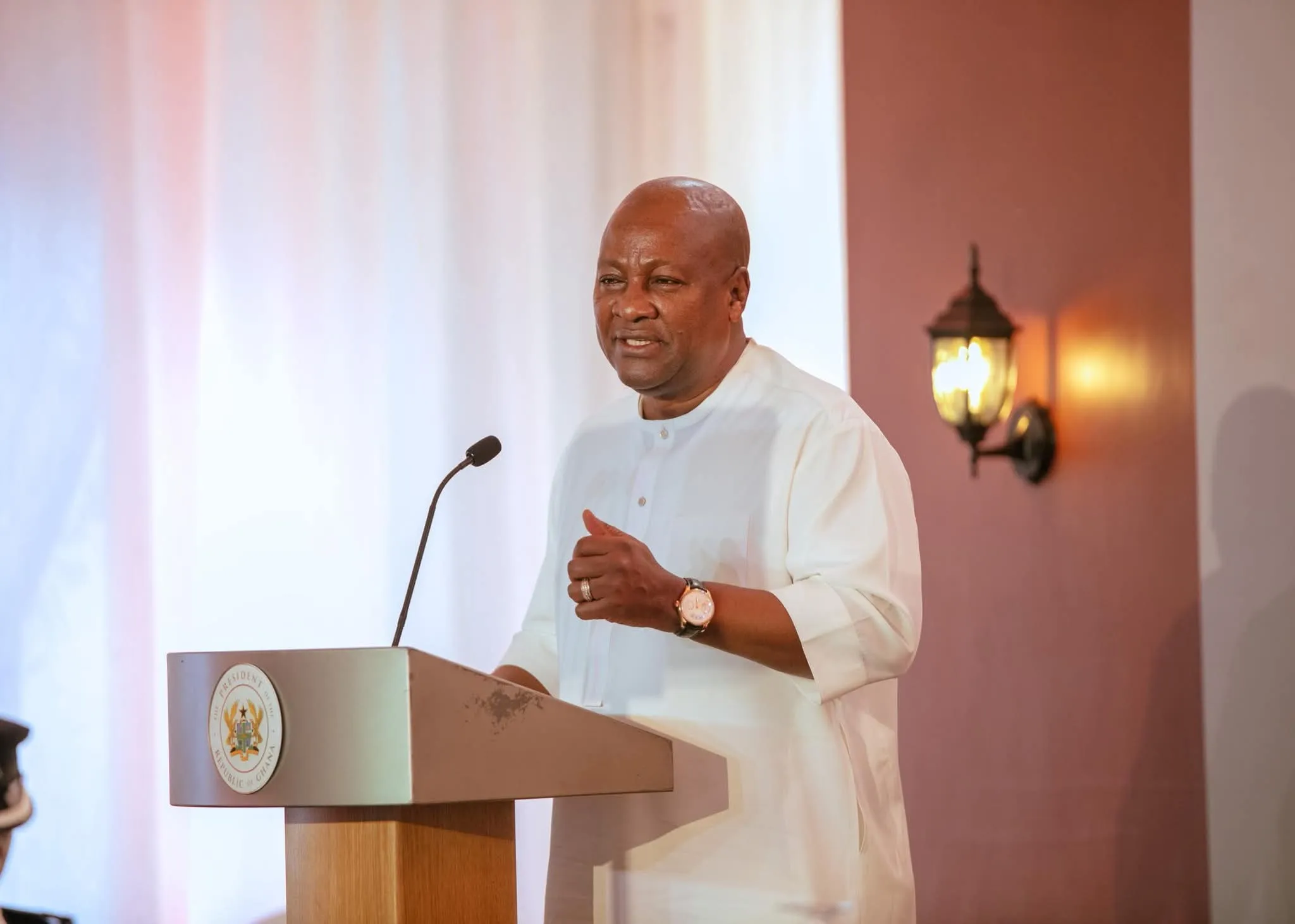
Ghana’s currency has depreciated beyond the ₵10-12 per dollar range that President John Dramani Mahama identified as the cedi’s “true value,” raising concerns about renewed inflationary pressure and increased costs for businesses and consumers.
The cedi is currently trading at ₵12.10 per dollar at major commercial banks including ABSA and Stanbic, according to market data from September 3. Forex bureaus are selling dollars at ₵12.70, significantly above the upper limit of the band the president outlined in June.
President Mahama had expressed optimism about currency stability after consultations with Bank of Ghana Governor Dr. Johnson Asiama and Finance Minister Dr. Cassiel Ato Forson. The projected range was intended to signal government confidence in the currency’s fundamental value and provide market guidance.
The depreciation poses immediate challenges for Ghana’s import-dependent economy, where currency weakness typically translates into higher prices for essential goods including rice, cooking oil, medicines, and spare parts. The development threatens to reverse eight consecutive months of declining inflation rates.
Commercial banks and forex bureaus are showing widening spreads, creating additional uncertainty for businesses that rely on foreign exchange for operations. Small and medium enterprises, particularly those dependent on imported inputs, face increased operational costs that may be passed on to consumers.
Transport operators and utility companies may also adjust prices upward in response to higher import costs, potentially exacerbating cost-of-living pressures for households already dealing with economic constraints.
Economic analysts warn that without improved foreign exchange inflows, enhanced fiscal discipline, and stronger confidence measures, continued currency weakness could further erode purchasing power across the economy. The breach of the projected stability band represents a significant test of the government’s economic management credibility.
The cedi’s performance has broader implications for monetary policy, as the Bank of Ghana balances inflation control with support for economic growth. Currency depreciation complicates these objectives by potentially reigniting price pressures that had been moderating in recent months.
For businesses planning investments or imports, the currency’s movement beyond government projections creates additional uncertainty in financial planning and cost calculations. Import-dependent sectors may face particular challenges in maintaining profit margins while keeping products affordable for consumers.
The situation highlights ongoing challenges in Ghana’s foreign exchange market, where demand for dollars consistently exceeds supply, creating persistent downward pressure on the cedi despite government interventions and policy measures.

