

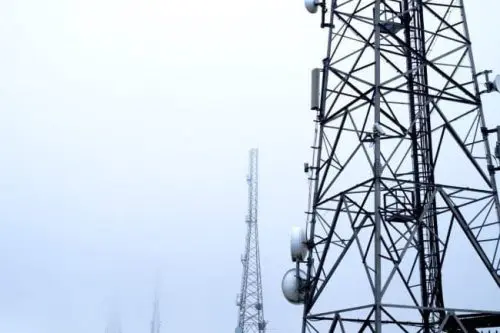
When the International Chamber of Commerce (ICC) issued its ruling on March 17, 2026, confirming that Airtel Ghana owes American Tower Corporation (ATC) Ghana GHS1.1 billion in unpaid tower and utility bills, industry observers broadly expected a swift resolution to one of the most consequential creditor disputes in Ghana’s telecoms history. What has emerged instead is a more complicated picture, one in which a clear legal victory may prove far harder to translate into actual recovery.
What the ICC Ruling Covers
The ruling, delivered by the ICC International Court of Arbitration in Paris, established three principal reliefs for ATC Ghana. Airtel Ghana was found to owe GHS1.1 billion as of August 2025. An additional one month’s tower fee for September 2025, the month ATC finally cut off power to Airtel Ghana’s network sites, was also confirmed as owed. Airtel Ghana was further ordered to settle ATC Ghana’s arbitration costs and legal fees.
Faced with continued non-payment, ATC had begun disconnecting power to AT Ghana’s radio access network sites on September 1, 2025, putting over three million subscribers at immediate risk of service disruption, prompting the National Communications Authority (NCA) and the Ministry of Communications, Digital Technology and Innovations to intervene and direct AT Ghana and Telecel Ghana to implement national roaming arrangements to safeguard subscribers.
The ICC gave Airtel Ghana ten days from the date of ruling to pay in full. That deadline passed on March 27, 2026. Since then, an interest penalty of approximately four percent per month has been accruing on the outstanding balance, meaning every thirty days of delay compounds the total further. As April 27 approaches, a second tranche of interest is due to be added.
The Enforcement Problem
The ICC ruling’s legal clarity has not simplified the practical question of how ATC Ghana collects. That difficulty flows directly from the ownership structure surrounding AT Ghana, which has become the central flashpoint in industry discussions since the ruling was made public.
The structure is layered. The Government of Ghana owns 100 percent of the shares in Airtel Ghana. Airtel Ghana owns all the shares in People’s Network, known as PPL Net Ghana. PPL Net is the company that now holds all the physical assets and operations of the telecom brand AT Ghana. That means the entity the ICC ruled against, Airtel Ghana, currently holds no cash and no physical infrastructure of its own.
The layering was not accidental. On November 1, 2024, Airtel Ghana wrote to its key creditors, including Stanbic Bank, ATC Ghana, and Helios Towers, notifying them of plans to transfer its assets and staff into PPL Net. The stated reasons were twofold: to create a clean, debt-free operating entity that would be more attractive to potential investors, and to protect the jobs of over three hundred workers who would otherwise be at risk if the debt load triggered a formal bankruptcy. The plan, as described by those involved, was for PPL Net to generate revenue from operations and pay dividends up to Airtel Ghana, which would then gradually settle its creditors.
ATC Ghana secured a High Court injunction in January 2025 restraining Airtel Ghana from transferring or disposing of its assets pending the conclusion of the ICC arbitration, with the court emphasising the need to prevent dissipation of assets that could render any eventual award unenforceable. The difficulty, however, is that the transfer to PPL Net had already been completed in November 2024, two months before the injunction was obtained, rendering it largely without practical effect against an already concluded transaction.
Two Schools of Legal Thought
Legal and industry experts have coalesced around two competing views on what ATC Ghana’s enforcement options now look like.
The first view holds that because the ICC ruling was secured against Airtel Ghana, and Airtel Ghana currently has no cash and no physical assets, enforcement is effectively paralysed. The only asset Airtel Ghana formally holds is its shareholding in PPL Net, and even those shares are reportedly under the control of Stanbic Bank Ghana due to an unpaid loan obligation, meaning even that avenue may be closed to ATC Ghana.
The second view is more interventionist. It holds that if ATC Ghana can demonstrate to a Ghanaian court that Airtel Ghana created PPL Net and transferred its physical assets to it with the deliberate purpose of shielding those assets from creditors, a court could potentially allow ATC Ghana to pierce the corporate veil and pursue the underlying assets held by PPL Net. This doctrine, sometimes described as lifting the corporate veil, is not routine in Ghanaian jurisprudence but is legally recognised in cases of demonstrated fraudulent intent.
A further extension of this argument is more politically charged. Because Airtel Ghana is ultimately wholly owned by the Government of Ghana, and because PPL Net and AT Ghana trace their ultimate ownership to the same state entity, some legal observers argue that a sufficiently strong court application could seek to attach state assets. That argument faces formidable constitutional and legal obstacles, given that Airtel Ghana is a limited liability company and, by the foundational principle of corporate law, its shareholder, the government, bears no personal liability for its debts.
Government’s Complicated Position
The government’s conduct throughout this affair has added another layer of complexity. When Communications Minister Samuel Nartey George publicly described the GHS1.5 billion bill as sitting on the government’s books following the January 2025 change of administration, he told journalists those who managed the AirtelTigo process were “enemies of our state,” framing the debt as a consequence of previous administrative negligence. That statement, while politically pointed, was legally imprecise. A limited liability company’s debts do not sit on its shareholder’s books, and the cabinet is understood to have pushed back on that characterisation.
The problem is that successive governments, from the time of former Communications Minister Ursula Owusu-Ekuful, made themselves active participants in negotiations between Airtel Ghana and its creditors. That posture, while not legally binding, gave creditors reasonable grounds to believe the state stood informally behind the obligations. Unwinding that expectation without formal legal acknowledgment creates precisely the kind of ambiguity that litigation is built on.
The Investor Signal
Beyond the question of who pays and how, the ATC Ghana case is being read in some quarters as a stress test for Ghana’s investment climate. Ghana is a signatory to the New York Convention on the Recognition and Enforcement of Foreign Arbitral Awards, which obliges it to give ICC rulings legal effect through its domestic courts, and how quickly and completely Ghana’s judiciary acts on the ruling will be closely watched by the infrastructure investors the country is trying to attract.
Tower companies, by the nature of their business model, anchor their return calculations on contractual predictability. A ruling that confirms an obligation but cannot be practically enforced undermines the logic of the entire towerco investment thesis in any market. ATC Ghana’s situation, playing out publicly during a period when Ghana is actively marketing itself to foreign direct investors, raises questions that go beyond this single dispute.
The next chapter of this saga will depend on whether ATC Ghana moves to enforce the ICC award in Ghanaian courts, how the judiciary responds to any attempt to reach assets held by PPL Net, and whether the government chooses to negotiate a settlement rather than allow a protracted legal process to escalate.

