Home Blog

Angie Safo joins TECNO Ghana to spotlight the all-new CAMON Slim

The social media influencer will spark online buzz around the latest offering from TECNO through her lens.

Known for her engaging mix of lifestyle content and entrepreneurial undertakings, Angela Nyamewaa Ama Safowaa better known as Angie Safo, will bring her creative flair and content creation talent to TECNO’s latest campaign, helping build excitement around the brand’s new budget-friendly CAMON Slim smartphone.

The month-long collaboration will see her incorporate the smartphone into her daily routine. In line with this, Angie will share posts that highlight the CAMON Slim’s camera, features and everyday performance. The idea is to prove that great tech doesn’t always have to break the bank.

“As someone who’s familiar with their products, I’m excited to work with TECNO Ghana for the CAMON Slim,” Angie shared. “Smartphones have become a big part of how we connect, create, and share our stories with the world, and the brand’s commitment to delivering such quality at affordable prices is commendable. I’m eager to help my audience experience the best value TECNO has to offer through a lifestyle lens.”

With influencers now an established force in driving product sales, the collaboration reflects TECNO Ghana’s commitment to bridging technology and culture. By working with creators who resonate with younger, tech-savvy audiences, the brand is confident it can change misconceptions around what a budget smartphone is, or can be. And with the likes of Angie Safo as a collaborator, such change feels well within reach.

TCDA Joins Nationwide Sanitation Drive as CEO Leads Staff in Clean-Up Exercise

The Tree Crops Development Authority (TCDA) has reaffirmed its commitment to environmental sustainability and responsible citizenship by actively participating in the National Clean-Up Exercise, with its Chief Executive Officer, Dr. Andy Osei Okrah, leading Management and Staff in the exercise.

The clean-up activity formed part of the nationwide sanitation campaign spearheaded by H.E. President John Dramani Mahama and observed across the country from July 10 to 11, 2026, to promote cleaner communities and strengthen public awareness on environmental hygiene.

Demonstrating leadership by example, Dr. Osei Okrah joined staff members in clearing weeds, collecting refuse and cleaning the Authority’s surroundings, underscoring the importance of collective action in maintaining a healthy environment.

The CEO described environmental cleanliness as a shared national responsibility that requires sustained commitment from both institutions and individuals. “The success of our national development agenda depends not only on economic growth but also on the cleanliness and health of our environment. Every citizen and institution has a role to play in keeping Ghana clean.”

Dr. Osei Okrah praised the dedication and enthusiasm exhibited by Management and Staff during the exercise, noting that their participation reflected TCDA’s culture of service, discipline and commitment to national development.

He also urged stakeholders across the tree crops sector, including farmers, aggregators, processors, exporters and industry associations, to embrace good sanitation practices within their operations. According to him, maintaining clean production, storage and processing environments is essential to safeguarding product quality, protecting public health and enhancing Ghana’s competitiveness in international markets.

The CEO further encouraged TCDA’s Zonal Officers nationwide to champion sanitation initiatives within their respective operational areas and to promote proper waste management practices throughout the tree crops value chain.
TCDA’s participation in the National Clean-Up Exercise highlights the Authority’s dedication to supporting government efforts to improve sanitation while fostering sustainable practices that contribute to the growth and resilience of Ghana’s tree crops industry.

Korle Bu Cath Lab Reopens 16 Months After Fire

0

President Mahama commissioned a rebuilt cardiac catheterisation laboratory at Korle Bu Teaching Hospital on Thursday, restoring a facility he first opened in 2017 that a fire destroyed in March 2025.

The original lab, commissioned by Mahama in January 2017, had let cardiologists in Ghana perform angiograms, angioplasty, stent placement and pacemaker implantation locally for eight years, sparing patients trips abroad for procedures that guide catheters through blood vessels using X-ray and fluoroscopy imaging. A fire on March 7, 2025 destroyed the facility, disrupting emergency cardiac care at the country’s premier referral hospital. The Ghana Medical Trust Fund, known as MahamaCares, assessed the damage in January 2026 and chose to rebuild a larger, more advanced version rather than simply replace what was lost. Construction ran from February 17 to July 2026, under five months. “We celebrate the creation of something even better than what we lost,” Mahama said at the commissioning.

The National Cardiothoracic Centre, which will run the lab, currently performs about 600 cardiac, thoracic and vascular surgeries a year and logs roughly 12,000 patient visits, including about 1,500 new referrals, according to its director, Dr Kow Entsua-Mensah. Even before formally resuming full operations, the facility is set to host a cardiac intervention programme beginning July 12 in partnership with visiting American cardiologists, the Mount Carmel Foundation and Africa World Airlines, in which 30 patients selected from across the country will undergo complex cardiac device procedures.

The Korle Bu rebuild is part of a wider expansion of catheterisation labs to Komfo Anokye Teaching Hospital in Kumasi and Tamale Teaching Hospital, a push that followed the death of a Komfo Anokye doctor, Dr Kwame Adu Ofori, who suffered a heart attack requiring the kind of intervention a cath lab provides and died before he could reach one in Accra. Mahama said MahamaCares now carries a GH¢2.3 billion allocation covering not just patient treatment but infrastructure and workforce training, including a newly approved cohort of 500 critical care nurses, the first of whom have begun training at Korle Bu. He also announced a new subsidiary, Ghana Medical Equipment Services Limited, to maintain hospital equipment going forward, and said procurement had begun for a new maternity block to replace the hospital’s aging Gordon-Guggisberg building, which he described as a safety risk to mothers and staff.

AWS Open-Sources Loom To Secure AI Agents

0

Amazon Web Services released Loom, an open source platform that deploys AI agents from fixed configurations rather than code generated at runtime, aiming to close a security gap enterprises face scaling agents.

The design choice sits at the center of what Loom is trying to solve. Many agent platforms generate code on the fly to handle each new request, but that code counts as untrusted and needs its own isolated environment to run safely, adding complexity for security teams. Loom instead builds agents once using AWS’s open source Strands Agents SDK and deploys them onto Amazon Bedrock AgentCore Runtime through configuration alone, so the underlying code can be reviewed and scanned a single time rather than re-checked with every deployment. AWS engineer Heeki Park, who introduced the platform, said it “gives builders the ability to easily create agentic applications” while keeping security and governance built into the deployment process itself.

On governance, Loom enforces three mandatory tags on every deployed resource, with room for organizations to add their own for cost tracking, and applies a two dimensional access model that pairs user roles with group tags to scope permissions. Credentials and behavioral rules are kept out of the platform entirely and pulled from AWS Secrets Manager only when needed, while inbound and outbound authentication runs through AgentCore Identity using OAuth2 and token exchange, so a user’s identity carries through an entire chain of agent requests rather than getting lost between steps. For actions considered sensitive, Loom adds human approval checkpoints built on the Strands Agents hook framework and Model Context Protocol elicitations, and it connects to the AWS Agent Registry, still in public preview, so agents and tools clear a governance review before reaching production.

AWS is offering Loom through AWS Labs on GitHub and inviting outside contributions, pitching it specifically at platform engineering teams building on fully managed AWS services rather than as a general purpose product. The release extends Bedrock AgentCore, which reached general availability in October 2025 after AWS first launched Bedrock Agents in late 2024, and arrives as enterprise agent tooling has become a crowded field, with OpenAI’s Agents SDK, Google’s Gemini agent framework and startups such as Cognition, maker of the Devin coding agent, all competing for the same enterprise deployments.

Court Injunctions Halt More NPP Constituency Polls

0

A Kumasi High Court has suspended NPP constituency elections in Bantama and Manso Nkwanta for 10 days, adding to a wave of court challenges disrupting the party’s internal polls nationwide.

In the Bantama case, Justice Aberinga Anafo George granted an interim injunction sought by three party members, Marcus James Kwadwo Osei, Paul Asare and Enock Ofori-Amanfo, against the NPP, its Ashanti Regional Representative Prince Karikari and Constituency Chairman Fifi Mensah. The order restrains the respondents from “conducting, proceeding with or completing the Constituency Executive Elections” in Bantama for 10 days. The plaintiffs were represented by Belinda Opoku Mensah, led by Akwasi Agyemang Badu. The suit follows weeks of internal tension in the constituency over its polling station album of delegates, with some local executives and grassroots coordinators alleging that long serving delegates were being removed from the register and replaced with unapproved or fictitious names, a dispute that had already spilled into a heated on air exchange on a Kumasi radio station before reaching court.

In the second case, Justice William Osei-Kuffour granted Clement Opoku Agyemang an injunction against the NPP’s national headquarters, its General Secretary, the Ashanti Regional Chairman and Manso Nkwanta Constituency Chairman Benjamin Boakye, halting the constituency election that had been scheduled for July 11 and 12 until the underlying case is resolved. The court ordered that the writ of summons, statement of claim and injunction be formally served on all respondents.

The two rulings extend a pattern that has touched NPP constituencies well beyond Ashanti Region in recent weeks. A Sunyani High Court injunction has separately halted Sunyani East’s constituency election over the disqualification of several aspirants, while earlier suits produced injunctions covering the Afigya Sekyere East polling station album and the Tarkwa-Nsuaem electoral area elections in the Western Region. The party’s Central Regional chairmanship race also remains unresolved, held up by its own court injunction after the rest of the country’s regional elections were completed. The recurring theme across the cases is disputes over how constituency delegate rolls and candidate eligibility have been handled ahead of the nationwide exercise, which forms part of the NPP’s post 2024 reorganisation before the 2028 general election.

Amin Adam Defends Mosque, Points To School Projects

0

Former Finance Minister Mohammed Amin Adam defended his 6,000 capacity Tamale mosque against critics who said the money could have funded factories, pointing to years of education spending in Karaga.

In an interview, the Karaga MP listed classroom blocks he said he had built or supported at the Northern School of Business, Tamale Senior High School, Markaziyya Islamic School and Pishigu Senior High School, along with a dormitory at Ambariyya Islamic Institute and the establishment of Nyong Technical Institute. He said Pishigu SHS and Nyong Technical Institute were funded through companies he sourced rather than government money, and pointed to a stalled Karaga STEM College of Education that he said would have been Ghana’s first STEM focused teacher training college had funding come through. He also cited scholarship schemes running in Karaga, Aboabo and Zogbeli, and for journalists in Tamale.

On the mosque itself, Amin Adam rejected the idea that Masjid Al-Noor serves worship alone, pointing to the Sheikh Adam Issah Centre for Islamic Research, an Islamic library and offices for the Noorul Hayat Foundation charity built into the complex. “You don’t abandon your faith just because you are a politician,” he said, framing the project as continuing work he had done as an Islamic educationist before entering politics.

The mosque, which seats about 6,000 worshippers indoors with room for another 4,000 outside and up to 10,000 during major gatherings, drew a notably high profile commissioning audience, including former Vice President Mahamudu Bawumia, National Chief Imam Sheikh Osmanu Nuhu Sharubutu and the Imam of Abuja’s National Mosque, Professor Ibrahim Ahmed Maqari. Amin Adam donated GH¢300,000 as seed funding for its operations at the ceremony. He also used the occasion to caution Imams directly against using sermons to attack individuals, urging them instead to preach peace, unity and moral values, remarks that drew a visibly emotional reaction from parts of the audience.

Wontumi Pitches NPP Unity Amid Own Mining Trial

0

Ashanti Regional Chairman Wontumi pledged to reunite the NPP and personally engage Kennedy Agyapong if elected national chairman, campaigning as he awaits judgment in his own illegal mining trial.

Speaking in a virtual engagement with the NPP’s Asia and Pacific Caucus, Wontumi said he was ready to lead the party’s rebuilding effort after its 2024 election defeat. “I am built for this battle, and I am fully prepared,” he said, promising to strengthen ties with grassroots members and diaspora branches he admitted the party had previously failed to engage effectively. He proposed consultations on widening the membership base allowed to elect party executives, framed overseas branches as partners in fundraising and voter mobilisation ahead of 2028, and said discipline within the party should be balanced with reconciliation, arguing that punishments already imposed had served their purpose.

On Kennedy Agyapong specifically, Wontumi said dialogue was needed for the party’s future and that he would personally seek an opportunity to engage him. Agyapong, a former presidential aspirant, was referred to the NPP’s National Disciplinary Committee in late June over petitions accusing him of anti party remarks, including criticism of the leadership over the stalled Afari Military Hospital project and comments suggesting he could expose internal wrongdoing. The committee was given two weeks from June 25 to report its findings to the National Council, which has not yet announced an outcome.

Wontumi’s own standing within the party is not free of friction either. Agyapong’s campaign team called last September for disciplinary action against Wontumi himself, accusing him of reckless and divisive remarks alleging that the NPP’s presidential primary schedule had been arranged to favour a particular candidate, a claim the party leadership publicly distanced itself from at the time. Separately, Wontumi is a defendant in an ongoing criminal trial over alleged illegal mining at Samreboi in the Western Region, accused alongside his company, Akonta Mining Limited, of assigning mineral rights without approval and facilitating unlicensed mining in the Tano Nimiri Forest Reserve. He has pleaded not guilty. The High Court was originally set to deliver judgment on July 3, but adjourned to July 20 after Wontumi’s newly appointed lawyer sought more time to prepare, a request the Attorney General’s office opposed.

Members of the Asia-Pacific Caucus pledged support for the party’s rebuilding effort and for mobilising Ghanaians abroad ahead of the 2028 election.

GSE Turnover Surges As Weekly Trading Rebounds

Ghana Stock Exchange turnover value jumped 54 percent last week as the benchmark GSE Composite Index closed Friday at 14,805.95 points, up 0.8 percent from the previous week.

Trading value for the week of July 6 to 10 reached GH¢67.14 million, up from GH¢43.58 million the prior week, while volume rose 49 percent to 20.63 million shares from 13.85 million. Market capitalization climbed to GH¢287,123.51 million, a gain of about 0.45 percent on the week and 66.89 percent since the start of the year. The GSE Composite Index (GSE-CI) is now up 68.82 percent year to date, while the GSE Financial Stocks Index (GSE-FSI), which added 0.40 percent on the week to close at 8,240.66 points, has gained 77.33 percent so far in 2026.

Two stocks drove most of the week’s activity. MTN Ghana accounted for GH¢37.16 million of value traded, the largest single contributor and the main reason the ICT sector led all sectors by value with a 56.24 percent share of the market. Kasapreko was the week’s most actively traded stock by volume at 9.55 million shares and helped push the Food and Beverage sector to a 51.37 percent share of total volume traded, worth GH¢18.4 million. CAL Bank, IIL and Hords Limited rounded out the five most active stocks by volume, while GCB Bank, CAL Bank and Ecobank Ghana followed MTN and Kasapreko as the most active by value.

Among individual price movers, IIL led gainers with a 55.56 percent jump to GH¢0.28 a share, part of a 460 percent advance since January. Hords Limited rose 27.27 percent, CPC gained 15.38 percent and CLYD climbed 12.58 percent, the last of which is up 598 percent year to date, the steepest gain among the week’s tracked movers. SCB Preference shares added 10 percent and GOIL rose 6.40 percent. On the losing side, RBGH fell 1.75 percent, the week’s weakest performer, followed by declines of 0.91 percent at ETI, 0.17 percent at SIC and 0.14 percent at SCB. Of the 17 stocks tracked as market movers, 13 advanced against four declines, and the average price change across that list was a gain of 7.83 percent.

Daily figures show volume falling in every session, from 4.98 million shares on Monday to 3.47 million by Friday, even as value traded swung sharply, dropping to GH¢9.56 million on Tuesday before peaking at GH¢18.30 million on Thursday. Market capitalization rose steadily through the week regardless, climbing from GH¢286,098.45 million on Monday to Friday’s close.

Kumasi Officer Probed Over Sex Work Rentals

0

The Ashanti Regional Police Command is investigating an unnamed Chief Inspector accused of owning unauthorized structures at Kumasi’s Asafo BB and renting them to sex workers.

A statement dated Friday from the command’s Public Affairs Unit said the officer is accused of owning wooden structures at Asafo BB, a busy transport and commercial hub in Kumasi, and leasing them to commercial sex workers. The statement did not name the officer, confirm whether the structures are formally registered to him, specify what offence is under consideration, or say whether he has been suspended or reassigned while the investigation continues. “The Command takes the allegations seriously,” said Superintendent Godwin Ahianyo, head of the Public Affairs Unit, adding only that further developments would be communicated as the investigation proceeds.

The case surfaces in the same neighborhood the police themselves targeted just weeks earlier. Between June 8 and June 17, the Ashanti Regional Police Command and the Inspector General’s Special Operations Team ran a joint crackdown across eight communities, including Asafo, arresting 186 people on suspicion of human trafficking, sexual exploitation, narcotics trafficking and illegal firearms possession, among them a suspect known as “Mama Gee” accused of running a trafficking network. Asafo BB itself has been flagged for years as a persistent hotspot for commercial sex work operating largely unchecked, with past reporting describing local enforcement efforts there as an uphill struggle.

Neither the current allegation nor the Chief Inspector’s identity has been independently confirmed beyond the police statement, and no charges have been announced. The Ashanti command’s Public Affairs Unit has in recent months also disclosed other internal misconduct cases, including a separate investigation into an inspector accused of defilement in a different part of the region, as the service continues efforts to enforce professional standards among its ranks.

CJID Summit Calls For Journalism Rethink

0

Media leaders meeting in Accra on Thursday called for West African journalism to be rebuilt around data skills and regional cooperation, warning that old models can no longer defend democracy.

The Centre for Journalism Innovation and Development (CJID) marked seven years of its DUBAWA Ghana fact-checking platform with a summit built around one core argument from CJID chief executive Dapo Olorunyomi: journalism schools and media organisations across the region are still operating on principles built for an industrial age, even as artificial intelligence and algorithm driven platforms reshape how information spreads. “The central purpose of journalism is to ensure democracy works,” he said, arguing that constitutions in Ghana, Nigeria, Sierra Leone, Liberia and The Gambia all treat the press as an accountability mechanism rather than a simple reporting function.

Olorunyomi called for journalism curricula to add computational reporting, data analysis and open source investigation, and said media development funding should shift away from propping up individual newsrooms toward building information ecosystems resilient enough to survive disinformation and platform disruption. He also argued that no single West African country carries enough weight to negotiate effectively with global technology companies alone, making regional cooperation, including between Anglophone and Francophone media organisations, a practical necessity rather than an aspiration.

Delivering a keynote on behalf of President John Mahama, government spokesperson Shamima Muslim framed the stakes in national security terms, describing today’s disinformation as a form of weaponised information that now contests democracy on digital platforms rather than only in courtrooms or at the ballot box. She cited the World Economic Forum’s Global Risks Report 2025, which ranked misinformation and disinformation the world’s top short term risk for a second straight year, and the Reuters Institute’s Digital News Report 2025, which found 73 percent of Africans worried about telling truth from falsehood online, the highest level recorded anywhere. Muslim pointed to Ghana’s climb from 52nd to 39th on the 2026 World Press Freedom Index and ongoing consultations on a proposed bill covering misinformation, disinformation and hate speech as evidence of government action on the issue.

National Media Commission executive secretary George Sarpong described the region as entering an “Age of Disinformation” driven less by new technology than by collapsing public trust, and called for platform regulation involving governments, tech companies, academia and civil society together, cautioning against governments alone deciding what counts as true. CJID executive director Akintunde Babatunde said generative tools such as ChatGPT and Gemini were already being used to scale disinformation around elections, and pointed to a regional open source intelligence workshop CJID ran for 15 journalists ahead of the summit as one practical response.

Other speakers pushed back gently on parts of the framing. CDD Ghana’s Kojo Asante argued that public frustration usually reflects poor governance performance rather than a failure of democracy as a system, while Media Foundation for West Africa director Sulemana Braimah said the deeper crisis is one of journalism itself losing ground to a wider content economy driven by platform engagement rather than accuracy. Investigative journalist Manasseh Azure Awuni said credibility remains the profession’s strongest asset even as reporters now spend part of their time disproving false claims rather than only producing original stories.

Awuku Warns Mahama Against Third Term ‘Trap’

0

NPP MP Sammi Awuku urged President Mahama on Friday to reject what he called a political trap, after separate lawsuits asked the Supreme Court to reopen Ghana’s two term limit.

In a Facebook post, the Akuapem North MP said “those behind the suits are plotting the eventual downfall of President Mahama,” urging him not to be drawn into what Awuku described as a poisoned trap set by detractors inside his own party. Awuku pointed to former President Jerry Rawlings as an example of leaving office without pursuing an extended stay, and told Mahama to retire at the end of his term in 2029 rather than face prolonged public agitation over the question.

Awuku’s post responded to a suit filed by journalist and lawyer Kenneth Agyei Kuranchie, a former NPP parliamentary aspirant, asking the Supreme Court to rule that the two term limit in Article 66(2) of the 1992 Constitution applies only to consecutive terms, and that a full electoral cycle out of office restores a former president’s eligibility. A second, separate case pursuing the same legal theory was filed days later by Ganiwu Alhassan, a teacher from Kpandai in the Northern Region, through his lawyer, naming the Attorney General as defendant and asking the court to declare that a president who served two non-consecutive terms remains eligible to run again. Both cases turn on the same constitutional question, though they were brought independently.

The suits arrive despite two Supreme Court nominees, Justice Janapare Bartels-Kodwo and Justice Senyo Dzamefe, telling Parliament’s Appointments Committee during their vetting last year that the Constitution’s two term cap admits no alternative reading. Former NPP national chairman Freddie Blay has taken a different position, saying he would support a third term for Mahama if the Supreme Court interpreted the Constitution that way. Mahama himself has repeatedly said he has no interest in a third term or in amending the Constitution to allow one, most recently repeating that position during a visit to Singapore in August 2025.

Iddrisu Orders Crackdown After Bole Teacher Case

0

Education Minister Haruna Iddrisu ordered swift police action against a Bole Senior High School teacher accused of sexual misconduct with a student, while directing GES to crack down on indiscipline.

Speaking Thursday at the 2026 GALOP National Schools Awards, Iddrisu said his ministry was closely monitoring the police investigation into the Bole case and expected it handled with urgency through to prosecution. The teacher, who has not reported to duty since the allegation surfaced and is reported to be in nearby border communities, has had his salary suspended by the Ghana Education Service (GES) pending the outcome.

Iddrisu used the same platform to widen his message beyond the single case, describing indiscipline among learners, teachers, headmasters and examination officials as a problem across the sector. “Indiscipline generally as a Ghanaian disease,” he said, adding that the GES Director General now has the government’s backing under President Mahama’s Reset Agenda to sanction offenders at every level, including students, teachers and school administrators.

The directive follows a run of incidents that have pushed discipline in schools onto the national agenda in recent weeks. Students at Bawku Senior High School reportedly turned on teachers enforcing WASSCE rules, injuring two and damaging property, while the ministry has also cited cases of students carrying firearms onto school premises, vandalising CCTV cameras and selling narcotics on campus. GES has already set up a committee to review its Code of Conduct after rejecting public claims that the service no longer punishes misconduct or that class repetition had been abolished, and the ministry has said it will convene a national stakeholders conference in Sunyani before the end of July to work out a coordinated response.

Iddrisu said restoring consistent discipline across schools is necessary to rebuild public confidence in the education system, though he has also said in Parliament that responsibility should not fall on GES alone, describing parenting and community socialisation as shared obligations alongside the school system.

Minority Repeats Flood Fund Constitutional Warning

0

Deputy Minority Leader Patricia Appiagyei told Asaase Radio on Thursday that the disputed release of GH¢350 million in flood relief funds threatens confidence in how Ghana manages public finances.

“We cannot ignore the Constitution and create constitutional chaos,” she said on the Asaase Breakfast Show, repeating claims her caucus first raised at a Wednesday press conference in Parliament. Appiagyei argued that if court orders and constitutional procedure can be set aside, public money is not safe, and said the Attorney General should apply the law rather than his own judgment when advising government on constitutional matters.

Her remarks return to allegations the Minority has not yet had answered. The caucus says the Attorney General, Dr Dominic Ayine, wrote to the Governor of the Bank of Ghana on July 1 acknowledging that the Contingency Fund was the subject of ongoing garnishee proceedings, but directed the central bank to release the GH¢350 million anyway, citing his own “considered opinion” that the flood emergency justified it. Parliament had approved the withdrawal specifically from the Contingency Fund on June 29. The Minority argues that if the fund remained legally attached, the money released could only have come from a different public account that Parliament never approved, which it says would breach the Constitution and the Public Financial Management Act, 2016 (Act 921).

Appiagyei and her caucus have demanded that Ayine and Finance Minister Dr Cassiel Ato Forson appear before Parliament with the garnishee order, the July 1 letter and related correspondence, that the Bank of Ghana governor state publicly which account was debited, and that the Auditor General conduct a special audit of the disbursement. The Minority has also called for Ayine’s resignation or removal, while stressing it supports the flood relief itself and wants funds delivered without delay. As of this report, the Attorney General’s office and the government have not publicly responded to the allegations.

Ghana’s PFM Gains Mask Wide Regional Gaps

0

More than half of Ghana’s district assemblies met public financial management benchmarks for the first time in 2025, though a 43 point regional gap shows how uneven the progress is.

The Centre for Local Governance Advocacy (CLGA) launched the third edition of its Public Financial Management Compliance League Table (PFMCLT) in Accra on Wednesday, covering all 261 Metropolitan, Municipal and District Assemblies for the first time. The national average compliance score rose from 33 percent in 2024 to 56.2 percent in 2025, and the number of assemblies meeting the 50 percent benchmark jumped from just 12 to 153, based on assessments across six pillars including procurement, internal audit and financial reporting.

Parliament’s Public Accounts Committee chairperson, Abena Osei Asare, told the launch that the gains still fall short of what the law requires. “The laws are adequate, but compliance is weak,” she said, adding that many infractions flagged by the Auditor General remain avoidable given stronger internal audit systems and closer attention to Public Accounts Committee recommendations.

CLGA deputy executive director Gladys Gillian Naadu Tetteh said the national average obscures how differently regions are performing, with more than 43 percentage points separating the strongest and weakest regions. That spread shows clearly at the extremes of the table. Bia East District Assembly topped the rankings with a score of 94.5 percent, followed by Nkwanta South Municipal Assembly at 93.5 percent and Asokwa Municipal Assembly at 92 percent. Nsawam Adoagyire Municipal Assembly finished last at 8.5 percent, behind Sissala West and Wa West district assemblies.

The results arrive months after a CLGA led stakeholder meeting recommended tightening how the league table treats known compliance failures, proposing that assemblies named in the Auditor General’s report for misappropriation or other infractions should lose points under the audit indicator rather than being scored on submitted documents alone. It is not yet clear whether that change was adopted for the 2025 edition. CLGA board chairman Bernard Joe Appeah said the table’s purpose goes beyond scoring administrations, since assemblies exist to deliver health, education, infrastructure and local economic development, not simply to manage budgets.

The league table is funded by the European Union and fulfills a commitment in the government’s 2025 Budget Statement to publish an evidence based assessment of MMDA compliance with the Public Financial Management Act, 2016 (Act 921).

rCOMSDEP National Coordinator Leads Clean-Up Exercise at Corporate Headquarters

By: Felix Ernest Odamtten/Muhammed Faisal Mustapha

The National Coordinator of the Responsible Cooperative Mining and Skill Development Programme (rCOMSDEP), Ms. Mawusi Ama Mawuenyefia, on Friday led staff of the organisation in a clean-up exercise at the institution’s corporate headquarters in support of the government’s National General Cleaning Exercise.

The exercise formed part of the Presidency’s newly introduced national sanitation initiative, which designates Fridays and Saturdays as National Sanitation Days to promote environmental cleanliness and reduce the outbreak of waterborne and infectious diseases following the recent floods experienced in parts of the country.

Armed with brooms, rakes and other cleaning tools, the National Coordinator and members of staff cleaned offices, drains, walkways and the surroundings of the headquarters, demonstrating their commitment to maintaining a clean and healthy working environment.

Speaking after the exercise, Ms. Mawuenyefia said environmental cleanliness should not be treated as a one-off activity but become a continuous responsibility for every institution and individual.

“I think this should be done at least every quarter. We must embrace the culture of taking responsibility for our immediate environment,” she said.

She noted that maintaining clean surroundings was essential in preventing diseases that often emerge after flooding, adding that rCOMSDEP would institutionalise periodic clean-up exercises as part of its commitment to environmental sustainability and corporate responsibility.

Ms. Mawuenyefia commended members of staff for their enthusiasm and active participation, describing the exercise as a demonstration of teamwork and collective responsibility.

On behalf of the staff, Mr. Sabastine Baidoo thanked the National Coordinator and the management of rCOMSDEP for leading the initiative.

He said the exercise had strengthened staff commitment to environmental sanitation and expressed the hope that similar activities would be organised regularly to sustain a clean and healthy workplace.

The National General Cleaning Exercise forms part of broader government efforts to promote environmental sanitation, encourage public participation in cleanliness and build resilience against sanitation-related diseases nationwide.

Azumah, Court Filings Clash Over Mine Order

0

Azumah Resources says no court has ordered it to hand over the Black Volta gold project, though other reporting cites a court order finding partner E&P non compliant.

In a Thursday statement, Azumah Resources Ghana Ltd board chairman Noel Addo said media reports claiming a court had ordered the company to relinquish the Black Volta and Sankofa mine sites were false, and challenged anyone making that claim to produce the ruling. Addo said the only relevant filing is an ex parte application by former investors, filed June 10, seeking to stop Engineers & Planners (E&P) from interfering with the mine sites and to restore access to company IT systems. He said the order explicitly allows E&P to apply to have it set aside, that E&P has filed that application with Azumah’s support, and that no hearing date has been fixed, meaning the order is not yet enforceable.

That account differs from reporting elsewhere on the same dispute. Adomonline, citing High Court of Justice documents dated June 8, reported that the English court granted permission for an interim arbitration award issued by the International Chamber of Commerce (ICC) in October 2025 to be enforced as an English court judgment, and that the order itself states E&P “failed to comply with the Interim Award,” ordering E&P to pay close to £33,310 in legal costs. E&P has instructed lawyers to contest that enforcement order. It is not clear from the public record whether the two accounts describe the same filing or separate orders issued days apart in the same proceeding.

The dispute traces to a 2023 Framework Agreement under which E&P agreed to acquire the debt and equity interests held by former investors IGIC Pty, Cangol Pty and Azumah Resources Australia Ltd in the companies behind Black Volta, for 100 million dollars. Azumah says E&P paid the full amount, that funds held in the company’s Ghanaian accounts were also transferred to the investors, and that the investors’ own lawyer confirmed by email that “the total purchase price for the loans and the shares is $100 million.” Azumah says the former investors’ board appointees resigned after payment, then brought fresh ICC claims seeking money beyond the settlement, which Azumah is contesting. The former investors have disputed that the original transaction was properly authorised or that its conditions were met.

E&P is led by Ibrahim Mahama, brother of President John Mahama, a detail that has drawn scrutiny from governance analysts given the company’s dealings with a regional development bank on the same transaction. Azumah maintains that Black Volta’s mining concessions, granted by the Government of Ghana, cannot be transferred by a foreign court or arbitration panel, and that the project remains under the operational control of Azumah Resources Ghana Ltd, Upwest Resources Ltd and Phoenix Resources Ltd, with E&P continuing as a shareholder. The ICC arbitration and the English court proceedings both remain unresolved, with a final ICC ruling reportedly expected in September.

Mugabe Joins Calls For NDC Action In Kasoa

0

Broadcaster Salifu Mase, known as Mugabe, criticised NDC leadership on Thursday for staying silent on a Kasoa chairman accused of disparaging remarks about the constituency’s MP.

Speaking on his programme Inside Politics on TV XYZ, Mugabe said the alleged comments attributed to Awutu Senya East Constituency Chairman Stephen Ofosu Agyare about MP Phillis Naa Koryoo Okunor deserved swift condemnation from the party’s national leadership, arguing that Naa Koryoo, a married woman and mother, was entitled to have her dignity protected. He said continued silence risked deepening division in the constituency and damaging the party’s image, and recalled that a supporter died during the campaign that helped the NDC win the seat, an outcome he said local supporters expected to translate into development rather than internal conflict. “They should do something about this,” Mugabe said, addressing senior party figures directly. He urged Ofosu Agyare to consider how he would feel if the MP were his own wife or sister, and suggested the chairman focus instead on lobbying for the constituency’s development and Naa Koryoo’s advancement, including a possible ministerial appointment.

Mugabe’s comments add to a dispute that has already spilled well beyond one broadcast. The controversy traces to an audio recording circulating on social media in which Ofosu Agyare is alleged to reference a past relationship with the MP, allegations that have not been independently verified and that neither he nor Naa Koryoo has addressed in detail publicly. Sections of the NDC Women’s Wing in the constituency held a demonstration calling for the chairman’s suspension over the recording, while a separate group of grassroots supporters later staged a solidarity visit to his home backing him to stay in his post. The rift has also touched local media: the constituency’s Municipal Chief Executive was separately accused of disrupting a live radio broadcast at Obaatanpa FM that was discussing the dispute. Ofosu Agyare has, since January, pursued a defamation lawsuit against several constituency executives, including the youth organiser, amid the wider factional split.

As of this report, the National Democratic Congress national leadership had not publicly responded to the allegations against Ofosu Agyare or to Mugabe’s call for disciplinary action.

Feed Costs Push Poultry Beneficiaries To Eat Birds

0

Ghana’s Agriculture Minister Eric Opoku told Parliament’s Assurance Committee on Thursday that some beneficiaries of the Nkoko Nkitinkiti poultry programme have been eating birds meant for breeding, rather than rearing them for income.

Opoku said people had been sending him videos of the birds being slaughtered and eaten shortly after distribution. “The immediate consumption of birds deviates from the purpose of the programme,” he told the committee, describing the pattern as undermining the initiative’s goal of building sustainable household poultry businesses.

One beneficiary’s account, aired on a Rainbow Radio phone in segment, points to cost rather than carelessness as the driver. Enyo, who received chicks through the programme in Weija Gbawe, said her group reared the birds until high feed costs became unaffordable, at which point they shared and ate the chickens rather than let them go to waste. Her account contradicted an earlier claim on the same programme by Ayawaso East’s Municipal Chief Executive, who had described the initiative there as a clear success with beneficiaries selling birds and reinvesting profits.

Nkoko Nkitinkiti is a Mahama administration flagship programme that has procured about 3 million birds for roughly 80,000 households nationwide, with 200 beneficiaries selected per constituency and 50 birds allocated to each household. The government says the initiative is meant to cut into Ghana’s poultry import bill, which officials have put at more than 300 million dollars a year, and has expanded distribution to Ghana’s five northern regions after an earlier pilot, with the European Union and the Food and Agriculture Organization donating a further 150,000 birds to vulnerable households in six northern districts.

The consumption issue is not the only concern raised about the rollout. Separately, a lawmaker told Joy FM that distribution had been uneven, with some constituencies receiving as few as two birds per beneficiary against the stated allocation of fifty, and called on the ministry to review the programme’s first phase before expanding further. Opoku has said the ministry ordered an investigation into shortfall complaints, adding that any deliberate under distribution by district officials would be out of place.

The minister has also proposed extending the programme to Members of Parliament, telling the committee the ministry has begun procuring birds for a scheme that would let lawmakers take up poultry farming, a proposal still awaiting formal parliamentary approval.

JIHYO, Shenseea Single Lets Fans Buy Royalties

TWICE member JIHYO and Jamaican artist Shenseea released their collaboration Distant Lover on Thursday, the third single under a project that lets fans buy royalty shares in the songs.

Distant Lover blends K-pop, dancehall and Afrobeats and centers on the uncertainty of modern situationships, pairing JIHYO’s vocals with Shenseea’s dancehall delivery. It arrives through FANDOM, a project built by Korean company Musicow with Roc Nation Distribution that turns each release into an investable asset rather than just a stream count. Under the model, Musicow has previously offered Royalty Shares tied to a song’s master recording at 50 dollars each through a regulated crowdfunding platform, giving buyers a pro rata claim on the track’s future royalty income rather than simple fan merchandise. A similar offering tied to FANDOM’s May single closed the day before Distant Lover’s release.

The approach has already been tested twice. FANDOM’s first release, January’s Two Car Garage from Jon Bellion and Swae Lee, has drawn about 4.9 million streams, including 3.69 million on Spotify and 653,000 on Apple Music, alongside more than 256 million TikTok views across over 160,000 videos using the song. Its second release, May’s Something Special featuring Ahn Hyo Seop and Khalid, has passed 7.2 million streams, landed on Spotify’s official K pop playlist, ranked in the top 1 percent of Spotify new releases in its debut week, reached number one on the platform’s Daily Top Songs on Shorts chart and became the second most added song at Top 40 radio.

Distant Lover extends a broader pattern of K pop artists teaming with international pop and R&B acts, following crossovers such as Rosé with Bruno Mars and Jennie with Dua Lipa. JIHYO has built her own following as a Twice member and solo artist, while Shenseea has established herself internationally with a Grammy nomination and dancehall roots. The single and its music video are available now, with limited edition box sets including photo cards and posters expected to follow.

Simo Exit Adds To OpenAI Leadership Churn

0

OpenAI’s applications chief Fidji Simo stepped down Thursday, citing a worsening chronic condition, becoming the latest in a string of senior departures at the company this year.

Simo told staff and later wrote on X that a medical leave she began in April, following a severe flare of postural orthostatic tachycardia syndrome (POTS), a neuroimmune condition she was diagnosed with in 2019, has taken longer to resolve than she expected. She will move into a part time advisory role focused on consumer products, advertising and health, rather than continue running day to day operations. “I failed to make this decision many times before,” she wrote.

Simo joined OpenAI’s board in 2024 and took the newly created role of Chief Executive Officer of Applications in May 2025, a position that consolidated the company’s business and product work under one executive reporting directly to Sam Altman. Chief Operating Officer Brad Lightcap, Chief Financial Officer Sarah Friar and Chief Product Officer Kevin Weil all began reporting to her at the time, while Altman stepped back to focus on research, compute and safety. Once she went on leave, President Greg Brockman absorbed product strategy, and her remaining duties will now split between Brockman, Friar and Chief Strategy Officer Jason Kwon.

Her exit adds to a year of unusual turnover near the top of OpenAI, which has also seen Lightcap move into a newly created special projects role, chief marketing officer Kate Rouch depart, and a single day earlier this year in which the company lost its product chief, its Sora lead and an enterprise technology executive together. A head of private equity left for Google and a sales leader departed for Thrive Capital in separate moves.

The announcement landed on a day OpenAI had already filled with news, including the launch of its GPT 5.6 model family and a new office focused agent called ChatGPT Work, both pitched squarely at Anthropic. Before joining OpenAI, Simo spent more than a decade at Facebook, including as head of the Facebook app, and later served as chief executive of Instacart, where she led the grocery delivery company through its public listing. Altman responded to her post on X saying he was grateful for her contributions and wished her a speedy recovery.

Meta Stock Rallies On Cheaper AI Buildout

Meta Platforms shares climbed as much as 6 percent Friday after a Bank of America note said its AI buildout may cost half what analysts expected, extending a rally that has taken the stock up roughly 15 percent over the past week.

The move traces to an internal Meta memo reviewed by Reuters rather than Thursday’s launch of the Muse Spark 1.1 model or its new paid developer pricing, according to BofA Securities analyst Justin Post, who reiterated a Buy rating and an 835 dollar price target on the stock. The memo describes Meta deploying 1 gigawatt of AI computing capacity so far in 2026, with another 5.5 gigawatts expected in the second half of the year, on the way to roughly 14 gigawatts of total capacity by the end of 2027.

Those numbers matter because of what they imply about cost. BofA had previously estimated Meta would spend about 45 billion dollars to build each gigawatt of AI capacity. Measured against the company’s expected 145 billion dollars in 2026 capital spending, the new capacity figures put the actual cost closer to 22 billion dollars per gigawatt, roughly half the bank’s earlier estimate. Post called the implied capacity growth well above BofA’s own prior forecast and said Meta appears to have found “significant positive economics relative to our estimates.”

The gap matters to investors because it bears directly on the question hanging over Meta’s AI spending: whether the company can earn an adequate return on it. BofA said that if Meta can keep building capacity for under 30 billion dollars per gigawatt, the economics would compare favourably with the 10 billion to 16 billion dollars in annual cloud revenue Amazon and Google generate per gigawatt, and look attractive next to reported SpaceX capacity agreements priced between 40 billion and 50 billion dollars per gigawatt each year.

The Reuters report also detailed Meta’s plans to begin manufacturing its custom Iris chip with Broadcom and TSMC in September, with new chip generations expected roughly every six months through 2027. BofA said the chip program is unlikely to explain the savings already showing up in 2026, since production has not yet started, but views continued progress on custom silicon as a further, separate boost to Meta’s long term infrastructure margins.

DTT Committee Flags Land Encroachment Risk To Towers

0

Ghana’s Digital Terrestrial Television (DTT) Committee has warned that encroachment on transmission sites threatens the country’s sole national broadcast network, urging urgent protection of the towers and land involved.

Committee chairman Emmanuel Adjei raised the concern while presenting the panel’s final report to Communications Minister Samuel Nartey George, saying the committee’s review went beyond the platform’s finances to cover the physical security of the infrastructure that carries it. He said transmission towers, land, buildings and related installations form the backbone of the network and require protection from encroaching activity, citing “the need to safeguard these national assets.”

The warning carries weight because Ghana runs its digital terrestrial broadcasting on a single national platform, with no backup network to fall back on if a site is compromised. The committee’s review comes less than a year after the minister said in September 2025 that government could no longer absorb the full cost of running the platform, a statement that put more than 45 television stations at risk of disruption. Encroachment on the towers and land that carry the signal would add a physical vulnerability on top of that financial one.

Adjei said the committee’s assessment examined the Ghana Broadcasting Corporation’s (GBC) contributions to the network, including land, towers and other facilities, alongside the operational obligations of K-Net Ltd, the platform’s technical partner, covering maintenance, network performance and related requirements. Beyond infrastructure protection, the committee recommended steps to tighten governance, improve service quality and set clearer lines of operational responsibility across the platform.

The panel engaged GBC, K-Net, the National Communications Authority, the National Media Commission, the Ghana Independent Broadcasters Association and other industry players in preparing its recommendations. George is expected to study the findings and consult stakeholders before the government decides how to act on them, including on how the state intends to secure transmission sites against encroachment going forward.

OpenAI’s GPT-5.6 Tops Microsoft Copilot Amid Rift Talk

0

OpenAI named GPT-5.6 the preferred model for Microsoft 365 Copilot on Thursday, days after reports that Microsoft had begun shifting some Word and Excel tasks to its own models.

The designation followed a Bloomberg report earlier in the week describing Microsoft’s growing use of its in house model family, known as MAI, which spans coding, image generation, transcription and voice, inside core Microsoft 365 apps as a way to cut costs. That reporting revived questions about whether the companies’ partnership, once treated as inseparable, was starting to loosen. OpenAI’s announcement reads as a response to that narrative without directly contradicting it. Neither company has said what share of Copilot traffic actually runs on GPT-5.6 versus Microsoft’s own models.

GPT-5.6 arrives as a family of three models. Sol targets complex reasoning, coding and scientific work, Terra is built for enterprise tasks balancing performance and cost, and Luna handles high speed, low cost inference for everyday use. OpenAI said the family improves reasoning and coding accuracy while cutting hallucination rates compared with earlier releases, and Microsoft said it will reach Copilot in Word, Excel, PowerPoint, Copilot Chat and Cowork, arriving both through native integration and Microsoft’s direct access to the OpenAI API.

The launch follows a period of restricted access. The Commerce Department’s Center for AI Standards and Innovation completed an evaluation of GPT-5.6 earlier this week, ending a review that had limited the model to a small number of government vetted partners before Thursday’s broader rollout.

Being Copilot’s default model carries real commercial weight for OpenAI. Microsoft 365 Copilot is among the largest deployed AI products in enterprise software, and holding preferred status there supports a meaningful share of OpenAI’s inference revenue at a time when the company is spending heavily on compute. Microsoft, for its part, has already used Anthropic’s models for some internal Copilot testing and hosts models from Meta and Mistral in its data centers, reflecting a broader shift toward mixing outside and in house AI systems rather than depending on a single supplier.

OpenAI’s head of API product, Nikunj Handa, said the update is meant to help organizations get “more useful work from every token” across the Microsoft tools people already use daily. The rollout comes in the same week OpenAI’s applications chief, Fidji Simo, stepped down citing chronic illness, adding some internal turbulence to a launch meant to project stability in the Microsoft relationship.

GSE Index Extends Gains Despite Falling Volumes

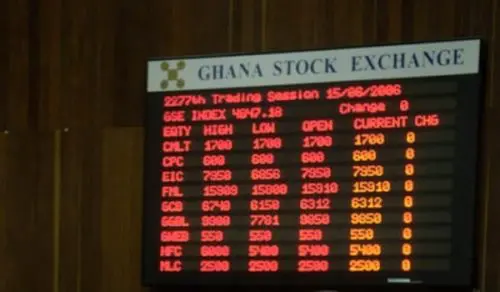
The Ghana Stock Exchange’s (GSE) Composite Index closed the week at 14,805.95 points on Friday, up 25.16 points on the day, even as trading volumes fell for a third straight session.

Friday’s close in the 7,250th trading session capped a week in which the benchmark GSE Composite Index (GSE-CI) rose from 14,707.14 points on Monday to its Friday level, a gain of roughly 99 points, or about 0.7 percent, over the five sessions. The index remains up 68.82 percent since the start of the year. The GSE Financial Stocks Index (GSE-FSI) held flat at 8,240.66 points on Friday after also closing unchanged from Thursday, though it carries a steeper 77.33 percent year to date gain.

Market capitalization rose alongside the index, climbing from GH¢286,098.45 million on Monday to GH¢287,123.51 million by Friday, an increase of just over GH¢1 billion across the week.

Activity told a different story. Daily trading volume slid from 4.98 million shares on Monday to 3.47 million by Friday, a drop of roughly 30 percent, even as value traded swung sharply from session to session, from a low of GH¢6.6 million on Friday to a high of GH¢18.3 million on Thursday. Across the full week, investors traded just over 20.6 million shares worth a combined GH¢67.1 million.

The week’s performance keeps Ghana on pace to remain Africa’s best performing major stock market this year. The GSE-CI crossed 15,000 points for the first time in March before easing back, and its year to date gain still outpaces regional peers such as Tanzania’s DSE All Share Index, Nigeria’s NGX All Share Index and the BRVM Composite Index, all of which have posted smaller gains in 2026. Analysts have tied the rally to a steadier cedi and a recovery in banking sector valuations following the country’s recent domestic debt restructuring.

No dividend announcements or listing notices were recorded on this week’s bulletin.

Spotify Names Kenyan Rapper tg.blk July Pick

Spotify has named Kenyan rapper and producer tg.blk, born Nyathigi Gatere, its EQUAL Africa artist for July, months after a stranger’s tip on SoundCloud helped launch her streaming career.

The 27 year old, who performs under the stage name tg.blk, built her sound largely on her own. She taught herself to rap and produce using GarageBand while studying environmental science and geographic information systems in the United States, then returned to Kenya to pursue music full time from Nairobi. Her break came when Nigerian artist 808 Vic heard one of her early tracks on SoundCloud and suggested she post it to Spotify, where a stranger’s playlist placement helped her audience start to grow.

That early momentum built into her 2021 single Love Being Used, which drew millions of streams and introduced her introspective, genre blending style, mixing rap, lo fi production, R&B and soul, to listeners beyond Kenya. Her 2024 EP ITS NOT THAT DEEP followed, along with the track gin and wine, which has now passed 10 million plays on Spotify alone. She released a new single, So Bad, in May.

Much of tg.blk’s audience and income now come from outside Kenya, a pattern she has linked to how streaming payouts work. Spotify subscriptions cost far less in Kenya than in markets such as the United States or Europe, and per stream earnings track those subscription prices, meaning listeners abroad generate more revenue per play than domestic ones do. She has said she reinvests those earnings into better equipment and video production.

Spotify’s EQUAL Africa programme spotlights women shaping the direction of African music and connecting them with new audiences across the continent and beyond. Phiona Okumu, the company’s head of music for Sub Saharan Africa, said tg.blk embodies “the fresh, daring and authentic spirit” reshaping East Africa’s alternative scene, pointing to her technical independence as a producer alongside her artistic voice.

Ghana To Host Africa’s Third Helmet Safety Summit

0

Ghana will host the third Safe African Helmet Initiative (SAHI) Summit in Accra in August, as motorcycle riders continue to account for roughly a third of the country’s road deaths.

Transport Minister Joseph Bukari Nikpe received the invitation during a courtesy call from a delegation of the FIA Foundation and Transaid, led by the Foundation’s Aggie Krasnolucka. About nine African countries are expected to send representatives to compare notes on helmet use and wider road safety enforcement.

The gathering builds on two earlier editions. Transaid and the FIA Foundation held an inaugural workshop in Kigali before hosting a second summit in Nairobi in July 2025, where Ghana took part for the first time alongside Benin, Cameroon and Senegal. Accra’s hosting role marks a step up from that first appearance to leading a regional conversation on its own soil.

The stakes for Ghana are steep by regional standards. The country records close to 26 road deaths per 100,000 people, above both the World Health Organization’s African regional average of 19 and the global average of 15. Motorcycles, meanwhile, have gone from a small share of road fatalities two decades ago to roughly a third of them today, a shift researchers link to weak helmet enforcement and the rapid growth of commercial motorcycle transport. Estimates of how much a proper helmet cuts that risk vary. Ghana’s National Road Safety Authority has cited a roughly 40 percent reduction in death risk, while WHO backed research puts approved helmets at more than six times more protective in a crash, underlining that even the lower estimate represents a significant reduction.

At the meeting, Krasnolucka described the Foundation’s helmet testing laboratory, built to separate certified helmets from counterfeit versions flooding African markets, and tied the initiative to the United Nations Decade of Action for Road Safety’s target of cutting global road deaths in half by 2030. “A quality helmet, properly worn, is the most significant measure to protect motorcyclists,” she has said of the wider programme.

Nikpe welcomed the invitation and pointed to the government’s nationwide education campaign around the Road Traffic (Amendment) Act, 2025 (Act 1153) and the Road Traffic Regulations, 2026 (L.I. 2519), both aimed at lifting compliance with helmet and other road safety rules. He committed the Ministry of Transport to continued work with the FIA Foundation and Transaid on road safety efforts nationally.

Meta Undercuts Rivals As AI Race Escalates

0

Meta began charging developers for its Muse Spark 1.1 model on Thursday, undercutting OpenAI and Anthropic, as a new report says it could overtake Google in six months.

The launch marks the first time Meta has charged for access to one of its artificial intelligence (AI) models through an application programming interface (API). The new Meta Model API lets developers use Muse Spark 1.1 free up to a set token limit, after which usage based fees apply at roughly a quarter of what OpenAI and Anthropic charge for comparable access. Meta is betting that price alone can pull developers toward a model that still trails the field on some measures. Muse Spark 1.1 remains behind Anthropic’s Mythos 5 and Fable 5, and OpenAI’s GPT 5.6, on coding benchmarks. Chief Executive Mark Zuckerberg said the goal is to “make sure the highest quality intelligence is available to everyone.”

The pricing move landed alongside a report from research firm SemiAnalysis arguing that Meta Superintelligence Labs, the unit Zuckerberg built after last year’s difficult Llama 4 release, could pass Google at the front of the AI field within six months. The firm said Google has “faded dramatically” over the past year while Meta rebuilt its AI operation almost from scratch.

SemiAnalysis pointed to a shift in how Meta gathers training data. Rather than depend on datasets bought from outside vendors, the company has reassigned about 3,000 engineers to build what the report calls a reinforcement learning environment factory, generating proprietary data for its AI agents in house. The firm argues that pipeline is not something rivals can easily buy or copy.

On hardware, SemiAnalysis expects Meta to have more AI computing capacity than OpenAI or Anthropic by the end of the year, once five gigawatt scale data centre clusters now under construction come online. The sites will run on Meta’s own AI Backbone network, letting the company split training workloads across facilities separated by long distances. That buildout sits inside a wider plan, reported to run as high as 145 billion dollars in AI infrastructure spending this year, with Meta said to be targeting seven gigawatts of AI capacity in 2026 and 14 gigawatts in 2027.

Production of Meta’s own AI chip, code named Iris and built with Broadcom and TSMC, is set to begin in September after reportedly clearing six weeks of bug testing, backed by supply agreements with Samsung, SanDisk and Sumitomo Electric.

Meta has paired that infrastructure spending with heavy recruitment, including a 14.3 billion dollar investment in Scale AI that helped bring in senior researchers from OpenAI, Anthropic and Scale itself. Meta shares rose about 4 percent on Thursday after recovering from early losses, while Alphabet shares fell roughly 1 percent.

Musk Praises Anthropic, Still Sells It Compute

0

Elon Musk said Thursday that Anthropic is “obviously” the current leader in artificial intelligence (AI), even as his own company continues supplying the Claude developer with computing power under a reported 40 billion dollar deal.

Musk made the remark on X, replying to a post about competition among top AI labs. “They are obviously currently the leader in AI,” he wrote, adding that no rival had matched Anthropic’s newest Mythos and Fable models and that a Mythos 2 release would likely follow soon. He offered no technical basis for the claim. The comment reversed a September 2025 post in which Musk said winning had never been a realistic outcome for Anthropic.

The praise sits awkwardly alongside a business relationship that puts Anthropic among the largest customers of Musk’s own computing infrastructure. Anthropic reportedly leases capacity on the Colossus 1 supercomputer, operated by Musk’s newly renamed SpaceXAI, for about 1.25 billion dollars a month through May 2029, a deal said to be worth roughly 40 billion dollars in total. Colossus is reported to run on more than 220,000 Nvidia graphics processing units (GPUs) drawing about 300 megawatts of power. When one X user suggested Musk could cripple Anthropic by cutting off that supply, Musk said he would not use the leverage to hurt a competitor.

Anthropic was founded in 2021 by former OpenAI executives led by Chief Executive Dario Amodei and has built its position through the Claude family of models, gaining particular traction among software developers. Claude Opus 4.5, released late last year, drew wide praise for coding performance and pulled users away from rival assistants, some of whom began describing themselves as “Claude pilled.” The company’s Claude Code assistant has since gained further ground in Silicon Valley, and Claude Cowork extended its reach to non-technical business users automating research and writing tasks.

Anthropic confidentially filed for a United States initial public offering (IPO) in June, after a funding round valuing the company at about 965 billion dollars, a figure that would place any resulting listing among the largest in AI industry history. The company has also added former Federal Reserve chair Ben Bernanke to its oversight trust as it prepares for closer public scrutiny.

Musk’s own AI unit released an updated Grok model on Wednesday, a day before his comments on Anthropic. Independent evaluator Artificial Analysis currently ranks Grok as the top model built outside Anthropic, with three Anthropic models still ahead of it overall.

Google’s AI Ad Labels Rely On Honesty

0

Google began rolling out an AI disclosure panel for ads on Search, YouTube and Discover on Thursday, though third party AI use depends on advertisers self reporting it.

The feature, called How This Ad Was Made, sits inside the existing My Ad Center menu that users reach through the three dot icon on an ad. It appears only on ads Google has flagged as containing artificial intelligence (AI) generated or edited material, not on every ad shown. Google’s vice president for ads privacy and safety, Keerat Sharma, announced the rollout in a blog post on Thursday, saying the company will automatically add a disclosure to each qualifying ad’s panel when its own AI tools were used.

That automatic disclosure only covers ads built with Google’s generative AI advertising tools. For campaigns built using AI systems from other companies, Google is giving advertisers a manual toggle to declare AI involvement themselves. Google has not said it will independently verify those declarations, leaving compliance largely dependent on advertisers choosing to flag their own work.

Google said it already embeds a digital watermark called SynthID in content produced by its own generative tools and uses the C2PA content provenance standard to attach machine readable metadata to AI generated images and video. Those systems help Google detect its own AI output automatically, but they offer no way to catch undisclosed AI use in ads built entirely outside Google’s tools.

The rollout lands weeks before transparency obligations in the European Union’s Artificial Intelligence Act, known as the EU AI Act, are due to take effect in August, and as regulators in India and New York already require some AI disclosure in advertising. Industry groups have pushed to exempt routine AI assisted commercial ads from those EU rules, arguing they differ from more sensitive synthetic media. Meta already labels ads made with its own AI tools and requires similar third party disclosures on Facebook and Instagram.

Google said its ban on misleading and deceptive advertising applies regardless of whether AI was involved in producing it, and that the company had previously required AI disclosure only for election related ads in certain jurisdictions. The new panel extends that requirement in form, if not yet in enforcement, to advertising generally.

Google Opens AlphaEvolve Coding Tool To Businesses

0

Google made its AlphaEvolve code optimisation agent generally available to all Google Cloud customers on Thursday, following results including a 10 percent routing gain for logistics firm FM Logistic.

The tool, built on Google’s Gemini models, does not write software from a blank page. Instead it takes an existing algorithm, along with a scoring method the customer defines, then generates and tests thousands of variations until it finds one that measurably outperforms the original. Google calls the process evolutionary because each improved version becomes the starting point for the next round of changes.

Early access customers named by Google put numbers behind that pitch. FM Logistic used the tool to refine warehouse routing and cut travel distances by more than 15,000 kilometres, a gain of 10.4 percent on what the company called an already tightly optimised baseline. Group Chief Information Officer Rodolphe Bey said the improvement meant “faster fulfillment, improved working conditions for our teams.”

Dutch retailer Coolblue applied AlphaEvolve to its 28 day demand forecasting pipeline and improved accuracy by more than 5 percent after roughly 200 iterations, according to Google, by refining feature selection and combining several forecasting models. Chipmaker Infineon has been testing the system across stages of chip development, including surrogate modelling, while BASF used it to build a supply chain digital twin after earlier attempts with fixed rule based models failed.

Google said it has also turned the tool on its own infrastructure. Inside the company, AlphaEvolve has helped design circuits for newer Tensor Processing Units and sped up a key step in Gemini’s own training process by 23 percent, contributing to a 1 percent cut in overall training time, according to the company’s research publications on the system.

The wider release follows a private preview that began in December 2025. Google previously named BASF, JetBrains and Kinaxis among the organisations that used that early version to work through problems the companies described as previously unsolved. Access now runs through the Gemini Enterprise Agent Platform, where AlphaEvolve sits alongside Google’s other enterprise agent tools rather than as a standalone product.