

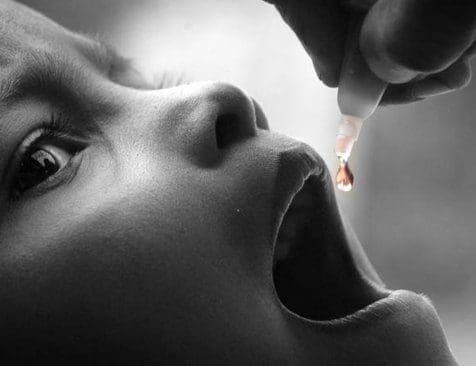
Senior health officials from across the Eastern Mediterranean gathered in Cairo on Monday evening for a high level meeting on polio eradication, acknowledging both progress made and the fragility of gains against a disease that continues claiming victims in the region. The gathering preceded the 72nd session of the WHO Regional Committee for the Eastern Mediterranean, which opened Tuesday and runs through Thursday.
Dr Hanan Balkhy, WHO Regional Director for the Eastern Mediterranean, welcomed ministers and health leaders to the “United to End Polio” event with a frank assessment. While praising collective efforts over decades, she noted that the region still carries the remaining global burden of wild poliovirus, which remains endemic only in Afghanistan and Pakistan.
Recent outbreaks of variant poliovirus in Djibouti, Gaza, Sudan, Somalia, and Yemen underscore vulnerabilities in the broader eradication effort. These outbreaks stem from circulating vaccine derived poliovirus, which can emerge in communities with low immunization coverage when the weakened live virus in oral polio vaccine circulates for extended periods.
The persistence of polio in the Eastern Mediterranean contrasts sharply with elimination achievements elsewhere. Most of the world has been certified polio free, making the continued transmission in Afghanistan and Pakistan increasingly conspicuous. Both countries reported increased wild poliovirus cases in 2024, with Pakistan documenting 74 cases and Afghanistan 25, compared to just six cases per country in 2023.
Current 2025 figures show 13 wild poliovirus cases reported through July, one from Afghanistan and eight from Pakistan. These numbers, while lower than 2024, demonstrate that transmission has not been interrupted despite intensive vaccination campaigns and surveillance efforts.
Dr Balkhy acknowledged financial support from Saudi Arabia and the United Arab Emirates, along with recent pledges from Qatar and Kuwait. She also recognized Rotarians, who for over 30 years have championed the fight to end polio worldwide through fundraising and advocacy that has contributed billions of dollars to eradication efforts.
Yet she framed the gathering against a backdrop of “shrinking budgets and competing global priorities,” warning that success depends on sustained commitment and shared responsibility. The Global Polio Eradication Initiative has developed a new Action Plan in coordination with member states and partners, designed to create a more agile, resilient, and accountable programme better equipped for today’s complex realities.
The Regional Subcommittee for Polio Eradication and Outbreaks has served as a mechanism for member states to coordinate financial, political, and technical commitments. This coordinating structure reflects recognition that polio eradication requires cross border cooperation, particularly between Afghanistan and Pakistan where virus transmission occurs across porous borders.
Conflict and insecurity complicate eradication efforts in several affected countries. In Gaza, a polio vaccination campaign during a humanitarian pause last year reached over 560,000 children despite ongoing hostilities. Sudan faces challenges maintaining immunization coverage amid civil conflict. Afghanistan’s security situation affects access to some populations, though cooperation with Taliban authorities has improved geographic reach compared to previous years.
The variant poliovirus outbreaks highlight how gaps in routine immunization create opportunities for virus circulation. When enough children miss vaccinations, even the weakened virus strains in oral polio vaccine can regain neurovirulence and cause paralysis. Addressing these outbreaks requires rapidly boosting population immunity through supplementary campaigns while strengthening routine immunization systems.
Dr Balkhy emphasized that polio eradication remains one of WHO’s highest priorities, a designation that carries implications for resource allocation and organizational focus. The disease’s continued presence in the Eastern Mediterranean means no region can confidently claim permanent protection until global eradication is achieved, as imported cases can spark outbreaks wherever immunization coverage drops.
The gathering provided a platform for member states, Global Polio Eradication Initiative partners, and donors to discuss collective efforts to stop transmission of both wild and variant polioviruses. These conversations occur against awareness that previous predictions of imminent eradication have proven premature, breeding caution about overly optimistic timelines.
Financial sustainability poses ongoing challenges. International public health funding faces pressures from multiple competing priorities including pandemic preparedness, non communicable diseases, and health systems strengthening. Maintaining donor commitment to polio eradication requires demonstrating continued progress and articulating consequences of allowing the virus to persist.
The Eastern Mediterranean’s role as the remaining reservoir of endemic wild poliovirus makes the region’s commitment crucial to global eradication prospects. If transmission continues in Afghanistan and Pakistan, the disease could potentially spread to other countries where immunization coverage has declined, undoing decades of progress.
Dr Balkhy concluded her remarks by emphasizing the need to remain “united in purpose, focused on results, and unwavering in our resolve to end polio once and for all.” The session aimed to reinforce political commitment and coordination necessary to translate that resolve into the operational realities of vaccination campaigns, surveillance, and community engagement that actually stop virus transmission.
Whether this gathering generates renewed momentum or simply reiterates familiar commitments will become apparent through epidemiological data in coming months. For now, polio cases continue occurring in the Eastern Mediterranean, each one representing both a child’s suffering and evidence that eradication remains unfinished business.

