

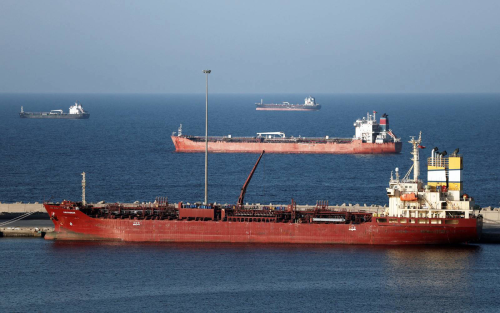
Oil prices edged lower on Friday and were on course for their steepest weekly decline in six months, as U.S. President Donald Trump’s decision to extend a pause on strikes against Iranian energy plants raised cautious hopes of a diplomatic path out of a four-week war that has severely disrupted global energy supply.
Brent crude fell on Friday while West Texas Intermediate (WTI) futures slipped below $94 per barrel, with both benchmarks down around 4.6 percent for the week despite Brent surging 5.7 percent and WTI gaining 4.6 percent on Thursday, when markets swung sharply on fears of fresh escalation.
WTI has jumped 40 percent since the United States and Israel launched strikes on Iran on February 28, while Brent has climbed more than 48 percent since the war began.
The week’s retreat was driven by Trump’s announcement on Thursday that he was extending his pause on threatened strikes against Iranian energy infrastructure until April 6, saying talks with Tehran were going well. Iran, however, has denied that direct talks are taking place, and an Iranian official told Reuters that a 15-point U.S. ceasefire proposal, delivered to Tehran through Pakistan, was reviewed in detail by senior Iranian officials but dismissed as one-sided and unfair.
Analysts cautioned against reading too much into the weekly pullback. “Despite talks of de-escalation, oil is trading on war longevity, not just headlines. Any direct damage to oil infrastructure or prolonged conflict could force markets to rapidly reprice higher,” said Priyanka Sachdeva, analyst at Phillip Nova.
The threat to prices from a wider conflict has not receded. While Trump announced the pause on energy infrastructure attacks, the U.S. has simultaneously sent thousands of troops to the Middle East, with Trump weighing whether to deploy ground forces to seize Kharg Island, Iran’s strategic oil export hub.
The scale of the supply disruption remains historically unprecedented. The war has removed 11 million barrels of oil per day from global supply, with the International Energy Agency describing the crisis as more severe than the combined impact of the two oil shocks of the 1970s and the Russia-Ukraine war on gas.
Price forecasts for the months ahead are sharply split. Analysts at Macquarie Group said that if the war winds down soon, oil prices will fall quickly but still remain near pre-conflict levels. However, they warned prices could rise to $200 per barrel if the conflict drags on to the end of June.
“With each passing day, market pressure is building. Asian countries are tapping buffer stocks and weighing demand adjustments,” said Mukesh Sahdev, founder and chief executive of consultancy XAnalysts.

