

Two peer-reviewed studies published in 2025 have added measurable academic weight to Ghana’s growing push toward urban and backyard farming, with findings pointing to meaningful gains in household food access, dietary quality, and economic resilience, particularly for women and low-income urban residents.
The first study, by Quaye and colleagues, published in Food and Energy Security by Wiley Online Library, examined integrated crop-livestock farming systems across urban households in the Kumasi Metropolis. Its findings show that the integrated crop-livestock farming system increases urban households’ access to food by 84 percent compared to households without a farm, 48 percent compared to households cultivating only crops, and 37 percent compared to those keeping only livestock.
On dietary variety, the same system was found to enhance dietary diversity by 12 percent against households without a farm, 7.6 percent against crop-only households, and 16 percent compared to livestock-only households. The study also found that access to vacant land and credit were key structural enablers, with households lacking land remaining heavily dependent on purchased food at rising market prices.
The second study, by Sarpong, Dinye, Donbein, and Amoako, published in the Asian Journal of Agricultural and Horticultural Research, takes a wider view. Drawing on a systematic review of peer-reviewed articles, empirical studies, and policy documents published between 2000 and 2024, the authors find that urban agriculture makes a significant contribution to food security by improving access to fresh produce, enhancing household nutrition, and increasing income, particularly among women and informal workers.
The study also finds that urban agriculture bolsters environmental sustainability through waste recycling, urban greening, and climate resilience, while recommending that urban agriculture be integrated into urban planning frameworks, with land rights secured for farmers and financial and technical support expanded.
The timing is significant. President John Mahama’s “Feed Ghana” programme, launched in 2025, explicitly incorporates urban and peri-urban agriculture as a pillar of the Yiridya vegetable development initiative, aimed at cutting dependence on vegetable imports from neighbouring countries. The programme encourages households and schools to establish gardens and community growing spaces. The research findings now provide an evidence base that could sharpen that policy direction.
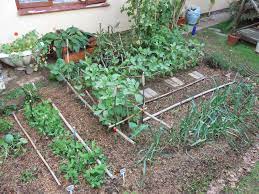
Urban agriculture is already a feature of Ghana’s cities, with backyard gardens playing a documented role in supplying fruits, herbs, and eggs, with their contribution to household food security estimated in terms of savings on food expenditure and direct income from sales.
However, both studies are clear that structural barriers remain. Challenges including land tenure insecurity, unsafe irrigation practices, weak institutional support, and limited policy integration continue to restrict the reach and scale of urban agriculture in Ghanaian cities.
For policymakers, the research presents a practical case for embedding urban farming more formally into city planning frameworks and broadening access to land and credit for urban producers, steps that both studies argue could translate household-level gains into a more durable contribution to national food security.

