

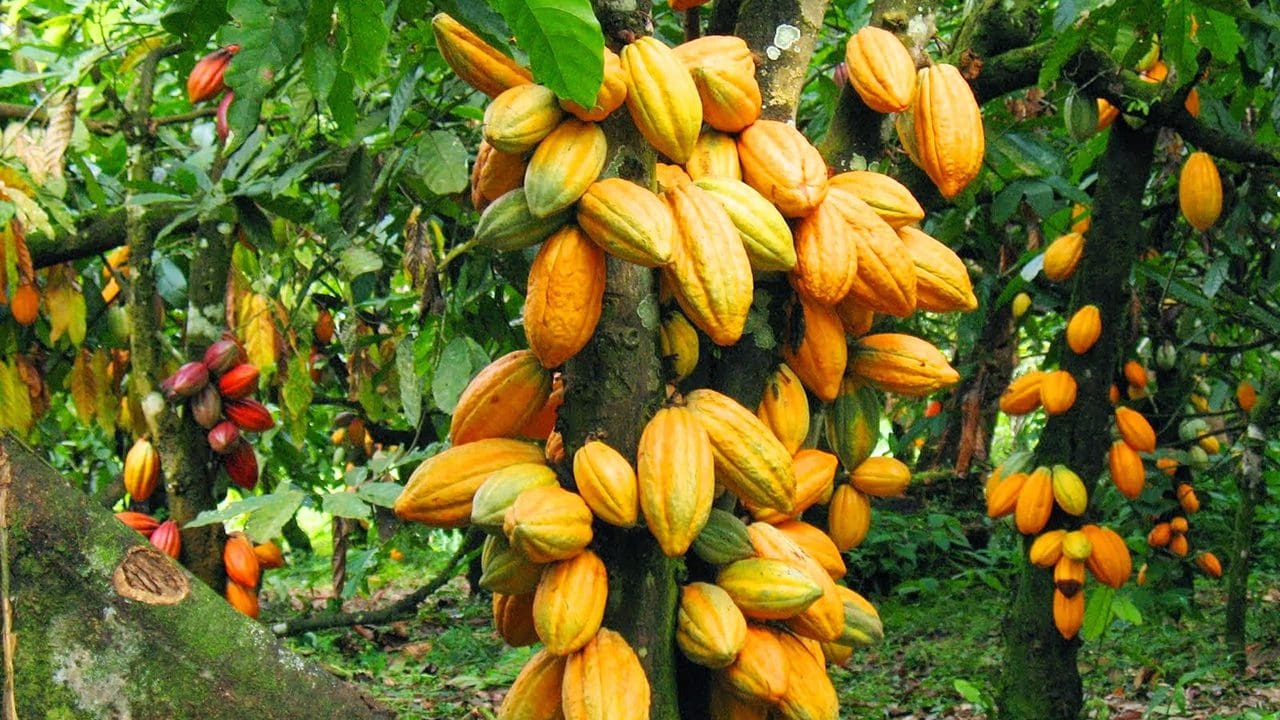
Edward Kwame Yeboah, the 2025 National Best Cocoa Farmer, appealed to Ghanaian youth to quit illegal mining and embrace cocoa farming as he warned that galamsey is destroying farms and threatening food security.
Yeboah made the appeal during a recent engagement with COCOBOD leadership in Accra. He stated that cocoa farming provides long term economic security and protects the environment when done properly with support from COCOBOD. The farmer urged youth to embrace cocoa farming which offers sustainable income and preserves land for future generations.
According to Yeboah, illegal mining destroys farmlands, water bodies and future opportunities unlike cocoa farming which has taken care of his family and given him national recognition. Farmers outlined several operational challenges including input costs and infrastructure deficits during the meeting with COCOBOD officials. They appealed for assistance addressing these constraints affecting cocoa production nationwide.
Ghana’s cocoa sector faces mounting pressures from illegal mining activities known locally as galamsey. The Ghana Civil Society Cocoa Platform highlighted the detrimental impact of galamsey on cocoa farming in major producing regions including Ashanti and Western South. Mining activities cause significant land degradation, diminishing fertile ground available for cocoa cultivation.
COCOBOD lowered its 2024/2025 production forecast to a maximum of 600,000 tons after initially projecting 650,000 tons at the season’s start in October 2024. Cocoa arrivals at Ghanaian warehouses neared 570,000 tonnes as of May 2025, missing 80,000 tonnes to reach the original target. The shortfall marks a dramatic decline from peak seasons when Ghana produced between 900,000 and 1,000,000 metric tons annually.
Climate change compounds production challenges through unpredictable rainfall, drought and extreme heat events that undermine bean development. Swollen shoot disease has affected approximately 81 percent of the Western North region which handles most of Ghana’s cocoa production. The disease amounts to 330,456 hectares out of 410,229 hectares in the region according to COCOBOD’s Cocoa Health and Extension Division.
Ghana maintains its position as the world’s second largest cocoa producer, providing direct employment to over 800,000 farming households. The sector contributes approximately 20 percent of Ghana’s agricultural GDP and remains a critical foreign exchange earner after gold. However, productivity has suffered losses over recent years due to multiple challenges including aging farms, disease pressure and economic instability.
COCOBOD Chief Executive Dr. Ransford Abbey assured farmers that despite current operational and financial challenges, hope remains for Ghana’s cocoa sector. He acknowledged concerns raised by farmers regarding production challenges and pledged continued engagement to address them. The Board remains committed to improving farmer welfare and sustaining Ghana’s reputation as a global producer of premium quality cocoa.
Abbey explained COCOBOD’s decision to suspend cocoa road projects nationwide as a necessary step to stabilize the Board’s finances. He reaffirmed commitment to restoring financial stability, prioritizing farmer support and ensuring long term sustainability of Ghana’s cocoa sector. The Board failed to secure foreign bank loans for the 2024/2025 season for the first time in over three decades.
Farmers also face smuggling challenges along borders with Côte d’Ivoire and Togo. A disparity in farm gate prices between Ghana and neighboring Côte d’Ivoire encouraged smuggling, leading to lost volumes in official channels and reduced tax revenues. Some local buyers in eastern Ghana’s Volta and Oti regions have not graded a single cocoa bean this season due to smuggling.
The government’s recovery strategy hinges on accelerated replanting with disease resistant varieties, targeted extension services and upward adjustments in farm gate prices. COCOBOD collaborates with research institutions to distribute high yielding, disease resistant seedlings to farmers. The Board provides inputs, training and support through extension officers and field schools nationwide.
Over 60 percent of Ghana’s cocoa farms are now enrolled in sustainability programs to meet industry standards. The programs focus on agroforestry systems, integrated pest management and improved soil fertility techniques. Ghana’s cocoa is globally recognized for superior flavor and aroma, commanding premium prices from chocolatiers and manufacturers.
The 2025 National Award winning cocoa and coffee farmers met with COCOBOD executives alongside Ghana Cocoa, Coffee and Sheanut Farmers Association officials. The engagement focused on operational challenges, farmer welfare and sector sustainability amid production headwinds. Yeboah’s call for youth involvement in cocoa farming reflects broader concerns about aging farmer populations and generational renewal in the sector.

