

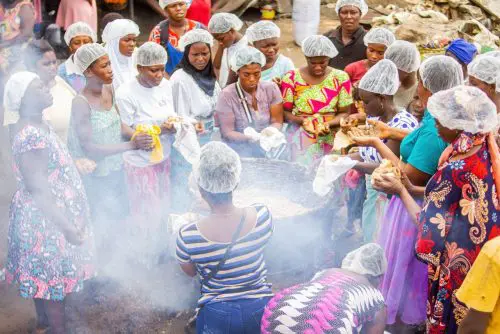
Across Africa, businesses converting waste into valuable products are winning praise, but a critical question remains unanswered: what happens inside the production process itself?
Waste valorization, the practice of transforming waste materials into useful goods, has become a celebrated pillar of Africa’s growing circular economy. Entrepreneurs across the continent are recycling agricultural by-products, building eco-friendly manufacturing lines, and positioning their brands as agents of environmental change. The momentum is real and the intentions are genuine.
Yet sustainability advocates, including those at the forefront of Ghana’s green business space, are beginning to sound a quiet alarm.
Creating value from waste while releasing excessive smoke, harmful chemicals, or polluted water during production does not complete the sustainability equation. It simply relocates the environmental problem.
Esther Kyerewaa Twumasi, Miss Agriculture Ghana and founder of SkinVive, argues that the conversation must move beyond finished products and into the systems that produce them. Writing in a new opinion piece, she identifies sourcing practices, energy use, waste management, supplier accountability, and environmental education as dimensions most sustainable businesses continue to overlook.
“Sustainability must be intentional and holistic,” she writes.
Her call is not for perfection but for continuous improvement. At SkinVive, that has meant reexamining how agricultural waste is sourced and how smoke produced during soap manufacturing can be reduced before it enters the atmosphere.
The argument lands with broader weight across developing economies where green entrepreneurship is growing faster than the regulatory and operational frameworks designed to govern it. Many small and medium enterprises adopt sustainability as a marketing identity without auditing the environmental cost of their own production lines.
Twumasi positions responsible production as a long-term obligation to communities, ecosystems, and future generations. The future of circular economy businesses, she contends, will be determined not only by the innovation behind a product but by the integrity of the process used to make it.
For Ghana’s growing class of sustainable entrepreneurs, that is a challenge worth taking seriously.

