

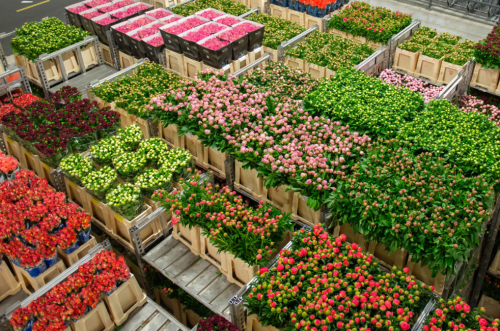
Kenya’s floriculture sector has suffered losses of at least $4.8 million in three weeks as fighting in the Middle East disrupts the air cargo networks that keep its most time-sensitive exports moving, with weekly losses now projected to climb past $1.4 million if the conflict persists.
The Kenya Flower Council (KFC) confirmed that of the total losses, approximately $2.1 million represents flowers that perished before reaching market, while $2.7 million reflects reduced prices caused by delayed arrivals and compromised quality.
The damage runs deeper than direct market access. While the Middle East accounts for roughly 15 percent of Kenya’s national flower exports, Gulf-based carriers handle a substantial share of global air cargo for perishable products, meaning the disruption has also hit shipments bound for Europe, Kenya’s largest market. Air cargo capacity has fallen by up to 30 percent, pushing freight rates to $5.40 per kilogram.
The consequences are visible at farm level. At Isinya Flower Farms, located 56 kilometres south of Nairobi, Marketing Manager Anantha Kumar said daily exports had collapsed from 450,000 stems to between 150,000 and 200,000 stems, meaning nearly half of production is being discarded. “With the current freight rates, customers are not able to buy,” Kumar told the Associated Press, adding that European carriers were charging roughly double the normal rate per kilogram, while most Middle Eastern carriers had suspended operations entirely.
KFC Chief Executive Clement Tulezi warned that farms most exposed to Middle Eastern markets had recorded revenue declines of up to 75 percent. Shipment delays of up to 48 hours, alongside widespread flight cancellations and rerouting, have eroded both shelf life and auction prices at destination markets. Tulezi described the $5.80 per kilogram freight rate recorded last week as the highest the industry had seen in a decade.
Industry leaders are urging the Kenyan government to facilitate direct cargo flights to Europe, bypassing disrupted Gulf routes, to cushion growers and protect the country’s access to its primary export market. Kenya’s horticulture sector is valued at over $800 million annually and supports up to half a million jobs directly. Growers warn that a prolonged disruption could replicate the scale of economic damage experienced during the Covid-19 pandemic, when global supply chains collapsed and farms were forced to cut production sharply.

