

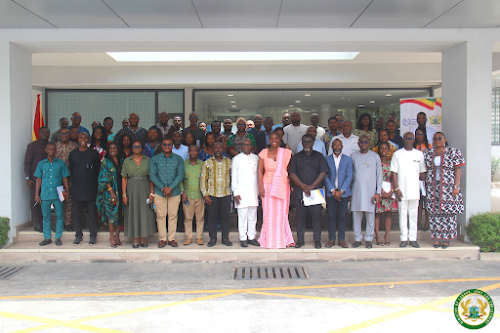
Ghana has officially launched its Decent Work Country Programme (DWCP) for 2026 to 2030, establishing a national policy framework to coordinate efforts on job creation, social protection and labour standards over the next five years.
The programme, developed jointly with the International Labour Organization (ILO) and Ghana’s tripartite partners representing government, employers and workers, was unveiled in Accra and is positioned as a direct response to persistent challenges in the labour market, including high youth unemployment and structural inequality.
Chief Director of the Ministry of Labour, Jobs and Employment, Hamidu Adakurugu, told the launch gathering that the framework provides a clear and coordinated approach to employment policy, designed to improve outcomes across the workforce and strengthen institutional capacity to deliver on those goals.
The DWCP is built around three pillars: expanding decent and sustainable job opportunities, broadening and digitising social protection coverage, and reinforcing workers’ rights through updated labour regulations. These priorities align with the government’s broader economic agenda, which includes a pledge to create more than two million jobs by 2028, at a time when an estimated 300,000 young Ghanaians enter the labour market each year.
ILO Country Director Dr. Vanessa Phala described the programme as a forward-looking framework designed to accelerate technical cooperation and mobilise resources for reform within Ghana’s labour ecosystem.
The DWCP’s development has a long lead-in. A comprehensive diagnostic study was initiated in 2018 and was followed by extensive stakeholder consultations, though progress was interrupted by the COVID-19 pandemic and subsequent revisions to global ILO guidelines. The framework was revisited and validated in 2024, bringing it in line with current labour market realities before the formal launch.
A dedicated steering committee will oversee implementation, with periodic evaluations planned to measure impact and feed into future policy decisions. Officials and stakeholders at the launch called on the media and civil society to support public awareness of the programme, particularly among vulnerable groups it is designed to reach.
Ghana’s tripartite system, which brings together government, the Ghana Employers’ Association (GEA), the Trades Union Congress (TUC) and the Ghana Federation of Labour (GFL), was held up at the launch as a strong foundation for consensus-driven implementation, with the ILO describing it as a model of collaborative policy development in the West African context.

