

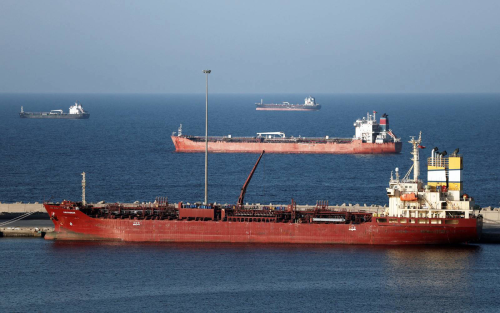
The head of the Food and Agriculture Organization (FAO) has warned that the world is facing a narrowing window to prevent the Strait of Hormuz crisis from evolving into a deep global food security emergency in 2026 and 2027, cautioning that the most damaging consequences of current supply disruptions may not arrive for months.
FAO Director-General QU Dongyu delivered the warning on Tuesday at a special event on the Middle East crisis during Rome Nutrition Week 2026 at FAO headquarters, organised by the Government of Spain. Spanish Prime Minister Pedro Sánchez, World Food Programme (WFP) Executive Director Cindy McCain and International Fund for Agricultural Development (IFAD) President Alvaro Lario were among those present.
Qu framed the crisis as something qualitatively different from past disruptions. Severe restrictions on movement through the Strait of Hormuz have already hit flows of oil, liquefied natural gas, sulphur and fertilizers, driving up agricultural input costs and placing upward pressure on food prices across all regions. But the harder consequences, he argued, are still forming.
“We have a window to act, but that window is narrowing,” he said.
The danger lies in the agricultural cycle. Farmers who cannot afford inputs today will plant less, fertilize less and harvest less in the months ahead. That deferred damage feeds into 2027 production figures, long after any near-term diplomatic resolution of the conflict. For import-dependent countries, particularly across Africa and parts of Asia, those impacts are arriving on top of existing debt distress, climate shocks and constrained public budgets.
Qu also raised a dimension largely absent from the energy and trade focus of earlier reporting: the nutritional quality of food itself. When soils are left without adequate inputs, staple crop yields carry reduced protein content and lower micronutrient density. Fruits and vegetables that anchor healthy diets become scarcer and more expensive. He said protecting the nutritional integrity of agrifood systems must remain a policy priority even during supply shocks.
FAO has issued several specific policy responses. It is calling on governments to keep trade open and avoid export restrictions on fertilizers and agricultural inputs, arguing such measures harm the poorest importing countries most. It also recommends shifting away from exclusively fertilizer-intensive emergency packages toward adaptive approaches including inter-cropping, nitrogen efficiency improvements and crops with lower synthetic fertilizer dependency. The organization called for targeted social protection for the most vulnerable populations and urged international financial institutions to provide liquidity support to farmers before the next agricultural cycle begins.
The Agricultural Market Information System (AMIS), which FAO coordinates, has been activated as part of the monitoring response. Qu added that the crisis has exposed the fragility of agrifood systems built around a narrow set of trade bottlenecks and fertilizer suppliers, arguing for more diversified logistics corridors, regional trade integration and strategic reserves as structural fixes. A potentially strong El Niño cycle could compound the damage further if the current vulnerabilities remain unaddressed.

