
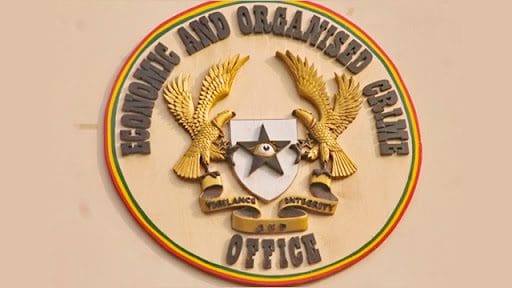
Ghana’s Economic and Organised Crime Office (EOCO) plans to launch nationwide lifestyle audits in November 2025, targeting politicians, entertainers, and social media personalities suspected of living beyond their declared means.
The initiative, which operates under the Economic and Organised Crime Office Act, 2010 (Act 804), represents a significant escalation in Ghana’s anti-corruption efforts. It comes at a time when public scrutiny of unexplained wealth has intensified, particularly following recent high-profile cases involving luxury assets and questionable income sources.
According to sources familiar with the exercise, investigators will examine individuals whose visible assets, including expensive vehicles, real estate holdings, and extravagant spending patterns, appear inconsistent with their known income streams. The audits won’t be random. They’ll focus on people whose lifestyles have raised red flags within financial monitoring circles.
“Anyone unable to explain the legitimate origins of their wealth could face legal action,” an EOCO source disclosed, speaking on condition of anonymity. The agency possesses extensive powers under Act 804 to investigate, freeze assets, and pursue prosecutions for financial crimes.
The timing reflects broader momentum in Ghana’s accountability landscape. Earlier this year, international law enforcement actions spotlighted concerns about illicit financial flows in Ghana, prompting renewed calls for stronger measures against unexplained wealth. Some legal experts have even advocated for constitutional reforms to enhance lifestyle audit capabilities.
For celebrities and influencers, the announcement has sparked mixed reactions. While some public figures have welcomed greater transparency, others question whether the exercise will apply equally across all sectors of society. Past proposals for lifestyle audits generated debate about whether investigations should prioritize political officeholders over entertainment personalities.
The exercise forms part of Ghana’s commitment to strengthening institutional integrity and promoting transparency across both public and private sectors. EOCO has emphasized that cooperation from the general public will be crucial, encouraging citizens to report suspicious wealth accumulation through official channels.
What makes this initiative particularly noteworthy is its comprehensive scope. Unlike previous anti-corruption measures that primarily targeted public officials, these audits will extend to private individuals whose wealth sources warrant investigation. This broader approach signals a shift in how Ghana’s authorities tackle financial crimes.
The agency’s powers under Act 804 include the authority to search premises, seize suspicious assets, and, upon conviction, confiscate proceeds believed to stem from criminal activity. These capabilities give EOCO substantial leverage in pursuing investigations, though the exercise must still adhere to due process requirements and respect individual rights.
As November approaches, speculation is already building about which high-profile individuals might face scrutiny. Social media discussions have highlighted numerous cases where public figures display wealth that appears disproportionate to their known business ventures or employment income.
For Ghana’s anti-corruption framework, the lifestyle audits represent a critical test. Success could establish a precedent for sustained accountability measures, while implementation challenges might reveal gaps in existing legislation or enforcement capacity.
EOCO officials have assured the public that investigations will be conducted professionally and transparently, with findings subject to legal standards of evidence. However, they’ve also made clear that the agency won’t hesitate to pursue cases where credible indicators of financial impropriety exist.
The initiative aligns with international best practices for combating money laundering and economic crimes, drawing on models used successfully in other jurisdictions. Whether it achieves its stated objectives will depend on several factors, including political will, institutional capacity, and public support for accountability measures.

