

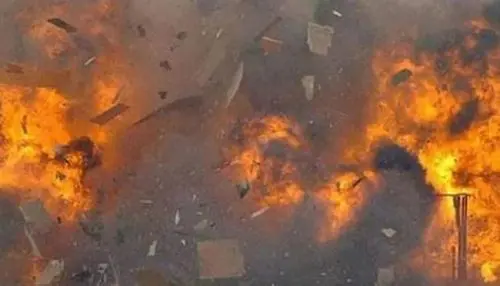
At least 20 people have been killed and dozens more injured after an explosive device was detonated on a passenger bus travelling along the Pan-American Highway in the municipality of Cajibío, in southwestern Colombia, as a wave of coordinated attacks swept the Cauca region on Saturday.
Cauca Governor Octavio Guzmán confirmed the updated death toll on Sunday, reporting 15 women and five men among the victims. The blast, which struck the El Túnel sector, left 36 others injured, three of whom are in intensive care, with five minors among the wounded. Colombia’s Institute of Legal Medicine deployed forensic specialists to assist with victim identification.
“We are facing a terrorist escalation that demands immediate responses,” Guzmán said, calling on national authorities to guarantee security and condemning what he described as an indiscriminate attack on civilians.
Colombia’s Defence Minister Pedro Sánchez visited the site of the explosion to coordinate rescue efforts, as authorities convened a national-level security council to address the crisis. General Commander of Colombia’s Military Forces Hugo Alejandro López Barreto described the assault as part of a broader “wave of attacks,” disclosing that at least 26 violent incidents had struck the departments of Cauca and Valle del Cauca within 48 hours.
Other attacks recorded in the same period included a shooting at a police station in Jamundí, the interception of three explosive-laden drones targeting a civil aviation radar facility in El Tambo, and two car bomb detonations near military installations in the cities of Cali and Palmira.
Colombia’s armed forces have attributed the Cajibío bombing to dissident factions of the Revolutionary Armed Forces of Colombia (FARC), led by Néstor Gregorio Vera Fernández, also known as “Iván Mordisco.” FARC formally disarmed under a 2016 peace agreement, but splinter groups that rejected the deal have continued armed insurgency, particularly in rural areas where competition over cocaine trafficking routes drives ongoing violence.
President Gustavo Petro condemned the attack, calling those responsible terrorists and demanding a global security response against the armed networks behind the assault. He noted that many of the Cajibío victims were indigenous people. Authorities have offered a reward of over one million US dollars for information leading to the capture of a suspect known as “Marlon,” identified as the local dissident group leader.
Cauca and neighbouring Valle del Cauca form a critical corridor for illegal armed groups competing for control of drug smuggling routes through the port of Buenaventura, a principal gateway for cocaine exports to Central America and Europe.

