

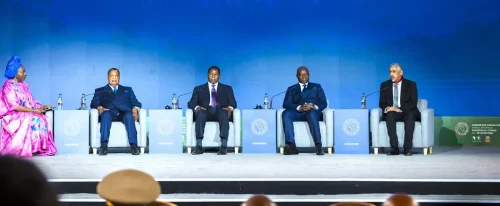
Three African heads of state used the opening presidential dialogue of the African Development Bank Group (AfDB) 2026 Annual Meetings to present concrete national economic strategies, moving the conversation at this year’s gathering from broad financing aspirations to specific blueprints for transforming natural assets into long-term growth.
The dialogue, held Tuesday at the Kintele Conference Centre in Brazzaville before an audience of senior government officials, central bank governors, development partners and private sector leaders, followed the opening ceremony of the 61st Board of Governors meeting. This year’s theme is “Mobilising Africa’s Development Financing at Scale in a Fragmented World.” The panellists were Gabon’s President Brice Oligui Nguema, Central African Republic (CAR) President Faustin-Archange Touadéra, host President Denis Sassou Nguesso of the Republic of Congo and AfDB Group President Dr Sidi Ould Tah.
Nguema outlined Gabon’s decision to monetise its vast forest reserves through a national carbon credit framework, backed by a dedicated agency mandated to market environmental credits on international markets. He tied this directly to the development of ecological tourism, arguing that conservation and economic activity are not in conflict when structured properly. He also called for greater compensation from the international community for Congo Basin countries actively preserving forest ecosystems that provide global climate benefits.
“Africa’s greatest asset is not our mineral resources; it’s our youth, our human capital,” he said, drawing applause from the audience.
Congo’s President Sassou Nguesso acknowledged the continuing role of hydrocarbons in his country’s revenues while pressing the case for diversification. He described plans to develop fertiliser manufacturing using the country’s large potash, phosphate and natural gas reserves, positioning Congo as a future supplier to African and global agricultural markets. He also raised the hydropower potential of the Congo River basin as a strategic energy asset and cited active cooperation with the AfDB on regional electricity projects, arguing that industrial development across the continent is impossible without a reliable power foundation.
Touadéra focused on the structural challenges facing landlocked economies, calling on the AfDB to deepen support for road building, power generation and regional connectivity. He confirmed his government’s backing for Mission 300, the joint AfDB and World Bank initiative targeting electricity access for 300 million Africans by 2030, describing energy and infrastructure as the essential prerequisites for unlocking investor interest in landlocked markets.
On the financing side, Dr Ould Tah pushed back against the narrative of a capital-scarce continent. He cited an estimated four trillion dollars in African-held financial resources currently held in pension funds, insurance vehicles and sovereign wealth funds, much of it deployed outside the continent. The bank’s role, he said, is to work with states and financial institutions to design bankable projects capable of attracting that capital home and crowding in foreign direct investment alongside it. The AfDB estimates Africa’s annual development financing gap at 400 billion dollars.

