

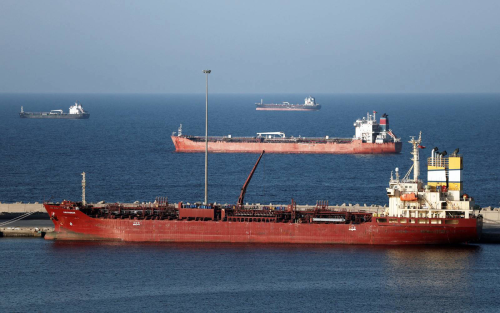
The United Arab Emirates has formally told the United States and Western allies it is prepared to deploy its navy as part of a multinational task force to reopen the Strait of Hormuz, escalating its posture amid an ongoing crisis that has brought global energy markets under severe strain.
The United Arab Emirates (UAE) told the US and other Western allies it would participate in a multinational maritime task force to reopen the Strait of Hormuz, the Financial Times reported on Friday, citing people familiar with the matter. The UAE is pressing dozens of countries to form a “Hormuz Security Force” to escort shipping and defend the strait against Iranian attacks.
The crisis stems from the closure of the strait by Iranian forces following coordinated US-Israeli airstrikes on Iran on 28 February 2026, which resulted in the death of Supreme Leader Ali Khamenei. Iran responded by shutting the waterway, which normally carries about 20 percent of global oil and liquefied natural gas supplies, to all foreign shipping.
The UAE has faced more Iranian attacks than any other country in the region. Senior Emirati minister Sultan Al Jaber, who held talks in Washington with US Vice President JD Vance this week, described Iran’s actions as holding Hormuz hostage, with costs passed on to consumers worldwide at the fuel pump, in grocery stores, and at the pharmacy.
Officials said the UAE is also working with Bahrain on a United Nations Security Council (UNSC) resolution to provide a mandate for any future force, although opposition from Russia and China is possible. There is growing recognition among Gulf states and in Washington that reopening the strait may require coordinated naval escorts.
Separately, Britain’s Royal Navy is reported to be preparing to lead a “Hormuz Coalition” alongside France and the United States, with mine-clearing vessels and autonomous uncrewed systems planned for deployment to counter Iranian naval mines laid in the strait.
According to shipping analytics firm Kpler, Strait of Hormuz transits have fallen by approximately 95 percent from peacetime levels, with only 116 vessel crossings recorded between 1 and 19 March 2026.
On 26 March, Iran’s Foreign Minister Abbas Araghchi announced that ships owned by five nations, including China, Russia, India, Iraq, and Pakistan, would be permitted to transit the strait, while most other commercial shipping remains blocked.
Broad coalition support remains elusive. Several US allies have said they have no immediate plans to send ships to unblock the strait, rebuffing a Trump administration request for military support. France said it had held talks with around 35 countries seeking partners for a possible post-conflict mission to reopen the strait, but only once US-Israeli operations against Iran end.

