

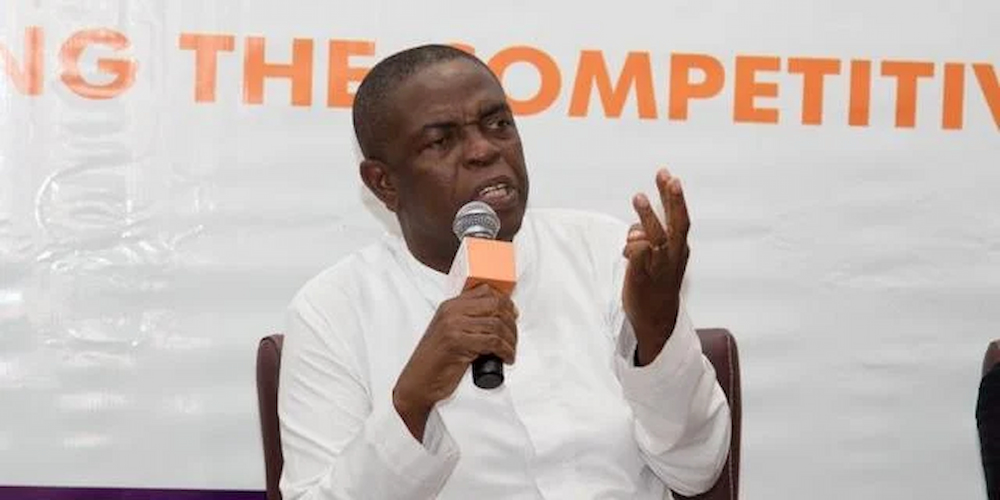
Veteran Ghanaian journalist and pan-Africanist Kwesi Pratt Jr. told African union leaders gathered in Accra on Wednesday that the near-total casualisation of mining workers across the continent is not an accident of economics but a deliberate continental strategy designed to keep labour weak and profits flowing outward.
Speaking at the opening of the 3rd Executive Council Meeting of the African Federation of Miners and Mineral Wealth (AFMMW) at the La Palm Royal Beach Hotel, Pratt said the scale of precarious employment in Africa’s mining sector has reached a point that demands a political, not merely industrial, response. “Ninety percent of workers in our mining sector are now casual,” he told delegates. “This is a continental strategy.”
Pratt argued that multinational companies and global economic interests have systematically fragmented African mining labour to prevent unions from accumulating the strength needed to negotiate fair terms. By rotating casual workers through short-term contracts with no job security, pension rights, or union membership, corporations effectively neutralise organised labour before it can become a genuine counterweight to corporate power.
He anchored his argument in the Democratic Republic of Congo (DRC), which sits atop an estimated $24 trillion in untapped mineral reserves, yet where 74 percent of the population survives on less than two dollars a day. The gap between what the DRC exports in copper, cobalt, and critical green minerals and what its citizens receive in return, Pratt said, is the clearest proof that extraction without ownership produces poverty, not prosperity.
He also raised the human toll embedded in global supply chains, pointing to child labour in artisanal mines, chronically unsafe working conditions, deaths in disasters including the Kalando mine collapse in Lualaba province, and the starvation of 78 trapped miners in South Africa, all while companies such as Glencore report billions in annual profits.
Pratt traced the logic of current exploitation directly to colonial and neocolonial economic structures. The global green energy boom, he argued, driven by demand for electric vehicles, wind turbines, and solar panels, follows the same extractive blueprint: Africa digs, the world processes, and the margin stays abroad.
On a more constructive note, he praised the AFMMW’s move to establish a union-owned investment company to acquire and manage mining assets directly, describing it as a concrete mechanism to translate solidarity into ownership. Unions, he said, must not only negotiate wages but must fight for worker stakes in the value chains their members sustain.
The three-day meeting, running until Friday, March 28, brings together union leaders from Ghana, South Africa, Zambia, Zimbabwe, Botswana, Namibia, Burkina Faso, Liberia, Mali, Tanzania, Egypt, and other African nations to deliberate on strategies to combat casualisation, enforce occupational health and safety standards, promote union participation in mining value chains, and advocate for policies mandating local processing.

