

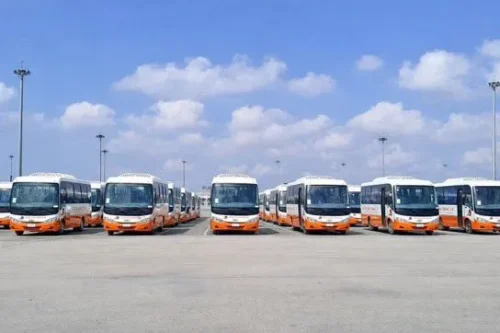
As the government rolls out its first batch of 100 new minibuses to address Ghana’s worsening urban transport crisis, a growing body of expert opinion is questioning whether the intervention targets the right problem at all.
The government confirmed delivery of the first 100 of 300 procured buses in early April, with additional batches expected in August and November, as part of a broader effort to ease pressure on commuters following shortages of commercial vehicles that left passengers stranded at terminals during peak periods.
The short-term relief is acknowledged. But Chartered Accountant and road user Dickson Assan argues the measure amounts to treating symptoms while leaving the underlying condition unaddressed. He likens the decision to prescribing painkillers for a patient who needs surgery, warning that without structural reform, the congestion will return regardless of how many vehicles are added to the network.
His core argument centres on spatial and urban planning. Ghana’s cities, particularly Accra, have grown rapidly and without strategic coordination. Commercial centres, residential areas, and office blocks have expanded along the same corridors simultaneously, concentrating traffic onto road networks that were never built for that volume. Corridors such as Spintex Road, once relatively fluid, are now saturated with development on both sides while the underlying road infrastructure has remained largely unchanged.
This view is supported by data. Research shows that 95 percent of Accra’s population primarily relies on walking and trotros for daily travel, yet cars and taxis, used by a small minority, occupy 75 percent of road space, leaving a quarter to be shared by the vast majority of commuters.
A Glimmer Research study estimated GH¢4.5 billion in annual economic losses from congestion in Ghana, with time lost accounting for 71 percent of that figure, alongside approximately 73,000 tonnes of avoidable carbon dioxide emissions.
Assan also points to the underperformance of existing public transport institutions. Metro Mass Transit (MMT) and the State Transport Company (STC) were originally designed to provide structured, large-scale services but have long struggled with limited funding, operational inefficiencies, and declining ridership. Earlier initiatives, including the Ayalolo Bus System and Bus Transit Limited, both launched with fanfare but failed to sustain momentum. The Ayalolo bus rapid transit system and a collapsed revolving fund for new buses have been cited by transport analysts as examples of initiatives that began with promise but did not endure.
Transport commentator Peter Kwakye-Ackah has echoed similar concerns, arguing that short-term fixes alone will not resolve systemic issues and calling for Ghana to shift away from import dependence toward domestic bus assembly through private sector partnerships, while also prioritising urban rail infrastructure for expanding cities.
For Assan, the path forward is clear but demanding. It requires better urban planning to reduce unnecessary travel and distribute traffic more evenly, sustained investment in road maintenance, smarter traffic management systems, and a serious effort to rehabilitate existing public transport institutions rather than layering new capacity onto a broken system.
Transport analysts note that Ghana’s urban road network, particularly in Accra and Kumasi, is constrained by potholes, poor drainage, and congestion bottlenecks that slow travel speeds and accelerate vehicle wear, meaning new buses entering service face the same structural disadvantages as the fleet they are supplementing.
The 300-bus rollout may ease queues in the short term. Whether it shifts the trajectory of Ghana’s urban mobility crisis depends on what comes after the delivery.

