

The Gold Fields Ghana Foundation (GFGF) has pledged GH¢320,000 to intensify malaria prevention efforts in two of Ghana’s highest-burden municipalities, as the country marked World Malaria Day 2026 against the backdrop of more than 5.3 million suspected malaria cases recorded nationally in 2025.
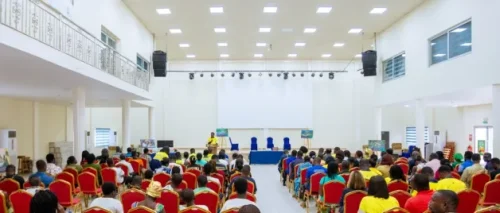
The initiative, held under the theme “Driven to End Malaria: Now We Can. Now We Must,” brought together community leaders, health officials and municipal authorities from the Tarkwa-Nsuaem and Prestea-Huni Valley Municipalities in the Western Region, where malaria transmission remains persistently elevated.
Speaking at a stakeholder forum held in partnership with the Tarkwa-Nsuaem Municipal Assembly and Municipal Health Directorate, GFGF Executive Secretary Abdel Razak Yakubu said the commitment reflects the Foundation’s drive to shift communities from passive recipients of health services to active owners of prevention. “About four out of every 10 cases reported at health facilities are malaria. This affects productivity and livelihoods. Our support is aimed at raising awareness and reducing malaria cases in Tarkwa-Nsuaem and Prestea Huni-Valley,” he said.
The GH¢320,000 allocation will fund radio education campaigns, community outreach and logistics across both municipalities. As part of practical interventions during the event, a larviciding exercise was conducted at identified mosquito breeding sites using environmentally safe chemicals. The Foundation also distributed weed slashers to Water and Sanitation (WATSAN) committees to support communal efforts to clear bushes, desilt drains and eliminate stagnant water.
Municipal Director of Health Wilhelmina Tiwaa Duah painted a sobering picture of the local burden. In 2025 alone, health facilities in the Tarkwa-Nsuaem Municipality recorded 160,474 suspected malaria cases, of which 53,037 were confirmed positive. Among pregnant women, 224 out of 628 tested cases returned positive results, raising serious maternal health concerns. She warned that malaria in pregnancy can trigger complications including anaemia, miscarriage, stillbirth and premature delivery.
Despite the scale of infection, Duah noted that no malaria-related deaths have been recorded in the municipality over the past five years, crediting timely reporting and effective case management. She attributed Tarkwa’s particular vulnerability to the area’s heavy rainfall pattern, which accelerates the formation of stagnant water and mosquito breeding sites, and urged residents to maintain environmental sanitation by clearing weeds and draining gutters regularly.
Participants at the stakeholder forum were equipped with prevention knowledge and practical tools, while a panel discussion examined transmission patterns, environmental drivers and sustainable strategies for reducing infection rates. Officials stressed that sustained community participation and behavioural change remain central to any meaningful decline in malaria prevalence.
The Gold Fields Ghana Foundation, established in 2004 as the corporate social responsibility arm of Gold Fields Ghana Limited, has allocated more than US$100 million towards development programmes in communities surrounding the Tarkwa and Damang mines. Health programming, including annual World Malaria Day interventions, forms a core pillar of that investment.

