

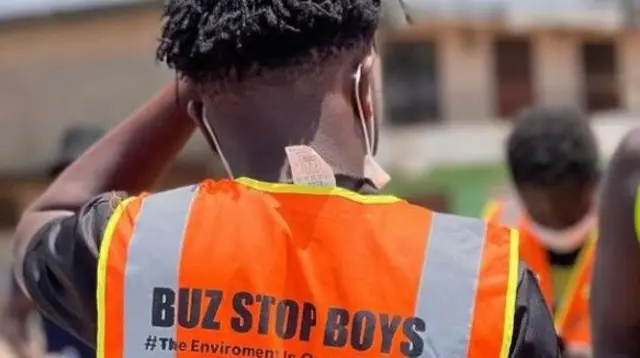
A group of university-educated volunteers armed with brooms and shovels are confronting Ghana’s sanitation crisis—and the social stigma that comes with it.
The Buz Stop Boys, whose gutter-cleaning and waste-removal efforts have gained national attention, say their work is often met with ridicule rather than gratitude, even as they prevent flooding and disease outbreaks in neglected urban areas.
“We get called ‘gutter boys’ by people who think educated young men shouldn’t do dirty work,” James Safo, the group’s Vice President, told Starr FM. The 27-year-old holds a degree in public health but traded clinical work for daily cleanup operations after recognizing how poor sanitation undermines community health. His team regularly clears clogged drains in flood-prone Accra neighborhoods—a task many consider beneath their qualifications.
The volunteers’ unconventional career choice highlights Ghana’s complex relationship with manual labor. While the country grapples with worsening sanitation—the World Bank estimates poor waste management costs Ghana $290 million annually—social attitudes often devalue hands-on environmental work. “Friends ask why I’m not chasing an office job with my degree,” said Safo. “But someone has to solve problems we’ll face in 20 years.”
Their persistence is yielding results. The group’s targeted interventions in flood hotspots have reduced waterborne disease cases in several communities, according to local health officials. During heavy rains last June, their preemptive drain clearing prevented the usual inundation of markets and homes in Accra’s Odorkor suburb.
Yet challenges persist beyond public perception. The volunteers fund most operations through personal savings and small donations, lacking the equipment and protective gear available to government sanitation workers. “We wear the same gloves for weeks because replacements are expensive,” one member revealed.
Despite these hurdles, their model is inspiring imitation. Youth groups in Kumasi and Takoradi have launched similar initiatives, while the Accra Metropolitan Assembly recently partnered with the Buz Stop Boys for a citywide cleanup campaign.
As Ghana’s waste generation grows alongside urbanization, the group’s message resonates beyond their trash bags: “Clean cities aren’t just about infrastructure,” Safo said. “They require changing how we value the people who maintain them.”

