LATEST ARTICLES

The Rules of Kwabotwe: How Mfantsipim School Shapes Leaders for Golf, Business and Government

0

By Dr. Ernest Asimenu
Captain, MOBA Golf

There is a saying in golf that great rounds are rarely built on spectacular shots alone. They are built on discipline, patience, sound judgement and the many small decisions made long before the final putt drops.

The same is true of leadership.

Long before many of us entered boardrooms, built businesses, led institutions or served in government, we were shaped by a school whose influence extends far beyond the classroom. Mfantsipim School, the oldest school in Ghana, affectionately known as Kwabotwe, has for generations continued to shape leaders.

Kwabotwe did not merely educate young men. It built character. It taught responsibility, order, punctuality, discipline and the courage to do what is right, even when no one was watching.

Golf teaches many of the same lessons. It is a game of honour, self-regulation, preparation and respect for others. A golfer is expected to call a penalty on himself, repair damage he did not necessarily cause and respect the pace and dignity of the game.

In much the same way, the traditions of Mfantsipim are captured in four enduring rules. On the surface, they may appear to be simple school regulations. In reality, they form a powerful framework for leadership in corporate life, business and government.

The Golden Rule

A breach of common sense is a breach of school rule.

This is perhaps the most profound of the Kwabotwe rules.

Not every situation in life can be covered by a written policy. Not every decision in business will have a manual. Not every matter in government will have an obvious precedent. There are moments when leaders must rely on judgement, conscience and common sense.

Golf is governed by rules, but it is also governed by judgement. A player must understand not only the letter of the rules, but also the spirit of the game. The golfer who is always looking for a loophole may remain technically within the rules, but may still fall short of the values golf represents.

The same applies in leadership.

Many corporate failures do not arise because people did not know the rules. They arise because individuals ignored what they knew, deep down, to be right. Governance failures, ethical lapses and poor business decisions often begin with a breach of common sense.

The Golden Rule therefore teaches something essential: leadership is not only about asking, “Is this permitted?” It is also about asking, “Is this right?”

The finest leaders understand that good judgement begins where written policy ends.

The Silver Rule

No one or individual must pass by litter.

At first glance, this appears to be a rule about cleanliness.

It is much more than that.

The Silver Rule is about ownership, responsibility and the refusal to walk past a problem.

On the golf course, players are taught to repair pitch marks, replace divots and rake bunkers. You do not only repair the damage you caused. You leave the course in a better condition for the player coming behind you.

That is leadership.

In business, poor service, weak controls, unethical behaviour and declining standards often survive because people notice them and keep walking. In government, citizens suffer when public officials see inefficiency, waste or injustice and assume that someone else will deal with it.

The Silver Rule teaches that once you see a problem, you inherit some responsibility for addressing it.

Great organisations are not built merely by people who complete their assigned tasks. They are built by people who refuse to pass by what is wrong.

Leadership means bending down to pick up the litter, even when you did not drop it.

The Bronze Rule

We are supposed to be fifteen minutes early for all social gatherings.

In golf, arriving at the first tee at the exact time of your tee-off usually means you are already late.

A serious golfer arrives early. He checks in, warms up, studies the conditions, settles his mind and prepares for the opening shot.

The Bronze Rule is therefore not merely about punctuality. It is about preparation, respect and professionalism.

In corporate life, leaders who arrive early are often better prepared, less hurried and more attentive. In business, preparation creates an advantage. Entrepreneurs who anticipate developments are more likely to succeed than those who are constantly reacting.

The same principle applies in government. Public officials who prepare thoroughly make better decisions. They understand the issues, respect the people they serve and are less likely to be driven by panic or avoidable pressure.

Time is one of the clearest expressions of respect. When we are late, we do not only misuse our own time; we also misuse the time of others.

The Bronze Rule reminds us that successful people do not wait for the appointed hour before they begin to prepare.

Being early is not simply about the clock. It is a mindset.

The Diamond Rule

Each individual must have two white handkerchiefs with sixteen distinct boxes.

To some, this may sound like an unusual rule. Yet it carries a deeper lesson about order, neatness, personal discipline and attention to detail.

The white handkerchief had to be clean. The boxes had to be distinct. The requirement was precise.

That precision mattered.

Golf is a game where small details can determine the outcome of an entire round. Alignment, grip, stance, club selection, ball position and pace all matter. A putt can miss by a fraction. A careless decision can turn a good hole into a disastrous one.

The same is true in business.

Strong organisations are not sustained by vision alone. They are sustained by execution. Contracts must be accurate. Controls must work. Customers must be served consistently. Reports must be reliable. Details that appear small can carry enormous consequences.

In government, attention to detail can be the difference between a policy that transforms lives and one that fails in implementation.

The Diamond Rule teaches that excellence begins with discipline in the little things.

It reminds us that presentation matters, order matters and standards matter.

The Leadership Scorecard

The four rules of Kwabotwe can be translated into a simple leadership scorecard:

The Golden Rule teaches sound judgement.

The Silver Rule teaches responsibility.

The Bronze Rule teaches preparation.

The Diamond Rule teaches attention to detail.

These are not outdated traditions. They are timeless leadership principles.

They matter on the golf course, where integrity is often tested in silence. They matter in business, where judgement and execution determine success. They matter in corporate life, where culture is shaped by what leaders tolerate. And they matter in government, where decisions affect entire communities and generations.

Mfantsipim’s Enduring Legacy

Mfantsipim School continues to shape leaders because it has always understood that education must go beyond academic performance.

A brilliant mind without discipline can become dangerous. Intelligence without integrity can damage institutions. Authority without responsibility can weaken public trust.

Kwabotwe’s contribution has been to combine learning with character.

Its rules taught generations of students that leadership begins in ordinary habits: making sensible decisions, taking responsibility, respecting time and paying attention to detail.

These habits may appear small, but in leadership, as in golf, the scorecard is often determined by the smallest strokes.

The true test of education is not only what a person knows. It is how that person behaves when trusted with people, power, resources and opportunity.

That is why the Rules of Kwabotwe remain relevant.

They remind us that leadership is not performed only at the podium. It is demonstrated in the decisions taken when no one is watching, in the problems we refuse to ignore, in the respect we show for other people’s time and in the standards we maintain even in the smallest matters.

Mfantsipim School, the oldest school in Ghana, continues to shape leaders because its values remain deeply practical.

IEAG Demands Refunds After High Court Upholds GSA Container Charge Directive

0

The Importers and Exporters Association of Ghana (IEAG) has called for the immediate refund of excess Container Administrative Charges (CAC) collected by shipping lines following a High Court ruling that upheld the Ghana Shippers’ Authority’s (GSA) directive capping the charges.

In a statement issued on Monday, July 13, the Association welcomed the court’s dismissal of an application by the Ship Owners and Agents Association of Ghana (SOAAG) and some shipping lines seeking to suspend the implementation of the GSA’s Container Administrative Charge directive.

According to the IEAG, the ruling confirms that the regulatory directive issued by the Ghana Shippers’ Authority on May 11, 2026, remains valid and enforceable, describing the decision as a victory for regulatory certainty and Ghanaian businesses that have long complained about excessive administrative charges at the country’s ports.

The Association said importers and exporters had for years been burdened with unjustified Container Administrative Charges imposed by shipping lines, despite the original reasons for introducing the fees no longer existing. It argued that the continued charges increased the cost of doing business, fuelled inflation and undermined the competitiveness of local businesses.

Under the GSA directive, Container Administrative Charges were capped at GH¢720 per Twenty-foot Equivalent Unit (TEU) as an interim measure pending broader stakeholder consultations on a permanent pricing regime.

However, IEAG alleged that several shipping lines ignored the directive and continued collecting amounts above the approved cap while the matter was before the court.

The Association is now urging the Ghana Shippers’ Authority to begin strict enforcement of the directive and ensure that every shipping line or agent that charged more than GH¢720 per TEU from May 11, 2026, accounts for and refunds the excess amounts to affected importers and exporters.

It proposed that where necessary, the excess collections should be paid into an account designated by the GSA to facilitate transparent verification and reimbursement to affected businesses.

IEAG further warned that allowing shipping lines to retain monies collected in contravention of the directive would undermine public confidence in the regulator and reward non-compliance.

The Association also called on the Ghana Shippers’ Authority to invoke all enforcement powers available under the Ghana Shippers’ Authority Act, 2024 (Act 1122), against shipping lines and agents found to have deliberately violated the directive. It appealed to the Ministry of Transport to provide the Authority with the institutional and legal support needed to strengthen regulation within the shipping sector.

Reaffirming its commitment to trade reforms, the IEAG said it would continue working with the Ghana Shippers’ Authority and other stakeholders to promote a transparent, competitive and efficient shipping and logistics sector that supports Ghana’s economic growth.

World Bank, GRA Equip Officials to Improve Tax Compliance

The World Bank Group, in partnership with the Swiss State Secretariat for Economic Affairs (SECO) and the Ghana Revenue Authority (GRA), has held a two-day capacity-building workshop aimed at equipping tax officials with behavioural communication strategies to strengthen voluntary tax compliance and improve taxpayer engagement in Ghana.

The workshop, themed “Leveraging Social and Behavioral Change Communications for Tax Compliance in Ghana,” brought together officials from the GRA’s Communication and Planning Department to enhance their capacity to develop evidence-based communication strategies that encourage voluntary tax compliance, build public trust and foster stronger relationships between taxpayers and the tax authority.

The initiative forms part of ongoing efforts by the World Bank and its partners to support Ghana’s domestic revenue mobilisation drive by strengthening taxpayer education, promoting voluntary compliance and building public confidence in the country’s tax administration system.

Participants were taken through practical sessions on taxpayer education, trust-building, message design, campaign implementation and the application of behavioural science to address tax administration challenges.

Speaking at the training, Raymond Muhula, Lead Public Sector Specialist at the World Bank, underscored the importance of domestic revenue mobilisation to Ghana’s socio-economic development, noting that sustainable financing for public services depends largely on citizens’ willingness to fulfil their tax obligations.

He said investments in roads, schools, hospitals, digital infrastructure, security, social protection and climate resilience require a public finance system capable of mobilising resources fairly, efficiently and sustainably.

“As external financing becomes more constrained and citizens rightly demand better services and accountability, strengthening voluntary tax compliance becomes central to the national development agenda,” he stated.

World Bank

Muhula expressed appreciation to the Government of Switzerland through SECO for supporting the initiative, describing the workshop as an important step towards strengthening Ghana’s tax administration through behavioural science and strategic communication.

According to him, improving tax compliance requires more than legislation, audits and enforcement measures, adding that trust, fairness and public confidence are key drivers of voluntary compliance.

“People comply when they understand their obligations, when processes are simple, when they believe others are also contributing, when they see fairness in the system, and when they trust that public resources are being used for the common good,” he said.

He explained that Social and Behavioral Change Communications (SBCC) goes beyond traditional public awareness campaigns and provides a structured approach to understanding the motivations, perceptions and behaviours that influence taxpayers’ decisions.

“It is not simply publicity. It is not a slogan, a poster or a one-off campaign. It is a disciplined approach to understanding what people know, what they believe, what they fear, what motivates them and what prevents them from acting,” Muhula noted.

He observed that Ghana has made significant progress in expanding the tax base, simplifying tax procedures and strengthening digital tax administration, with some reforms supported under the World Bank’s US$150 million Public Financial Management for Service Delivery Programme.

However, he stressed that policy and technological reforms alone would not deliver the desired results without effective communication strategies that influence taxpayer behaviour.

“Taxpayers must know what is expected of them, understand how to comply, and feel that the system is fair, accessible and responsive,” he added.

Muhula urged communication officers at the GRA to see themselves as drivers of behavioural change and key actors in strengthening the relationship between government and citizens.

“You are not merely communicators of policy; you are architects of public understanding. You help translate technical reforms into language citizens can trust and use, helping transform tax compliance from a legal obligation into a shared civic responsibility,” he said.

He further called for stronger collaboration among government institutions, local authorities, civil society organisations, professional bodies, traditional leaders, educational institutions, technology providers, development partners and the media to build a stronger culture of tax compliance.

An Economist At The World Bank’s Behavioural Science Team Jonathan Karver

An Economist at the World Bank’s Behavioural Science Team, Jonathan Karver, said behavioural communication focuses on influencing beliefs, attitudes and social norms rather than merely providing information.

“Social and behavior change communications are not just about providing information; they’re about shifting beliefs, attitudes and norms around tax obligations. By bringing these insights into the GRA, taxpayer engagement can improve for better revenue collection and stronger trust with the GRA,” he said.

Karver noted that the World Bank has observed a shift in the GRA’s communication strategy from an enforcement-driven approach to a more facilitation-oriented model focused on trust-building.

“We found that there’s been a very important shift away from more enforcement-heavy communication with taxpayers to a more facilitation-oriented approach focused on trust-building.

This workshop is about building on what the GRA has already started by making its communication more evidence-based and data-driven,” he explained.

He added that integrating behavioural insights into tax administration would enable the GRA to design more targeted communication campaigns, improve taxpayer experience and support Ghana’s domestic revenue mobilisation efforts.

Dr. Alex Adomako Mensah, Commissioner of the Support Services Division at the Ghana Revenue Authority, noted that effective communication is now key to modern tax administration and boosting voluntary compliance.

Dr. Adomako Mensah said the workshop reflects the GRA’s commitment to transforming the way it engages taxpayers and improving public trust in the tax system.

“Communication is not simply about sharing information. It is about building trust, promoting transparency, encouraging understanding, and creating positive experiences for taxpayers,” he stated.

He explained that while enforcement and audits remain important tools in tax administration, sustainable compliance is achieved when taxpayers understand their obligations, feel respected and receive timely, accurate and consistent information.

According to him, the training aligns with the GRA’s top management vision of “Transformation for Impact and Growth” and supports the Authority’s target of mobilising GH¢360 billion in revenue by 2028.

He noted that achieving the target requires more than improved systems and digital technologies, but also a deeper understanding of taxpayer behaviour and experiences.

“Our investments in digital transformation are helping us modernise our systems. Effective communication complements these efforts by ensuring that taxpayers understand our services, can navigate our processes with confidence, and remain engaged throughout their interactions with the Authority,” he said.

Dr. Adomako Mensah urged GRA staff to view taxpayers not merely as transactions but as individuals whose decisions are shaped by their experiences, perceptions and everyday realities.

He stressed that every interaction between GRA officers and taxpayers has the potential to either strengthen or weaken public trust.

“Our frontline staff represent the face of the Authority. Professionalism, integrity, empathy and transparency are not simply desirable qualities; they are essential to building confidence in the tax system,” he added.

He encouraged participants to apply the knowledge acquired during the training to improve taxpayer engagement, manage difficult conversations, simplify complex tax information and strengthen collaboration with stakeholders.

He reaffirmed the GRA’s commitment to becoming a modern, customer-centred and data-driven institution that delivers efficient, transparent and trusted tax services to the people of Ghana.

However, he commended  the World Bank and SECO for supporting the training, describing the partnership as an important contribution towards strengthening public institutions and building the capacity of GRA staff.

World Bank

IEAG Welcomes High Court Ruling on the Ghana Shippers’ Authority Container Administrative Charge Directive; Calls for Strict Enforcement and Immediate Refund of Illegally Collected Charges

0

The Importers and Exporters Association of Ghana (IEAG) warmly welcomes the decision of the High Court dismissing the interlocutory injunction application filed by the Ship Owners and Agents Association of Ghana (SOAAG) and some shipping lines seeking to restrain the implementation of the Ghana Shippers’ Authority (GSA) Container Administrative Charge (CAC) Regulatory Directive.

The ruling has unequivocally affirmed that the Regulatory Directive issued by the Ghana Shippers’ Authority on 11th May 2026 remains valid, operational, and enforceable. It is a significant victory for the rule of law, regulatory certainty, and the thousands of Ghanaian importers, exporters, freight forwarders and businesses who have, over the years, borne the burden of excessive and unjustified Container Administrative Charges.

For many years, the IEAG, together with other industry stakeholders, consistently challenged the exorbitant Container Administrative Charges imposed by shipping lines. These charges, which were originally introduced under circumstances that no longer exist, continued to be levied despite the rationale behind their introduction having long outlived its usefulness. The result was an unnecessary increase in the cost of doing business, inflationary pressures, and a decline in the competitiveness of Ghanaian businesses.

Recognizing these concerns, the Ghana Shippers’ Authority, after extensive stakeholder engagements and regulatory review, exercised its statutory mandate by issuing the 11th May 2026 Regulatory Directive, capping the Container Administrative Charge at GH₵720 per Twenty-foot Equivalent Unit (TEU) as an interim measure pending the conclusion of broader stakeholder consultations toward a final regulated charge. The directive was intended to provide immediate relief to shippers while ensuring fairness within Ghana’s shipping and logistics industry.

Unfortunately, despite the issuance of this lawful directive, several shipping lines ignored the regulatory order and continued to charge the previous administrative fees, reportedly collecting amounts far in excess of the approved GH₵720 per TEU from unsuspecting importers and exporters while the matter was before the courts.

Now that the High Court has dismissed the injunction application and confirmed the validity of the directive, the IEAG believes there can no longer be any justification whatsoever for any shipping line to continue charging beyond the approved regulatory cap.

Accordingly, the Importers and Exporters Association of Ghana respectfully calls on the Ghana Shippers’ Authority to immediately commence strict enforcement of its directive without fear or favour. The Authority must demonstrate that regulatory directives issued under the Ghana Shippers’ Authority Act are binding on all industry players and cannot be selectively complied with.

More importantly, the IEAG urges the Ghana Shippers’ Authority to direct every shipping line and shipping agent that collected Container Administrative Charges above the approved GH₵720 per TEU from 11th May 2026 onwards to immediately account for and refund the excess amounts to the affected shippers. Where necessary, such excess collections should be paid into an account designated by the Ghana Shippers’ Authority to facilitate transparent verification and subsequent reimbursement to all affected importers and exporters.

The Association firmly believes that allowing shipping lines to retain monies collected contrary to a valid regulatory directive would not only undermine public confidence in the Authority but would also amount to rewarding regulatory non-compliance at the expense of Ghanaian businesses.

Furthermore, we urge the Ghana Shippers’ Authority to invoke every enforcement mechanism available under the Ghana Shippers’ Authority Act, 2024 (Act 1122), against any shipping line or shipping agent found to have deliberately violated the directive. Compliance with regulatory directives must not be optional, particularly in a sector that plays such a strategic role in Ghana’s economy.

The IEAG also calls on the Ministry of Transport to provide the Ghana Shippers’ Authority with the necessary institutional, legal and political support required to effectively regulate the shipping industry and protect the interests of Ghanaian importers and exporters. A strong and independent regulator is indispensable to ensuring fairness, transparency and accountability within the country’s maritime and logistics sector.

As an Association representing the interests of Ghana’s trading community, we reiterate our unwavering support for reforms that reduce the cost of doing business, enhance transparency at the ports, improve Ghana’s trade competitiveness and protect legitimate businesses from exploitative commercial practices.

The High Court’s decision should serve as a turning point in strengthening regulatory compliance within Ghana’s shipping industry. The era where regulated entities disregard lawful directives with impunity must come to an end.

The Importers and Exporters Association of Ghana will continue to work closely with the Ghana Shippers’ Authority and all relevant stakeholders to promote a fair, transparent, efficient and internationally competitive shipping and logistics environment that supports national economic growth.

Signed

Samson Asaki Awingobit
Executive Secretary
Tel: 0243575046

St. Augustine’s College Excels in KAS Ghana STEM Plastic Waste Competition

0

St Augustine’s College has emerged as the winner of the 2026 KAS Ghana and Catholic SHS/SHTS/TVET Plastic Waste Management Competition for the Southern Belt, after scoring 77 percent in the contest held in Accra.

Archbishop Porter Girls Senior High School placed second with 62 percent, while St Thomas Aquinas Senior High School finished third with 53.3 percent.

The competition, organised for Catholic second-cycle institutions by the Catholic Schools Ghana in collaboration with the Konrad-Adenauer-Stiftung (KAS) Ghana office, is divided into two zones, the Northern and Southern belts. The Southern Belt comprises schools from the Greater Accra, Volta, Oti, Western and Central regions.

The schools that competed included St Augustine’s College, Bishop Herman College, Archbishop Porter Girls Senior High School, Holy Child Girls Senior High School, St Gregory Senior High School, Father Dogli Memorial Technical Institute and St Thomas Aquinas Senior High.

The initiative challenges students to develop innovative and practical solutions to plastic waste management while promoting environmental sustainability.

Country Representative Of Konrad Adenauer Stiftung Kas Ghana Anna Lena Sabroso Wasserfall

Addressing the gathering, the Country Representative of Konrad-Adenauer-Stiftung (KAS) Ghana, Anna Lena Sabroso Wasserfall, noted that civic education remains a key pillar of the foundation’s work, making environmental education an important area of focus.

According to her, KAS deliberately partners Catholic schools because young people are more receptive to environmental values and are better positioned to adopt sustainable practices that can influence their communities.

“We need to address people quite young. The younger they are, the better they get the message and begin to implement these values in their own lives,” she said.

She reaffirmed KAS Ghana’s commitment to supporting environmental education initiatives and nurturing innovative ideas that contribute to effective waste
management and environmental protection.

The General Manager of Catholic Schools Ghana, Mr Francis Batadjan said the competition aligned with the Church’s commitment to protecting creation and promoting responsible environmental practices.

He said improper disposal of plastic waste continued to threaten the environment, citing recent flooding incidents as a reminder of the consequences of poor waste management.

“When plastic destroys people, animals and plants, it is the earth that is being destroyed, and if our habitat is destroyed, where will we live?” he asked.

Mr Batadjan described the competition as “very, very impressive,” saying it had challenged students to develop practical solutions to plastic pollution.

Work

E Green Living & Environmental Issues

He expressed the hope that entrepreneurs, manufacturers and other stakeholders in the plastics industry would partner with participating schools to provide financial support and help scale up promising projects into viable enterprises.

He further urged students to see the competition as more than an opportunity to win prizes, stressing that its ultimate goal is to inspire positive behavioural change towards plastic waste management.

Among the products presented by the schools included eco pavement blocks made from plastic and other plastic materials for interior and exterior decoration.

Shimmer by Khuks reports new personal best as Kisses & Wishes sales soar

The proudly Ghanaian beauty brand continues to gain momentum as its latest release wins fans over in droves.

With the launch of its new Kisses & Wishes collection, Shimmer by Khuks has further solidified its position in Ghana’s beauty scene. Announced just over a week ago, the line is already a bona fide hit among fans, marking the brand’s strongest first-week performance to date. The must-have “It-Girl” essential is selling out fast, with sales estimates topping 200 orders per week, a new personal best for the brand.

Conceived as a love letter to its loyal fanbase, affectionately called Shimmies, Kisses & Wishes was marketed as an ode to self-expression, a message that has clearly struck a chord among the brand’s community. The line-up was created to redefine accessible luxury, with its Kiss Kit 2.1 bundle embodying that vision through a curated mix of four waterproof liners, seven lip shines ranging from glossy to super-glossy, three body shimmers, and a set of application brushes–all crafted with longevity, versatility, and quality in mind.

Shimmer By Khuks
Shimmer By Khuks

Speaking to the press, the brand’s CEO and founder, Angela Nyamewaa Ama Safowaa, shared: “We are absolutely thrilled by our community’s response to Kisses & Wishes, especially Kiss Kit 2.1. Seeing their enthusiasm reminds us why we’re always motivated to create products that celebrate every shade of African beauty. As order volumes keep going up, we remain committed to ensuring Shimmies across the country receive their packages on time to add a little more shine to their world.”

The news aligns with Shimmer by Khuks’ broader vision to expand its base and cater to consumers seeking a beauty experience worth buying into, one that blends affordability, authenticity, and representation. By offering luxury at accessible prices and shades that cover local skin tones, Shimmer by Khuks proves that African beauty shines brightest when it’s made for African women.

You can place your order for the Kisses & Wishes collection or’ Kiss Kit 2.1 on the official Shimmer by Khuks website: www.shimmerbykhuks.com

Bonaa Salifu II Mourns Ya-Na Abukari II, Describes Him as Father and Symbol of Dagbon Peace

0

The Paramount Chief of the Bogu Traditional Area, Bonaa Salifu II, has paid tribute to the late Overlord of Dagbon, Ya-Na Abukari II, describing him as a father, mentor and leader whose legacy of peace and unity will endure for generations.

In a heartfelt tribute, Bonaa Salifu II, who privately refers to the late Ya-Na as Chief Naa Tia Salifu, said the passing of the Dagbon Overlord was a significant loss not only to the Dagbon Kingdom but to Ghana as a whole.

He said Ya-Na Abukari II would be remembered for his dedication to restoring peace, reconciliation and development in Dagbon after years of chieftaincy-related tensions.

“Ya-Na Abukari II was a leader whose name will forever be associated with peace, unity and development,” Bonaa Salifu II stated.

According to him, the late Overlord played a critical role at a time when Dagbon needed healing, offering himself as a symbol of hope and working to rebuild trust and togetherness among the people.

He noted that Ya-Na Abukari II’s reign ushered in a period of stability and renewed confidence in the Dagbon Traditional Area.

Beyond his traditional responsibilities, Bonaa Salifu II described the late Ya-Na as a compassionate figure who offered guidance and support to many people, including himself.

He revealed that Ya-Na Abukari II accepted him as a son and treated him with the same love, care and affection he would have given to a biological child.

“Personally, I experienced his kindness and affection in a very special way. He accepted me as his own son and treated me with the love, care and guidance of a biological child,” he said.

Bonaa Salifu II added that the special relationship earned him the cherished recognition as one of Ya-Na’s favourite sons.

He praised the late Overlord’s humility, wisdom and commitment to preserving Dagbon’s cultural heritage while promoting opportunities for future generations.

According to him, although Ya-Na Abukari II’s physical presence would be deeply missed, the values he championed would continue to inspire the people of Dagbon and beyond.

“The seeds of reconciliation and progress he planted will remain a lasting testament to his remarkable reign,” he said.

Bonaa Salifu II extended his condolences to the Dagbon Kingdom, the Andani Royal Family and all who mourn the passing of the late Ya-Na, praying for the peaceful repose of his soul.

“Rest well, my father, my leader and my mentor. Your memory will forever remain in our hearts, and your name will continue to be honoured throughout Dagbon and beyond,” he said.

Adom Kyei Duah-Opambour Clash: Amoako Atta Urges Restraint and Brotherhood

0

Apostle Francis Amoako Atta, Founder and Leader of Prliament Chapel International (PCI), has appealed to renowned Ghanaian pastors Prophet Stephen Adom Kyei Duah and Prophet Ebenezer Adarkwa Yiadom, popularly known as Opambour and their junior pastors, to resolve their differences and promote unity within the Christian community.

His comments follow a public disagreement between the two pastors, which gained attention after Opambour criticised Prophet Adom Kyei Duah over a prophecy concerning the Black Stars’ qualification campaign for the 2026 FIFA World Cup.

Speaking on the matter on Okay fm, Apostle Amoako Atta cautioned that conflicts among influential religious leaders could have wider consequences for the church, describing the situation as one where “when two elephants fight, the grass suffers.”

He urged family members, church leaders and close associates of both pastors to intervene and encourage dialogue for the sake of peace within the body of Christ.

“Blessed are the peacemakers. From today, their loved ones and heads of their churches should speak to them so that there can be peace in the body of Christ,” he said.

The Apostle stressed that there should be no room for envy or rivalry among men of God, adding that Christian leaders must demonstrate humility and love in their dealings with one another.

He praised both pastors pointing out that, they both gained great influence through ministry, noting that the large number of people who attend their programmes and the recognition they receive from prominent personalities reflect a special responsibility.

Apostle Amoako Atta said the visit of national leaders, including the President, to a church indicates the level of trust and recognition accorded to a man of God, and therefore requires wisdom and maturity in conduct.

“When a current president leaves other churches and comes to your church, it is a great blessing and recognition God has given you,” he said.

He advised Prophet Adom Kyei Duah to remain patient and avoid taking certain criticisms personally, explaining that his position comes with the responsibility of protecting the lives and faith of those who look up to him.

The Apostle also cautioned both pastors against responding to every public comment, arguing that silence can sometimes be a powerful tool.

“In the school of life, you are not powerful just because you react. Anytime you give your attention to somebody, you have invested your time and energy,” he said.

He added that as leaders who have attained significant influence, their strength should not be measured by social media reactions but by their ability to maintain dignity, restraint and peace.

Quoting biblical passages including 2 Samuel 12:14 and 1 John 4:20-21, Apostle Amoako Atta emphasised the need for love, forgiveness and unity among Christians.

He urged the two pastors and other religious leaders to remember that they represent one body and should work together to strengthen the church rather than engage in conflicts that could divide believers.

Ghana Must Shift from Trading to Manufacturing in Mining Sector – Dr. Atoapem Frimpong Barimah

0

Mining industry expert Dr. Atoapem Frimpong Barimah has called for a major shift in Ghana’s local content strategy, urging the country to move beyond importing and reselling mining products to establishing local manufacturing industries that create jobs, transfer technology and drive industrial growth.

Delivering a speech at the 4th Made-in-Ghana Business Summit 2026 at the Labadi Beach Hotel in Accra, Dr. Barimah said Ghana’s mining sector should focus not only on the volume of minerals extracted but also on the value retained within the country.

Speaking on the theme, “Local Content in the Mining Value Chain in Ghana: A Lever for Sustainable Value Creation,” he stressed that local content should go beyond regulatory compliance to ensure the meaningful participation of Ghanaian businesses, institutions and citizens across the entire mining value chain.

According to him, although Ghana has made progress in increasing the participation of local companies in providing logistics, engineering, security, catering and environmental services to mining firms, much of the country’s mining consumables, equipment, chemicals and spare parts are still imported.

He argued that the continued importation of mining inputs exports employment opportunities to other countries while limiting technology transfer, industrial development and research in Ghana.

Dr. Barimah proposed a new approach that promotes joint ventures between international manufacturers and capable Ghanaian companies to establish factories in the country for the production of mining inputs.

He further recommended that mining companies support such investments through long-term Forward Purchasing Agreements to guarantee demand and encourage investors to establish manufacturing facilities in Ghana.

He said local manufacturing would create jobs, strengthen local supply chains, support the growth of small and medium-sized enterprises, increase government tax revenue and reduce the country’s dependence on imports.

Dr. Barimah also called for stronger collaboration among government, mining companies, financial institutions and academic institutions to create an enabling environment for industrialisation. He urged government to provide favourable policies and investment incentives, while financial institutions make affordable capital available to local manufacturers.

He added that universities and technical institutions must equip Ghanaians with the skills required for advanced manufacturing to support the country’s industrial transformation.
“Ghana possesses not only mineral resources but also the human potential to build a globally competitive mining industry,” he said.

He concluded by stating that the success of Ghana’s local content policy should be measured not by the number of local distributors but by the number of products designed, manufactured and exported from Ghana.

“If we successfully combine Joint Ventures, local manufacturing and Forward Purchasing Agreements, mining will become more than an extractive industry. It will become the foundation of Ghana’s industrial transformation,” he said, urging stakeholders to “move from mining Ghana’s minerals to manufacturing Ghana’s future.”

Davido’s Music Exit Fear Sparks Therapy Centre Plan

0

Afrobeats star Davido says his fear of missing the right moment to quit music has pushed him to consider building a therapy centre for fallen celebrities, he revealed this week.

The concern carries weight given his stature as one of Afrobeats’ leading voices for more than a decade. Born David Adeleke, the singer has spent 16 years in the industry and says he prays daily for the wisdom to step away before his legacy suffers.

He pointed to football legend Cristiano Ronaldo as proof that even decorated stars face mockery once public opinion turns. The singer called Ronaldo a close friend and said critics still laughed at him after his exit from the World Cup, despite his record of titles and trophies.

“My biggest fear is not knowing when to quit music,” Davido said.

That fear, he said, could apply to any performer, regardless of past success. Watching public figures fall from favour convinced him a support system is missing for celebrities adjusting to reduced fame, so he said he would fund a therapy centre for stars facing life after the spotlight if given the chance.

Reaction spread quickly on social media, with fans and fellow artists weighing in on how few musicians manage a graceful exit from the industry.

Davido has set no timeline for stepping back from music. The comments add to a broader discussion among African entertainers about mental health support once the applause fades, an issue that draws far less attention than the fame that precedes it.

Nigeria Shelves WAEC, NECO Fee Hike Amid Backlash

0

Nigeria suspended a planned fee hike for the West African Senior School Certificate Examination (WAEC) and National Examinations Council (NECO) on Monday amid opposition backlash.

The pause affects millions of secondary school leavers who would have paid nearly double to sit their final exams from 2027, though the government has only put the increase on hold rather than scrapped it for good.

The Federal Ministry of Education withdrew a June 18 letter that had raised WAEC and NECO registration fees to a uniform N50,000 (Nigeria’s naira) per candidate, up from roughly N27,500 for WAEC and N30,000 for NECO. Ministry spokesperson Folasade Boriowo said Education Minister Maruf Tunji Alausa ordered the halt to allow wider talks with exam bodies, state governments, school owners, parent groups and labor unions before any change takes effect. She said rising costs for logistics, security, printing and technology had driven the original proposal.

Opposition politicians treated the reversal as vindication of warnings they raised weeks earlier. Peter Obi, presidential candidate of the Nigeria Democratic Congress, a Nigerian opposition party unrelated to Ghana’s ruling National Democratic Congress, called the suspension “a victory for the Nigerian people” in a post on X. He argued that fees at the basic education level risk keeping children out of classrooms at a time when Nigeria already struggles to enroll millions of school age children, and pressed the government to reconsider other policies he described as burdensome.

Atiku Abubakar, the African Democratic Congress candidate for 2027, went further, framing the episode as part of a repeating cycle under President Bola Tinubu’s administration. Through spokesperson Phrank Shaibu, Atiku said the government keeps announcing harsh policies without consultation, then retreats only after public anger forces its hand, calling the pattern evidence of disconnected policymaking rather than responsive government.

The ministry has not given a timeline for when the review will conclude, and it stopped short of ruling out a revised fee once talks end. That leaves parents already stretched by inflation and rising transport and power costs facing the same uncertainty that triggered the outcry in the first place.

Brogya Genfi Calls for Stronger Government-Zoomlion Partnership to Restore Flood-Hit Communities

The Deputy Minister for Defence, Ernest Brogya Genfi, has reaffirmed the government’s commitment to restoring communities affected by the devastating June 29 floods, saying the military has been fully mobilised to lead the nationwide clean-up exercise ordered by President John Dramani Mahama.

Speaking during a visit to assess ongoing clean-up operations, Mr. Brogya Genfi said the two-day exercise, directed by President Mahama following the floods that claimed about 30 lives and left large parts of Accra submerged, is aimed at clearing refuse, desilting drains and preventing disease outbreaks.

He noted that the President’s personal involvement in the exercise underscores the urgency of the response and the government’s determination to protect lives and property.

“The Commander-in-Chief, President John Dramani Mahama, is himself on the ground, so we cannot fail the citizens. At the Ministry of Defence, we are providing the strategic direction for the military to deliver the support needed to clear the refuse and debris,” he noted.

According to the Deputy Minister, the Ministry of Defence is providing strategic leadership while the Ghana Armed Forces deploy personnel and engineering units to clear debris, evacuate waste and desilt choked drainage systems across affected communities.

He observed that as military personnel removed accumulated refuse, residents continued to bring out more waste from their homes, highlighting the scale of the sanitation challenge facing the affected areas.

Mr. Brogya Genfi stressed that beyond clearing debris, government will intensify fumigation and disinfection of flood-hit communities to reduce the risk of disease outbreaks in the aftermath of the disaster.

“Beyond the clean-up, there will be a health response through fumigation and disinfection of affected communities so that we do not experience any disease outbreak,” he mentioned.

He also called for greater collaboration between government and Zoomlion Ghana Limited and other private sector, saying the magnitude of the clean-up operation requires additional logistical support. He also commended the company for voluntarly releasing its semi-trailers for the carting of waste to dump sites.

“This exercise cannot rest on the shoulders of government alone. We need private sector support, which is why we are engaging the Jospong Group to provide the logistics required to complement the military-led operation,” he remarked.

The Deputy Minister said government officials had visited the Jospong Group of Companies to assess the company’s readiness to provide equipment and logistics to complement the military-led exercise.

He explained that military engineers have been deployed to undertake evacuation works and desilt drainage channels, but additional support from private sector partners will be critical to sustaining the operation.

EU Launches €80 Billion Boost For Tech Scaleups

The European Investment Bank and all 27 EU governments launched a second phase of a fund aiming to mobilize up to 80 billion euros for European technology scaleups.

The EIB is seeking to raise up to 15 billion euros directly for the new fund, roughly four times the size of its 2023 predecessor, with the goal of unlocking as much as 80 billion euros in total investment across more than 1,500 companies. The bank itself will contribute up to 1.25 billion euros, with the fund’s final size set later this year once participating governments and private investors finish their commitments.

The original fund, launched in 2023, backed 15 large venture capital funds and helped 12 European startups grow into billion dollar companies.

This phase takes a different approach. Rather than focusing only on large venture funds, the expanded program will also invest in mid-sized growth funds holding more than 300 million euros in assets, aiming to anchor over 100 funds in total, including up to 45 large ones investing roughly 200 million euros per company. Officials describe the shift as a direct response to Europe’s persistent shortage of late-stage financing, the gap that often pushes fast-growing companies to raise money, or relocate, abroad. “It is a decisive step to address the funding gap for scale ups,” EIB Group President Nadia Calviño said.

Private investors backing the program include Spain’s AltamarCAM, Banco Santander and BBVA, Italy’s Azimut Holding, Green Arrow Capital and Compagnia di San Paolo, and Denmark’s Danske Bank, with more expected to join. The initiative sits inside the EU’s broader TechEU framework, a financing platform exceeding 70 billion euros meant to support technology companies from early concept through a public listing, and is designed to work alongside national programs including France’s Tibi initiative and Germany’s WIN scheme.

The fund’s sector priorities point to where EU policymakers see the greatest strategic stakes: artificial intelligence, biotech, cleantech, defense, fintech and deep tech all featured heavily in the first phase and are expected to anchor the second. Crypto and blockchain ventures are notably absent from that list.

EOCO Confirms Aboagye Probe Over GH¢55m Fraud

0

EOCO has confirmed it is investigating NPP communications aide Dennis Miracles Aboagye over an alleged GH¢55 million fraud tied to his former role at a government decentralization committee.

In a statement Monday, the Economic and Organised Crime Office said Aboagye and Gerald Appiah, former Accountant of the Inter-Ministerial Coordinating Committee on Decentralisation, known as IMCCoD, are being investigated for offenses including “conspiracy to steal and stealing, using public office for profit,” alongside causing financial loss to the state, dissipation of public funds, defrauding by false pretences and money laundering.

The probe traces back to a forensic audit and a petition filed by IMCCoD’s current Executive Secretary, covering the period from August 1, 2022 to February 2, 2025. EOCO says the case concerns the suspected misappropriation of about GH¢55 million in public funds during that window, when Aboagye served as the committee’s Executive Secretary.

According to EOCO, officers picked Aboagye up at Accra International Airport on Saturday night, executing a Stop Order that had been placed on him a week earlier. He was handed over to EOCO investigators Sunday morning and accompanied them on a search afterward. That account directly contradicts the NPP’s earlier version of events, in which the party said Aboagye received no prior invitation or notice from EOCO before his arrest.

EOCO said Appiah has voluntarily begun refunding funds connected to the case, though the agency was careful to note that any recoveries “do not and by themselves conclude the investigative process neither does it absolve any suspect of any crime.”

Both men will be granted bail in accordance with the Constitution and Ghana’s laws, EOCO said, adding that it remains committed to investigating economic and organized crime professionally, impartially and within the law, and to recovering public assets where wrongdoing is established.

The statement arrives after days of dispute between the NPP and the government over the circumstances of Aboagye’s arrest, with the opposition alleging political intimidation and casting the case as part of a broader pattern targeting its members, while EOCO’s account frames the arrest as the product of a specific, evidence based investigation that began well before his detention.

WMA Renews Alarm Over Detained Gaza Doctor

0

The World Medical Association has renewed its appeal to Israel over detained Gaza health workers, warning that Dr. Hussam Abu Safiya’s health has severely deteriorated in custody.

WMA President Dr. Jacqueline Kitulu sent a further letter to Israeli Prime Minister Benjamin Netanyahu, the third such appeal after ones sent in November 2025 and January 2026. The WMA says it received no response to either earlier letter and that conditions have not improved, with at least 14 Palestinian physicians from Gaza still held, most without formal charge.

Abu Safiya, director of Kamal Adwan Hospital in northern Gaza, has been detained since December 27, 2024, when Israeli forces raided the hospital during a ground operation. According to information the WMA says it has received, he was placed in solitary confinement on June 3, and a lawyer’s visit on July 2 found him too exhausted to speak, suffering intermittent loss of consciousness, with injuries around his eyes, ears, neck and head, following earlier reported weight loss and cardiac arrhythmia. The WMA describes this as raising “grave concerns” for his life.

Israeli authorities describe Abu Safiya as affiliated with Hamas and hold him under the country’s Unlawful Combatants Law, which permits indefinite detention without standard criminal charges. Israel has said Kamal Adwan Hospital functioned as a militant command center, an allegation that colleagues who worked alongside Abu Safiya in Gaza have disputed. Israel’s Supreme Court upheld his continued detention in a ruling on June 16, extending it until at least October.

The WMA’s letter follows separate statements this month from the United Nations’ Independent International Commission of Inquiry on the Occupied Palestinian Territory and from the Israeli rights group Physicians for Human Rights Israel, both raising similar concerns about his treatment and calling for an independent medical evaluation. Pressure has also built within Israel’s own medical community, with hundreds of physicians petitioning the Israel Medical Association to intervene on his behalf.

The WMA’s letter calls on Israel to guarantee detained health workers immediate access to independent medical care, including an Istanbul Protocol evaluation where torture is alleged, to provide due process and fair trial guarantees or release detainees without charge, to end solitary confinement and ensure regular access to legal counsel and family, and to uphold the protections owed to health personnel under international humanitarian law.

Kwarteng Petitions NPP Over Obuasi West Vote

0

Obuasi West MP Kwaku Kwarteng has petitioned the NPP over a regional committee’s recommendation that let a former independent candidate contest a top constituency post.

Kwarteng is asking the party to sanction Effiduase-Asokore MP Dr Nana Ayew Afriyie over alleged misconduct tied to the matter, and is separately challenging the Ashanti Regional Executive Committee’s decision to clear Kofi Appianin Ennin to run as 1st Vice Chairman for Obuasi West.

At the center of the dispute is how Ennin’s political history is being characterized. Ennin, a local businessman, ran as an independent candidate against Kwarteng in the 2024 parliamentary election, framing his bid at the time as a response to frustration with the NPP’s internal candidate selection process. Kwarteng went on to win the seat for a fourth term. His petition now disputes claims that Ennin’s independent run had been authorized as a party strategy. “As Campaign Manager for the Obuasi West campaign in 2024, no decision was made by me,” he said, adding that neither the Constituency Executive Committee nor any recognized party organ sanctioned, sponsored or supported the independent candidacy.

Kwarteng is asking the party to review the regional committee’s recommendation and address what he describes as breaches of the NPP constitution.

The petition adds to a wave of disputes that has accompanied the NPP’s nationwide constituency executive elections this cycle, with separate court injunctions and internal disagreements already disrupting voting in Bantama, Afigya Sekyere East and other constituencies across the Ashanti Region.

De Sa Confirms Exit, Doubts Queiroz Departure

0

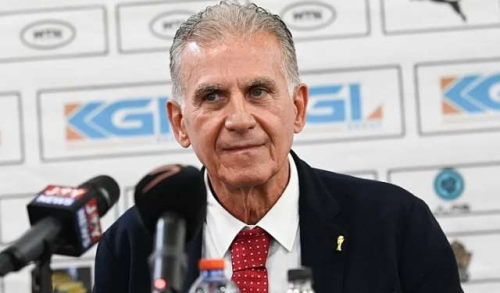
Black Stars assistant coach Roger De Sa has confirmed his own exit from Ghana’s technical team, while casting doubt on reports that head coach Carlos Queiroz has also left.

De Sa told KickOff Magazine that his agreement with the Ghana Football Association covered only the World Cup campaign and expires July 31. He joined the technical setup in April, reuniting with Queiroz, whom he had previously worked alongside at Egypt and Iran.

The confusion over Queiroz’s status traces back to a social media post he shared after Ghana’s Round of 32 exit, thanking players, fans and the GFA, which many interpreted as a farewell message. Queiroz has since said in a separate video that he did not resign and remains in charge. De Sa backed that account, saying any departure would have been communicated to him directly. “He would have told me if that’s the case,” he said.

Ghana’s run at the tournament included a 1-0 win over Panama, a scoreless draw with England and a 2-1 loss to Croatia in the group stage, enough to advance as one of the best third placed teams before a 1-0 defeat to Colombia ended the campaign in the Round of 32, Ghana’s first knockout stage appearance since 2010.

Reflecting on the tournament, De Sa said the technical team’s biggest challenge was inheriting a squad on a six match losing streak with little preparation time, made harder by managing a group of players drawn almost entirely from clubs across Europe.

The uncertainty around the coaching staff comes even as separate reports indicate the GFA and Sports Ministry have already agreed to offer Queiroz a new two year contract. Whatever is decided, Ghana will need a settled technical team in place before September, when the Black Stars open 2027 Africa Cup of Nations qualifying away to Ivory Coast.

Queiroz Set For New Two Year Black Stars Deal

0

Carlos Queiroz is set to sign a two year contract to remain Black Stars coach after guiding Ghana past the World Cup group stage for the first time since 2010.

The Ghana Football Association and the Ministry of Sports and Recreation reached consensus after reviewing Ghana’s tournament run, according to multiple reports. Queiroz’s current four-month deal, signed in April, expires July 31, and the new two-year agreement is expected to be finalized in the coming days, running through the 2027 Africa Cup of Nations.

Queiroz took over in April after the GFA dismissed Otto Addo following back to back losses to Austria and Germany. Across five matches at the helm, he recorded one win, two draws and two defeats, including a win over Panama and a draw against England in the group stage, before Ghana was eliminated in the Round of 32 by Colombia.

Officials point to his experience at both World Cup and continental level as the reason for keeping him. The 73 year old Portuguese has previously led Portugal, Iran and Egypt at senior international level, alongside a stint managing Real Madrid and two spells as Alex Ferguson’s assistant at Manchester United. Sports Minister Kofi Adams had already signaled openness to extending his tenure during the tournament itself. “Ghanaians are already giving the indication that we should keep him for some time,” Adams said at the time.

His main assignment now shifts to ending Ghana’s wait for a continental title since 1982, the longest active drought for a team of the Black Stars’ stature in Africa Cup of Nations history.

The extension talks follow recent resignation rumors, which Queiroz publicly denied after a Ghanaian fan approached him abroad and asked whether he had stepped down. An official announcement on the new contract is expected once final details are completed.

NDC MP: Aboagye Ignored EOCO Invitation

0

An NDC lawmaker says Dennis Miracles Aboagye’s arrest followed his refusal to honor an EOCO invitation over fraud allegations tied to his former government role, a claim the NPP disputes.

Akwatia MP Bernard Bediako Baidoo, speaking on Adom TV’s Badwam program, said Aboagye is being investigated over alleged fraud connected to his tenure as former Executive Secretary of the Inter-Ministerial Coordinating Committee on Decentralization. He argued that public officials have an obligation to answer such invitations, and that refusing one can justify an arrest. “We must all know that once you have served in a government,” he said, describing accountability as something every former official should expect.

Bediako was careful to separate the allegation from a verdict. He said he was not declaring Aboagye guilty, only that an investigation was underway, and urged the public to withhold judgment until it concludes. He pointed to similar arrests under the previous NPP administration, including cases where officials cited ill health, as evidence that such actions are not unprecedented.

His account directly contradicts what NPP National Organiser Henry Nana Boakye has said publicly. Boakye maintains Aboagye received no invitation from EOCO and was never informed of any wrongdoing before his arrest at the airport, a version the NPP has used to demand his release or formal arraignment before a court.

The dispute echoes comments Aboagye himself made in May, when he pushed back on the idea that being invited by EOCO or the Bureau of National Investigations implies guilt, arguing that every former government official should expect to answer questions about their time in office and that an invitation alone does not make someone a criminal.

Bediako said EOCO was expected to issue a statement clarifying whether an invitation had in fact been sent to Aboagye and ignored, a detail that would settle the central factual disagreement between the two accounts.

Benin’s Industrial Zone Offers Blueprint For Ghana

0

Afreximbank backed industrial zones in Benin and Togo have drawn more than a billion dollars in investment, a model Ghana hopes to replicate through its planned Tema Integrated Industrial Park.

Benin’s Glo-Djigbé Industrial Zone, known as GDIZ, now accounts for roughly a quarter of the country’s exports. Independent tracking of the project by its backers puts total Phase 1 investment at $1.4 billion, including more than $1 billion in foreign direct investment, across a 1,640 hectare site that grew from about 400 hectares built out in 2023 to a dozen operational units employing over 10,000 workers.

Togo’s Adétikopé Industrial Platform has followed a smaller trajectory, drawing tens of millions of dollars in foreign investment and generating well over $100 million in revenue since launch, with several thousand jobs created in agricultural processing and logistics.

Both parks are run by ARISE Integrated Industrial Platforms, backed by Afreximbank’s equity investment arm, the Fund for Export Development in Africa, known as FEDA. The network now spans multiple countries and thousands of hectares of industrial land, part of a broader push to shift African economies away from exporting raw commodities and toward local manufacturing under the African Continental Free Trade Area.

Ghana’s version of that model is furthest along in Tema. The Ghana Integrated Aluminium Development Corporation, TDC Ghana Ltd and ARISE IIP incorporated the Tema Integrated Industrial Parks Company in April to build a 100 to 120 hectare park in the Tema Heavy Industrial Area, on land next to the Volta Aluminium Company smelter. The project is expected to create more than 4,000 direct jobs, anchor downstream aluminium processing and support President Mahama’s 24 hour economy agenda.

GDIZ started from a similarly modest footprint before growing into a site hosting dozens of investors and shifting Benin’s national export mix. If Tema follows a comparable path, it could meaningfully diversify Ghana’s exports beyond raw bauxite and aluminium, the kind of outcome Afreximbank says depends on sustained investment in industrial infrastructure across the continent as it projects manufacturing value added growth accelerating to 4 percent in 2026 from about 3.2 percent this year.

NPP Probes Violence In Four Constituency Elections

0

The NPP is investigating violent disruptions in four constituencies, including a Bantama vote that police declared a crime scene after men stormed the venue and destroyed ballots.

General Secretary Justin Kodua Frimpong said the party’s National Steering Committee will review events in Afigya Sekyere East, Bantama, Adansi Asokwa and Asante Akyem Central following weekend constituency executive elections held nationwide.

The worst of the violence hit Bantama. At the Kumasi Cultural Centre on Saturday, a group of men allegedly stormed the venue, destroying ballot boxes and papers and assaulting an election official who suffered a foot injury and was taken to Komfo Anokye Teaching Hospital. Police arrested three people, including constituency organiser Shaibu Bamba and Adoato polling station chairman Abu, and the venue, where 1,218 delegates were registered to vote, was later declared a crime scene. “Machomen invaded the venue and started smashing EC items,” one witness said. The disruption followed a Kumasi High Court injunction sought by three party members, Paul Asare, Marcus James Kwadwo Osei and Enoch Ofori Amanfo, over allegations that delegate names had been removed from the electoral album. Some officials reportedly proceeded with the vote despite the order.

In Afigya Sekyere East, broadcaster and aspiring parliamentary candidate Okatakyie Afrifa-Mensah was arrested along with several members of his team after a confrontation tied to a separate court injunction seeking to halt that constituency’s election.

Beyond the four flagged constituencies, the party reported broader success. It said 245 of its 276 constituencies, or 88.7 percent, held peaceful elections over the weekend, while 23 remain on hold over various disputes. Voting could not proceed at all in Ningo Prampram, Atwima Mponua, Obuasi West and Trobu because of last minute problems, the party said. Separately, courts also suspended elections in Assin South and Bibiani pending legal challenges.

Frimpong said the National Secretariat remains committed to resolving the outstanding disputes and thanked party members for taking part in the internal vote, which forms part of the NPP’s reorganization ahead of the 2028 general election.

Rossi And Norris Steal The Show At Goodwood

0

Valentino Rossi made his first Goodwood Festival of Speed appearance in over a decade this month, riding his retired Yamaha MotoGP bike alongside Formula 1 champion Lando Norris.

The weekend opened with a Friday balcony moment that fans are already calling one of the festival’s biggest. Norris arrived driving a 1996 Liberty Walk Nissan S13 drift car, laying down thick tyre smoke through a series of burnouts in front of Goodwood House before parking the car beside Rossi’s motorcycle. The pair then climbed to the balcony together with the Duke of Richmond, sending the crowd gathered below into a frenzy.

Rossi returned to the famous Hill on Saturday aboard his 2020 Monster Energy Yamaha MotoGP YZR-M1, the same bike he raced before retiring at the end of the 2021 season and his first time riding it since. He led a demonstration run joined by fellow Monster Energy athletes, including Norris, drift driver Steve “Baggsy” Biagioni, rally driver Petter Solberg, and motorcycle racers John McGuinness and Michael Dunlop, as the M1’s engine note echoed across the Sussex estate.

“I am very happy and proud to be back at Goodwood,” Rossi said, marking his first appearance at the event since 2015.

Biagioni had already set the tone earlier in the week, debuting a new 1000 horsepower Toyota GR Corolla drift car ahead of the weekend’s headline runs.

The pairing carried extra weight this year. Norris arrived fresh off winning his maiden Formula 1 world championship with McLaren, while Rossi’s return brought nine world titles and 115 Grand Prix wins back to a hill he hadn’t climbed in more than ten years, giving fans a rare crossover moment between two generations of motorsport.

Vietnam Detains Captain After Boat Kills 15 Indians

0

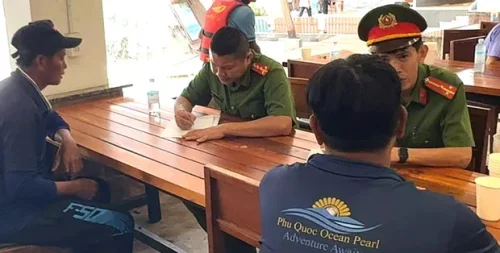
Vietnamese police detained the captain of a speedboat that capsized off Phu Quoc island Saturday, killing 15 Indian tourists on a company trip.

Captain Nguyen Hong Hai, 57, is under investigation for alleged violations of waterway transport safety regulations, according to state media. The boat was carrying 32 Indian tourists and four Vietnamese crew members when it flipped less than half a kilometer from shore, shortly after leaving Hon May Rut Ngoai island, about 10 kilometers south of Phu Quoc. Waves as high as 3 meters hampered the rescue that followed.

Ashish Kumar, a 48 year old distributor from the Indian city of Guntur who was traveling with the same company group, watched the accident unfold from shore. “We screamed, ‘Help! Help!'” he told The Associated Press. A nearby boat operator, identified only as Loc, said rough seas kept him from getting close enough to the capsized vessel to risk his propeller injuring people in the water, so his crew threw life buoys and pulled four survivors aboard within ten minutes. Loc then recorded video to alert other boats in the area, and within minutes nearly a dozen boats and rescue teams had converged on the scene, with jet skis reaching survivors more easily than larger vessels could.

Passengers told Vietnamese state media the captain had instructed everyone to wear life jackets before departure, but many were carrying rather than wearing them when the boat overturned, forcing some to escape through the bow or through windows. Kumar said no emergency medical care was available on shore when survivors were brought in, so tourists and tour staff took turns performing CPR and administering oxygen until two emergency doctors and a nurse arrived. Seventeen injured passengers were admitted to Phu Quoc Sun Hospital, and one remains in critical condition.

The Indian Embassy in Hanoi said Sunday that 16 survivors had been discharged and were returning to India, while the bodies of those killed were being transported to Ho Chi Minh City ahead of repatriation once official formalities are completed. The embassy said ten of the dead were from Tamil Nadu, three from Andhra Pradesh and two from Kerala.

All 15 victims were taking part in a trip organized by Lava International, an Indian smartphone and electronics manufacturer, for its employees, distributors and retail partners, the company confirmed.

Phu Quoc, known for its white sand beaches, is one of Vietnam’s most visited destinations, and India has become one of the country’s fastest growing tourism markets. Vietnam welcomed roughly 750,000 Indian visitors in 2025, up nearly 50 percent from the year before, growth officials attribute to expanding direct flights and the country’s e-visa policy.

Senator Lindsey Graham Dies Of Aortic Dissection

0

U.S. Senator Lindsey Graham died Saturday night of an aortic dissection linked to chronic heart disease, Washington’s medical examiner said in preliminary findings released Sunday.

The 71-year-old South Carolina Republican was pronounced dead at George Washington University Hospital at 10:23 p.m. Saturday. The medical examiner’s office listed the cause as aortic dissection due to arteriosclerotic cardiovascular disease, a tear in the body’s main artery brought on by hardened, plaque narrowed blood vessels. Officials said Graham’s death certificate will remain pending until toxicology and microscopic testing are complete, a standard part of any autopsy conducted in the District.

Emergency crews were dispatched to Graham’s Capitol Hill residence around 8:30 p.m. Saturday after a 911 call reporting cardiac arrest. Dispatch audio reviewed by Fox News Digital indicates responders faced a brief delay getting inside because of a deadbolted door. First responders performed CPR at the scene before transporting him to the hospital, where he was later pronounced dead.

The collapse came just hours after Graham returned from an official trip to Kyiv, where he met Ukrainian President Volodymyr Zelensky on Friday. Around 7 p.m., shortly before he fell ill, Graham spoke by phone with President Trump, who was scheduled to appear alongside him on NBC’s Meet the Press the next morning. “He sounded great actually. He was like a member of the family to me,” Trump said.

Aortic dissections strike roughly 20,000 Americans a year and are frequently fatal outside a hospital, in part because standard heart attack testing such as an EKG can look normal even as the artery is tearing. Graham’s father died of a heart attack at 68, a family history doctors say raises the risk of the same condition.

Tributes followed from across the political spectrum and beyond U.S. borders. Zelensky praised Graham’s ten wartime visits to Ukraine and his advocacy for the country’s defense. Israeli Prime Minister Benjamin Netanyahu and President Isaac Herzog also offered condolences, describing Graham as one of Israel’s closest friends in Washington.

Graham’s death closes out a two decade Senate career built largely around foreign policy and defense, including a hawkish stance on Middle East interventions and strong support for arming Ukraine. He famously clashed with Trump during the 2016 Republican primary while defending the late Senator John McCain, before the two men later built one of the closest working relationships between the White House and Capitol Hill.

United Close In On Tielemans After Ederson Deal Collapses

0

Manchester United are in advanced talks to sign Youri Tielemans from Aston Villa, turning to the Belgium captain after their move for Atalanta’s Ederson fell through over medical concerns.

Tielemans, 29, has a release clause reported at around £35 million, or roughly $47 million, with two years remaining on his Villa contract. United are prepared to trigger it, and reports suggest the Belgian favors the move despite interest from elsewhere.

He arrives with a strong recent résumé. Tielemans has spent three seasons at Villa Park, scoring in last season’s Europa League final win over Freiburg, and captained Belgium at this year’s World Cup, scoring twice in a dramatic 3-2 round of 32 win over Senegal before Belgium’s run ended against Spain in the quarterfinals.

The move addresses a midfield United have been short on since Casemiro left at the end of his contract. Manuel Ugarte, once earmarked for sale, suffered an ACL injury with Uruguay at the World Cup and is now expected to stay and recover rather than depart, leaving Michael Carrick’s squad thinner in central midfield than planned. Talks with Villa accelerated once Belgium were eliminated from the tournament.

Tielemans would join Andrey Santos in United’s midfield rebuild, with the club having already agreed a fee in the region of £50 million, or about $67 million, to sign the Chelsea midfielder. Villa, anticipating Tielemans’ departure, have moved quickly of their own accord, agreeing a deal for Freiburg’s Johan Manzambi, though he operates in a more advanced role than Tielemans.

United have also completed a separate piece of goalkeeping business, signing Karl Darlow on a free transfer after his contract at Leeds expired. Darlow will serve as backup to first choice Senne Lammens, with current second choice Altay Bayindir expected to leave Old Trafford this summer.

Sky Sports’ Dharmesh Sheth said the pace of the Tielemans discussions reflects how quickly a release clause deal can come together once a club decides to meet it. “This kind of deal can move very, very quickly,” he said.

Former Minister Nnaji Denies Forgery, Gets Bail

0

Nigeria’s ICPC arraigned former Science and Technology Minister Uche Nnaji on six counts of certificate forgery and money laundering Monday, and a Federal High Court granted him bail.

The Independent Corrupt Practices and Other Related Offences Commission, known as ICPC, brought the charges before Justice Joyce Abdulmalik in Abuja. Nnaji pleaded not guilty to all six counts.

The commission alleges that between August 2023 and October 2025, while serving as minister, Nnaji received roughly 29.5 million naira through a Fidelity Bank account as salary and allowances tied to a ministerial post it says he secured using forged credentials. Prosecutors say he presented a University of Nigeria, Nsukka degree certificate in Microbiology and Biochemistry and a National Youth Service Corps discharge certificate during his 2023 ministerial screening, both of which the university and the service corps have reportedly disowned as fraudulent.

Nnaji’s counsel, Chief Ogwu Onoja, a Senior Advocate of Nigeria, told the court a bail application had already been filed. ICPC counsel Osuobeni Akponimisingha said the prosecution was ready to proceed with three witnesses but did not oppose bail, leaving the decision to the court. Justice Abdulmalik granted bail of 20 million naira with one surety in like sum, ruling that the surety must be a federal civil servant at Grade Level 15 or higher who has held a fixed address for at least four years and can produce proof of employment. She also ordered Nnaji to surrender his international passport and other travel documents to the court.

Nnaji was arrested on June 30 by the Department of State Services at Nnamdi Azikiwe International Airport in Abuja as he returned from Enugu, following a June 11 court order that authorized his arrest after he allegedly missed repeated ICPC interview invitations. He resigned from the ministry in October 2025, describing it at the time as a decision made to respect due process, and has denied any wrongdoing, casting the allegations as politically motivated. “An orchestrated and sustained campaign of falsehoods,” he said of the accusations against him.

More than 300 people gathered outside the courthouse under the banner Global Gender Safety and Moral Development, calling on the ICPC and the Attorney General to pursue the case without interference.

Infantino Opens Door To 64 Team World Cup

0

FIFA President Gianni Infantino says the organization will study expanding the 2030 World Cup to 64 teams, a proposal already rejected by UEFA and Asia’s football confederation.

Infantino told Swiss broadcaster Blue Sport that FIFA’s relevant committees will examine the idea once the current 48 team tournament in North America concludes. “It’s important to organize it for the whole world, not just Europe and South America,” he said, arguing that a World Cup built around the sport’s global reach should extend opportunity well beyond its traditional powers.

The push for expansion did not originate with Infantino. Uruguayan Football Federation President Ignacio Alonso first raised the idea at a FIFA Council meeting in March 2025, and South American confederation CONMEBOL later formalized the proposal through its president, Alejandro Dominguez, who has framed the 2030 centenary tournament as a rare chance to make the competition more inclusive. The 2030 edition already carries an unusual structure, with three ceremonial opening matches set for Uruguay, Argentina and Paraguay before the bulk of the tournament shifts to Morocco, Portugal and Spain. Under a 64 team format, each of those South American host nations could instead run a full four team group rather than a single symbolic game.

Not every confederation is on board. UEFA President Aleksander Čeferin has dismissed the plan as a bad idea for the tournament, and Asian Football Confederation President Sheikh Salman bin Ibrahim Al Khalifa has warned that opening the format to 64 teams invites pressure to expand even further, potentially toward 132 teams, which he has said would create chaos rather than progress.

Infantino has pointed to this year’s 48 team tournament as evidence the format change already works. He noted that nine of ten African teams advanced to the knockout stage, compared with just five African teams total at the last World Cup, and said every continent produced goals and at least one point in the group stage, evidence he argues that broader access lifts competitive standards rather than diluting them.

No decision has been made, and FIFA’s Council retains final authority over any change. A fuller assessment is expected only once the current tournament wraps up in the coming days.

US-Iran Strikes Escalate Across Five Gulf Nations

0

The US and Iran traded a new round of strikes overnight, with Iranian forces hitting American military sites in five Gulf countries after Washington bombed dozens of targets in Iran.

President Trump ordered US Central Command to strike around 5 p.m. ET Sunday to, in CENTCOM’s words, hold Iranian forces accountable. American forces hit Iranian air defense systems, coastal radar sites, missile and drone capabilities, and small boats using fighter aircraft, naval vessels, and, for the first time, both aerial and sea based attack drones. Iranian state media reported explosions across several provinces, and officials said a security guard was killed and four others wounded when a strike hit a water pumping station in Mahshahr County in the south.

Sunday’s action followed a larger wave of strikes overnight Saturday that hit roughly 140 Iranian sites, including missile and drone facilities, naval assets, ammunition depots, communications networks and surveillance posts, after Iran struck a commercial vessel and again declared the Strait of Hormuz closed.

Iran’s Revolutionary Guard Corps answered with attacks spanning five countries hosting US forces. In Kuwait, Iranian state media said strikes damaged fuel storage tanks and a Patriot air defense system, while other reports described HIMARS launchers and ammunition stores set ablaze. In Bahrain, the Guard said it hit helicopter maintenance facilities, a hangar housing a P-8 Poseidon aircraft, a drone command center at Sheikh Isa air base, and a separate naval facility in Juffair. Iran also claimed strikes on fuel and ammunition depots at Jordan’s Prince Hassan Air Base and on radar systems in Oman, while Qatar reported three people wounded by falling debris after intercepting incoming fire. Jordan’s military said it shot down four missiles with no casualties or damage.

The exchange comes as the US and Iran near the midpoint of a 60 day interim deal meant to lead toward a lasting end to the war that began in late February, an agreement Trump said days earlier he now considers over. United Nations Secretary General Antonio Guterres warned that a return to full scale hostilities would have catastrophic consequences.

At the center of the standoff is the Strait of Hormuz itself. Iran has again declared the waterway closed, asserting a right under its reading of the two countries’ memorandum of understanding to manage traffic through it, while the US insists the strait remains open and says its forces are escorting commercial vessels through. Shipping data show traffic through the strait has fallen to its lowest level in five weeks, even as a handful of vessels, including some coordinated with the US military, have continued to pass. Trump was blunt about his own reading of the situation. “Yeah, it’s open. We bombed the hell out of them last night,” he told NBC’s Meet the Press.

Iran’s chief negotiator, Mohammad Bagher Ghalibaf, said the attacks would continue as long as the US challenges Iran’s authority over the strait, which carries about a fifth of the world’s oil trade.

South Africa Plans Biggest Oil Reserve Since Apartheid

South Africa has proposed building a 36 million barrel strategic oil reserve, its largest fuel stockpile since the apartheid era, to guard against global supply shocks.

The Department of Mineral and Petroleum Resources published the draft Strategic Petroleum Stocks Policy for public consultation on July 9. Under the plan, the state would hold reserves equal to 60 days of national demand, split 70 percent crude oil and 30 percent refined products such as diesel and jet fuel, stored at the Saldanha Bay and Milnerton facilities. Those stocks would only be released during a declared national emergency triggered by severe supply disruption or another catastrophic event.

Licensed fuel wholesalers and importers would face a separate, mandatory requirement to hold additional inventory on top of the state reserve, shifting the country from a largely voluntary stockholding system to one backed by law. The exact size of that private sector obligation has moved during the policy’s development, with the latest draft calling for 21 additional days of cover.

The shortfall the policy is meant to close is stark. South Africa currently holds only about 8 million barrels of strategic crude, despite having storage capacity for roughly 45 million barrels at Saldanha Bay. The country now imports around 90 percent of its crude oil and refined products, consuming about 27 billion litres of fuel annually, a dependence that deepened after the country lost roughly half its domestic refining capacity to plant closures in recent years.

South Africa last built up reserves of this scale in the 1970s, when the apartheid government constructed the underground Saldanha Bay storage facility amid United Nations sanctions. Those stocks were largely wound down after 1994, and the low point came in 2015, when the state sold its entire 10.3 million barrel strategic reserve to oil traders at a price a court later ruled unlawful. The stock was not returned to the state until 2020.

This year’s Middle East war exposed just how thin that margin has become. When fighting disrupted shipping through the Strait of Hormuz earlier in 2026, South Africa’s Saldanha Bay crude could not even be processed, because the Astron Energy refinery in Cape Town, the only plant connected to Saldanha by pipeline, was offline for scheduled maintenance at the time. Crude sitting in a tank 1,400 kilometers from the nearest working refinery does little to protect supply. Mineral and Petroleum Resources Minister Gwede Mantashe has argued the country needs to change that calculus. “South Africa cannot indefinitely remain a price taker,” he said.

The government’s own consultation document estimates that a nationwide fuel shortage would cost the economy roughly 1 billion rand a day in lost output, underscoring the stakes behind the proposal.

The policy remains open for public comment. If adopted, officials say it would represent one of the most significant reforms to South Africa’s fuel security framework in decades.

Nigeria Suspends WAEC Fee Hike After Backlash

0

Nigeria’s government has suspended a planned 82 percent increase in WASSCE and NECO registration fees, from 27,500 to 50,000 naira, after public backlash forced a reversal.

The Federal Ministry of Education withdrew a June 18, 2026 letter that had approved the new fee for candidates sitting the exams from 2027 onward. That letter, signed by the ministry’s Director of Senior Secondary Education, Adeniji Ibrahim, followed a request from the West African Examinations Council itself for the increase. Ministry spokesperson Boriowo Folasade said the withdrawal will allow for a broader review with stakeholders before any final decision.

The reversal came after former Vice President Atiku Abubakar and the National Association of Nigerian Students publicly opposed the fee increase, adding pressure to a decision that had already drawn criticism from parents and teachers’ groups over how steep the jump would be for families already stretched by the cost of secondary education.

The ministry said the original proposal responded to real cost pressures. Registration fees had stayed flat for years even as expenses tied to logistics, security, printing exam materials, deploying technology and quality assurance all rose, it said, arguing that credible national examinations require sustained investment to protect their integrity.

Education Minister Dr. Maruf Tunji Alausa ordered a halt regardless. “The proposal be placed on hold,” the ministry said, in line with what it described as a commitment to inclusive, transparent and evidence based policymaking.

Before any new fee takes effect, the ministry says it will consult examination bodies, state ministries of education, school proprietors and administrators, parents’ associations, organized labor and other education stakeholders. It stressed that no adjustment will apply until that process concludes.

The ministry framed the reversal as consistent with President Bola Tinubu’s Renewed Hope agenda for education, and thanked parents and students for their patience while the review moves forward.