

The Western Regional Security Council (REGSEC), accompanied by officials of the National Anti-Illegal Mining Operations Secretariat (NAIMOS), has visited the Ghana Rubber Estate Limited (GREL) plantation in the Western Region and called on the Ghana Police Service to urgently fast-track the prosecution of arrested illegal miners, warning that unpunished offenders are returning to continue their destruction.
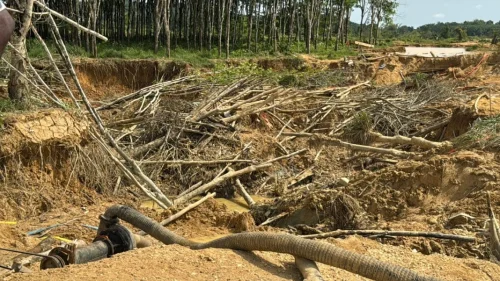
The joint inspection, led by Western Regional Minister Joseph Nelson and NAIMOS Director of Operations Colonel Dominic Buah, found extensive damage concealed beneath the plantation’s surface. Beneath an intact canopy lie dozens of excavated pits, cleared land, and approximately 10,000 felled rubber trees destroyed to enable illegal gold extraction.
GREL’s Head of Corporate Affairs, Perry Acheampong, said the plantation has logged more than 70 illegal mining incidents in the first quarter of 2026 alone, with security teams dislodging intruders on a daily basis. He welcomed the visit but directed a pointed appeal at the justice system: those arrested during a previous REGSEC operation in 2025 were not prosecuted, he said, and subsequently returned to resume mining activities. Management described the situation as getting out of hand, with illegal miners visibly expanding their footprint and felling more trees to widen their operations.
Minister Nelson acknowledged that miners have adapted their tactics, now operating during daylight hours and using new entry points to penetrate the plantation under the cover of night when surveillance is reduced. He warned that residents found complicit in facilitating access to the plantation would face serious consequences and signalled that new enforcement strategies are being considered to match the evolving methods of illegal miners.
Colonel Buah confirmed that NAIMOS preparations to deploy personnel to the Western Region are well advanced, and that the secretariat will formally announce its presence in the area within the coming weeks as part of a broader effort to curb illegal mining in forest reserves and near water bodies across the region.
GREL operates two rubber processing factories in the Western Region with a combined capacity of 20 tonnes per hour and directly employs 600 staff. The state holds a 26.75 percent stake in the company. The plantation has previously raised the alarm about polluted water sources forcing temporary factory shutdowns, making the escalation of mining activity a direct threat not only to the environment but to industrial output and employment.

