

Oil price swings and a domestic gas supply breakdown are intensifying pressure on Ghana to accelerate its nuclear power programme, with an industry official warning that prolonged institutional paralysis is now a national economic risk.
Brent crude climbed from $66.31 in early March 2025 to $96.18 by Thursday, after briefly surpassing $100 and nearing $115 at the height of Middle East tensions, exposing the vulnerability of Ghana’s fuel-dependent generation fleet to external price shocks.
At the same time, a technical fault at the Ghana National Gas Company (GNGC) processing plant forced an emergency shutdown, cutting gas supply to thermal power stations and triggering intermittent outages. The incident, linked to a failure in a key control system, has renewed concerns about the reliability of infrastructure underpinning a substantial portion of the country’s electricity supply.
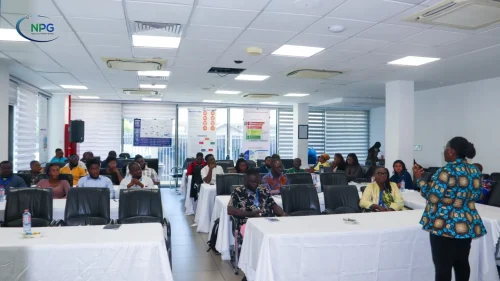
Bellona-Gerard Vittor-Quao, Public Affairs Manager at Nuclear Power Ghana (NPG) and a Volta River Authority (VRA) employee currently on secondment, said the dual disruption made the case for nuclear energy more urgent.
“Global shocks like this highlight why nuclear power is critical. It insulates the economy from fuel price volatility and provides a reliable base for growth,” she said.
Ghana’s nuclear programme, now in Phase Two of the International Atomic Energy Agency (IAEA) milestone framework, has completed site selection and received its first-ever IAEA Site and External Events Design Review (SEED) mission. However, critical technical studies including detailed site characterisation and an environmental impact assessment remain unfunded, according to Nuclear Power Ghana Executive Director Dr. Stephen Yamoah, who called on the government to intervene in March.
A separate regulatory gap has added to the uncertainty. No nuclear regulatory instrument has been passed by Parliament in nearly a decade, leaving the Nuclear Regulatory Authority (NRA) without the legally enforceable licensing and enforcement tools required under international standards, according to a Ghana News Agency investigation published earlier this month.
The original target to introduce nuclear power by 2029 has already shifted to the mid-2030s.
Vittor-Quao said a clear directive from the President was now essential, arguing that a firm decision would allow the programme’s technical experts to either commit fully or redirect their careers. She warned that competing African nations, among them Burkina Faso, Egypt, Kenya, Uganda and Rwanda, were advancing their own nuclear programmes, in some cases drawing on Ghanaian expertise, creating a real risk of talent drain and diminished strategic positioning.
Ghana has received technical cooperation from Japan, South Korea and the United States, and the Institute of Economic Affairs (IEA) convened a policy roundtable in Accra last month to build momentum. But analysts caution that without vendor selection, secured financing and resolved regulatory gaps, the programme cannot advance to the construction phase regardless of the political commitment on paper.
The Ghana Nuclear Power Programme Organisation (GNPPO), which is mandated to coordinate the programme at the highest level, has yet to function effectively at the decision-making level, further slowing implementation.
As global energy markets remain volatile and domestic supply risks persist, officials and analysts are converging on a single conclusion: the window for decisive action is narrowing, and delay now carries measurable economic consequences.

