The African Continental Free Trade Area (AfCFTA) Council of Ministers Responsible for Trade concluded its 18th Meeting in Abuja, hosted by the Federal Republic of Nigeria, at a defining moment for the continental economic trajectory.
With the Agreement’s legal architecture now substantially in place, the emphasis shifts decisively from negotiating the rules of African trade to making them work.
In a deliberate strategic choice, Ministers placed implementation — and the delivery of measurable outcomes for African businesses and citizens — at the centre of the next phase of their work, as Nigeria took the baton of Chairpersonship of the Council from the Arab Republic of Egypt.
The Meeting followed an important milestone reached at the 39th Ordinary Session of the Assembly of Heads of State and Government in February 2026, which adopted a set of Annexes to the Protocol on Intellectual Property Rights and significantly advanced the Phase II agenda.
A limited number of legal instruments remain under negotiation — notably an outstanding Annex to the Investment Protocol and a remaining Annex to the Protocol on Intellectual Property Rights — which State Parties are working to finalise.
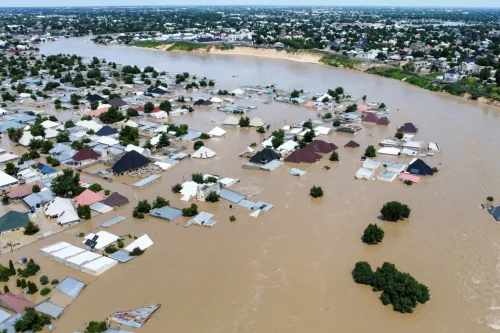
The Universal Peace Federation (UPF) Ghana has called for urgent national action to strengthen climate resilience following the devastating floods that swept through parts of the country after heavy rains on June 28 and 29.
The organisation said the recent disaster, which triggered widespread flooding, mudslides and fires, underscored the need for Ghana to shift from reactive disaster management to proactive climate adaptation measures.
The statement was jointly signed by the Chairman of UPF Ghana, Hon. Frank Fuseini Adongo, and the President of the Ambassadors for Peace Association, Amb. Ojo Samuel.
In a statement issued in Accra, UPF Ghana and its Ambassadors for Peace network expressed condolences to families who lost loved ones and sympathised with communities affected by the disaster.
According to the statement, the torrential rains resulted in more than 22 deaths, left several people missing and caused the collapse of dozens of buildings across the Central, Western North and Greater Accra regions.
Chairman of UPF Ghana, Hon. Frank Fuseini Adongo, said sustainable peace could not be achieved while climate-related disasters continued to destroy communities.
“We cannot achieve sustainable peace while climate disasters ravage our communities. We must pivot from disaster response to proactive, national climate resilience immediately,” he said.
UPF Ghana said the call aligns with the United Nations Sustainable Development Goal (SDG) 13, which seeks to combat climate change and its impacts through urgent action.
President of the Ambassadors for Peace Association, Amb. Ojo Samuel, described the floods as a wake-up call and stressed the importance of collective action to address the growing impact of climate change.
“This tragedy is a wake-up call for all of us. UPF Ghana and the Ambassadors for Peace Association reaffirm our commitment to working with government agencies, humanitarian organisations, traditional leaders, faith-based institutions and community stakeholders to support relief efforts, promote environmental stewardship, and collectively build resilient communities before more lives are lost,” he stated.
The organisation pledged to collaborate with government agencies, humanitarian organisations, traditional authorities, faith-based institutions and local communities to support ongoing relief efforts while promoting environmental stewardship and long-term climate resilience.
UPF Ghana also extended its thoughts and prayers to bereaved families and all those affected by the floods, urging stakeholders at all levels to prioritise climate action to reduce the impact of future disasters.
Apple Music today announced Nigerian singer-songwriter EKENE as the newest cover star of its Africa Rising playlist, a flagship initiative dedicated to championing the next generation of African talent.
Emerging as one of the most compelling new voices in Nigeria’s alt-pop scene, EKENE turns deeply personal experiences into thoughtful, emotionally resonant songs. Through introspective songwriting, soulful melodies and genre-fluid production, he has begun to carve out a distinctive artistic identity that speaks to a generation navigating questions of identity, belonging and self-discovery.
His debut single “Lullaby’ introduced EKENE as an artist in his own lane, with a sound rooted in stripped back, textured R&B that refuses to follow the current Afrobeats trend.
His latest project, Little Us , is a deeply introspective body of work that takes the form of a conversation between EKENE and his younger self. Rooted in the experience of growing up in a strict, religious Nigerian household, the project explores themes of identity, repression, faith and delayed self-discovery, tracing the emotional impact of the environments and belief systems that shape us.
Little Us reflects on the complexities of navigating family expectations, emotional expression and personal growth within a conservative environment. Nostalgic and reflective in tone, the project balances moments of heaviness with warmth and understanding, inviting listeners to revisit their own memories, question inherited patterns and better understand the versions of themselves they are still learning to make peace with.
“This project is really me trying to stay in touch with my younger self. I am understanding him, forgiving him, and saying the things I didn’t know how to say back then,” EKENE says of the project. “I just want people to hear it and feel seen.” Speaking on his selection as this month’s Africa Rising cover star, EKENE adds: “I am so grateful to, in some way, represent the amazing voices of my generation coming out of Africa, and doing so as a new artist makes this all the more special to me. I’m super thankful for the opportunity.”
Little Us delivers a thoughtful and emotionally rich statement that positions EKENE among a new generation of African artists reshaping the continent’s contemporary music. As this month’s Africa Rising cover star, EKENE will be featured across the Africa Rising playlist, join Ebro Darden for a conversation airing on Apple Music 1, and will feature in an Africa Now Radio episode with host Nandi Madida, offering listeners deeper insight into his journey and creative vision.
About Apple Music’s Africa Rising Campaign
Since 2020, Apple Music’s artist development programme Africa Rising has showcased the best and brightest emerging artists from around the continent, exposing them to global audiences and allowing their music to reach fresh ears. With the eyes of the world firmly fixed on Africa’s vibrant music scene, Africa Rising has spotlighted emerging African artists across the Apple Music ecosystem, including Tyla, Omah Lay, Rema, Tems, Ayra Starr, Amarae and many more.
Former Minister and Board Chairman of the Ghana Investment Promotion Centre (GIPC), Hon. Akwasi Opong-Fosu, is seeking to become the next National Chairman of the National Democratic Congress (NDC), with the contest expected to attract significant attention ahead of the party’s next organisational elections.
A founding member of the NDC, Opong-Fosu has served in several senior government positions over a public service career spanning more than four decades.
He has emerged as the frontrunner in an informal online poll conducted by Today.com.gh ahead of the National Democratic Congress (NDC)’s upcoming National Chairmanship election. The poll, which gauged public sentiment on the contest, placed Opong-Fosu firmly ahead of the other declared contenders after he secured 67.7 per cent of the votes cast.
Former Member of Parliament Nii Lante Vanderpuye followed with 19.8 per cent, while former National Chairman Samuel Ofosu Ampofo obtained 7.45 per cent. Alhaji Sinare received 4.34 per cent, with Chief Sofo Azorka polling 0.62 per cent.
Although the poll was not a scientific survey and does not reflect the views of the NDC’s delegate base, the results suggest strong public recognition and visibility for Opong-Fosu as the race begins to take shape.
Opong-Fosu is recognised as Ghana’s longest-serving PNDC District Secretary and District Chief Executive, having served continuously for 18 years before holding several ministerial and leadership positions under successive NDC administrations.
He served as Deputy Minister for Local Government under former President Jerry John Rawlings, Head of the Local Government Service and Acting Minister for Local Government under the late President John Evans Atta Mills, and later as Minister for Local Government and Rural Development, Minister for Environment, Science, Technology and Innovation, and Minister of State at the Presidency responsible for Development Authorities under former President John Dramani Mahama. He also represented the Amenfi East Constituency in Parliament from 2013 to 2017.
Beyond national politics, Opong-Fosu has held several international leadership positions, including President of United Cities and Local Governments of Africa (UCLG-Africa), Vice-President of United Cities and Local Governments (UCLG), Chairman of the ACP Local Government Platform, and a member of the United Nations Advisory Committee on Local Authorities.
Academically, he holds a PhD in Governance and Leadership from the European International University, Paris, an MSc in Public Policy and Management from SOAS, University of London, and has completed executive leadership programmes at the Harvard Kennedy School and the London School of Economics.
While the poll offers an early indication of public sentiment, accredited NDC delegates will ultimately determine the outcome of the National Chairmanship election. Opong-Fosu is contesting under the campaign theme: “Restoring Values. Renewing Mindsets. Resetting Ghana.”
World Vision Ghana, a Christian relief, development and advocacy organization dedicated to working with children, families and communities to overcome poverty and injustice, has officially opened entries for the 7th edition of the School Sanitation Solutions (Triple S) Challenge, inviting schoolchildren nationwide to pitch sustainable fixes for the country’s waste and hygiene issues.
The annual competition, which targets learners from Primary Six to Junior High School Two (JHS 2) across all 16 regions, is organized in partnership with Kings Hall Media, the Ghana Education Service (GES), and the Zoomlion Foundation.
The 2026 Essay Challenge Focus:
This year’s competition centers heavily on the theme of mindset and behavioral change.
To enter, eligible students must submit an essay answering the following prompt: “Ghana’s sanitation situation is generally poor. Meanwhile, sustained behaviour change among citizens has been identified as the ingredient required to address the country’s poor sanitation situation. As the Child Sanitation Diplomat, what practical recommendations will you make to bring about change?” INTERESTED CANDIDATES ARE REQUIRED TO READ AND OBSERVE THE FOLLOWING INSTRUCTIONS VERY CAREFULLY
1. All essays should be hand-written by the candidates themselves. If your script is shortlisted, you will be required to verbally defend it before a panel of experts at the Masters Encounter.
2. Your essay, written in the English Language, should be legible and should not be more than 1,500 words long.
3. Every point you raise should be clearly explained or articulated.
4. Write clearly at the top of your long foolscap sheet: (1) your full name, (2) name of your school, (3) town, district, and region where the school is located, and (4) telephone number of your Class Teacher AND telephone number of a parent/guardian.
5. All entries should be endorsed by a parent/guardian, put in an envelope and addressed to The Coordinator, School Sanitation Solutions Challenge, World Vision Ghana, Accra.
6. Your entry may be hand-delivered at any World Vision Ghana office in the country, including the Head Office at No. 3 Kotei Robertson Street, North Industrial Area, North Kaneshie – Accra.
7. Entries may also be submitted to any school-based SHEP Coordinator, a District or Regional SHEP Coordinator at the GES District or Regional office. Entries may also be submitted at the National SHEP Unit at the GES Headquarters in Accra.
8. You may also submit your script by post to The Coordinator, School Sanitation Solutions Challenge, World Vision Ghana, Private Mail Bag, Accra or delivered by courier service.
9. Deadline for submission of entries is 11:59 pm on Friday, 24th July, 2026. Entries received after this deadline will not be considered.
10. Only shortlisted candidates will be contacted.OTHER DETAILS ROUND ONE (THE COMMON CONTEST)
Every interested contestant submits an essay by the stated deadline to the addresses provided above. Five best entries from each of the four zones nationwide will be shortlisted for the Masters Encounter (Round Two).Only shortlisted contestants will be contacted. ROUND TWO (THE MASTERS ENCOUNTER)The 20 shortlisted contestants (5 per zone) will be invited to verbally defend their scripts before a three-member Panel of Experts at a public forum called the Masters Encounter at a designated location, which will be communicated later.
The best contestant from each zone will be selected by the panel of experts for the Grand Finale, also referred to as the Battle of Champions.
GRAND FINALE (THE BATTLE OF CHAMPIONS)
The four zonal champions will be invited to participate in the Grand Finale/Battle of Champions scheduled for Monday, 21st September 2026 at the National Theatre in Accra as part of the 3rd Children Sanitation Festival. It will be a contest on sanitation in Ghana to be moderated by Quiz Master Dan Afari-Yeboah.
The Grand Finale and Children Sanitation Festival will be telecast live on Radio & Television and streamed live on Facebook. PRIZES
Each of the 20 contestants who qualify for the Masters
Encounter will receive a certificate and attractive prizes;
The 3rd Runner-up in the Battle of Champions takes home a plaque, a tablet, a cash prize, educational materials, and attractive prizes.
The 2nd Runner-up takes home a plaque, a tablet, a cash prize, educational materials, and attractive prizes.
The 1st Runner-up takes home a plaque, a tablet, a cash prize, educational materials, and attractive prizes.
The overall winner takes home a plaque, a Laptop Computer, a tablet, a cash prize, educational materials, and attractive prizes for his/her school.
The ultimate winner of the national contest will be crowned Ghana’s next Child Sanitation Diplomat. The selected student will spearhead Water, Sanitation, and Hygiene (WASH) advocacy campaigns, influence policy discussions, and receive funding to implement a sanitation project in their local school or community.
The Inter-Governmental Action Group against Money Laundering in West Africa (GIABA) has officially launched its 2025 Annual Report, showcasing significant progress by ECOWAS Member States in strengthening their anti-money laundering and counter-terrorist financing frameworks while calling for intensified regional cooperation to combat evolving financial crimes.
The report was presented on Monday during GIABA’s Annual Briefing Session for Ambassadors, Technical and Financial Partners and the organisation’s Annual Press Conference at the Noom Hotel Dakar Sea Plaza in Dakar, Senegal on Monday 6th July 2026.
The event brought together ambassadors, representatives of ECOWAS institutions, international organisations, development partners, financial intelligence experts, government agencies and journalists from across the region.
The launch also marked a significant moment for GIABA’s Director-General, Mr. Edwin W. Harris Jr., who is preparing to conclude his tenure after years of steering the institution through one of the most challenging periods in West Africa’s fight against money laundering, terrorist financing and proliferation financing.
In an address delivered on his behalf by Acting Director of Administration and Finance, Mr. Jallow Mam Cherno, Harris described the report as a reflection of both the region’s achievements and the work that still lies ahead.
“It is with great pleasure, but also with a deep sense of responsibility, that I welcome you to this annual briefing session for ambassadors, technical and financial partners. This is also an opportunity for us to present GIABA’s 2025 Annual Report and hold our annual press conference,” he said.
Harris thanked ambassadors, development partners, ECOWAS institutions and the media for their continued support, saying their presence demonstrated a shared commitment to protecting regional economies, promoting financial governance and safeguarding peace and sustainable development across West Africa.
“Our meeting is taking place against a regional backdrop of persistent terrorist attacks, transnational organised crime, corruption, illicit financial flows and cybercrime,” he noted.
He observed that rapid technological developments, including digital transformation and crypto-assets, had created fresh opportunities for economic growth but had also opened new avenues for criminal exploitation.
“Against this backdrop, the fight against money laundering, terrorist financing and proliferation financing remains essential to the security, good governance and development of our region,” Harris stressed.
According to him, GIABA continued implementing its Strategic Plan throughout 2025 by expanding technical assistance programmes, strengthening the capacities of Financial Intelligence Units, conducting national risk assessments, organising specialised training and undertaking typology studies aimed at improving regional responses to financial crimes.
He said these interventions, supported by the Financial Action Task Force (FATF), other FATF-style regional bodies and development partners, had significantly reinforced GIABA’s position as a leading institution safeguarding financial integrity within the ECOWAS region.
Presenting the essence of the newly launched report, Harris stated that the document “bears testimony to the progress made while highlighting the challenges we need to address.”
He explained that the report documents the efforts undertaken by Member States to strengthen compliance with international standards while improving the effectiveness of national anti-money laundering and counter-financing of terrorism systems under the third round of mutual evaluations.
“The report highlights Member States’ efforts to strengthen their compliance with international standards and improve the effectiveness of their national systems, as part of the third round of mutual evaluations now focused on achieving concrete results,” he said.
Harris was quick to acknowledge that these gains would not have been possible without the unwavering commitment of GIABA’s technical and financial partners.
“These advances would not have been possible without the constant support of our technical and financial partners, to whom I say THANK YOU. Their support remains essential to enabling GIABA and its Member States address the new challenges posed by financial crime,” he stated.
Among the notable developments highlighted in the report was the Ministerial Committee’s decision to maintain the full membership of Burkina Faso, Mali and Niger within GIABA despite broader political developments within the ECOWAS sub-region.
Describing the decision as a landmark achievement, Harris said it reaffirmed the principle that the fight against financial crime must remain above politics.
“This decision reaffirms our recognition of the fact that the fight against money laundering, terrorist financing and proliferation financing transcends political considerations and requires technical cooperation based on solidarity and common interest,” he said.
He assured participants that GIABA would continue serving all Member States “with impartiality, professionalism and in strict compliance with its mandate,” adding that “the financial security of everyone strengthens the collective security of our region.”
The ECOWAS Resident Representative in Senegal, Her Excellency Mrs. Zelma Yollande Nobre Fassinou, also underscored the significance of the report, describing it as evidence of the steady progress being made by Member States despite increasingly sophisticated criminal threats.
“Our region continues to face increasingly complex security and economic challenges, characterised by terrorism, transnational organised crime, corruption, illicit financial flows and the growing use of new technologies for criminal purposes,” she said.
She stressed that regional and international cooperation remained the most effective response to these cross-border threats and reaffirmed ECOWAS’ commitment under its Vision 2050 agenda to build an integrated, prosperous and resilient community founded on democracy, transparency and responsible governance.
“For over twenty years, GIABA has played a vital role in strengthening national frameworks to combat money laundering, terrorist financing and proliferation financing. The progress made by Member States is encouraging, and the third round of mutual evaluations now focuses on the practical effectiveness of the mechanisms put in place,” she noted.
Fassinou further praised the continued support of ambassadors, development partners and international organisations, saying their contributions were essential for mobilising resources and sustaining reforms aimed at protecting the region’s financial systems.
She also acknowledged the media as indispensable partners in promoting transparency.
“I would also like to pay tribute to media professionals, whose role is essential in informing and raising awareness amongst citizens and promoting a culture of transparency and integrity. You remain indispensable partners in the prevention of economic and financial crimes,” she said.
Speaking on behalf of the Diplomatic Corps accredited to Senegal, His Excellency Hadrammeh M. Sidibeh, High Commissioner of The Gambia and Dean of ECOWAS Ambassadors, described the report as an important instrument for strengthening regional cooperation against organised financial crime.
“Our presence here today reflects a shared conviction: the security of our states is inextricably linked to their financial security,” Sidibeh declared.
He added that terrorism, cybercrime, illicit financial flows and organised criminal networks demanded collective and coordinated regional responses.
“For more than twenty-five years, GIABA has embodied this ambition. As a FATF-style regional body, it supports Member States in strengthening their AML/CFT/PF frameworks, builds the capacity of the relevant institutions and fosters ever-closer cooperation between those involved in combating financial crime,” he stated.
Sidibeh further commended the launch of the third round of mutual evaluations, saying the new phase placed greater emphasis on practical effectiveness and measurable results rather than simply complying with legal requirements.
As the event drew to a close, attention turned to Harris’ impending departure as Director-General after completing his term of office.
Reflecting on his years of service, Harris expressed profound gratitude to ECOWAS Heads of State, the ECOWAS Commission, Member States, Financial Intelligence Units, ambassadors, partners, journalists and the entire GIABA Secretariat for their unwavering support.
“I am stepping down from my position with humility, but also with the satisfaction that I am leaving behind an institution that is stronger, more credible, and better prepared to meet the challenges of the future,” he said.
He added that GIABA now possesses “recognised expertise, strengthened governance and a clear vision” to continue supporting Member States in implementing international standards.
“I remain confident that GIABA will continue its regional leadership role by supporting its Member States in strengthening more transparent and resilient financial systems for peace, security and development.”
The launch of the 2025 Annual Report climaxed with renewed commitments from ECOWAS institutions, ambassadors, development partners and Member States to deepen collaboration against financial crime and strengthen financial integrity as a cornerstone for regional peace, security and sustainable economic development.
The Royals of the current Ayikai Doblo chieftaincy arrangement have argued that the persons who performed the enstoolment of the so-called Ayi Kodjo an alleged ex-convict aka Azonto had no locus or authority to crown someone who does not hails from the recognized royal stool lineage.
According to the family head Daniel Nii Armah Tetteh, under Ga custom and the Chieftaincy Act, 2008 (Act 759), only legitimate kingmakers from the established royal family/house can validly nominate and enstool a chief.
They contend that if the installers themselves are not from the rightful lineage or lack customary authority, then the enstoolment cannot stand.
“Those who made you chief have no locus or power to crown someone who doesn’t come from the royal lineage,” stated in a rebuttal to claims by principal kingmakers supporting Ayi Kodjo
The argument comes amid controversy following the May 13, 2026 Amasaman High Court ruling that nullified the appointment of Amoo Dodoo to the Judicial Committee of the Ga Traditional Council for failing to meet statutory requirements under Act 759.
While the court ruling, Suit No. E12/AHC/73/25 did not directly address the Ayikai Doblo stool, opponents are using it to question the legitimacy of recent enstoolments within the area.
They maintain that any chief installed by persons without recognized customary authority cannot be valid under both tradition and law.
However, supporters of Ayi Kodjo maintained that he was duly and customarily installed by the rightful kingmakers of Ayikai Doblo under the Akumajey Traditional Area, and that claims questioning his lineage are unfounded.
The chieftaincy dispute continues to divide opinion in Ayikai Doblo, with both sides citing Ga tradition, custom, and statutory law to back their positions.
Former Chief Executive Officer of the National Food Buffer Stock Company (NAFCO), Hanan Abdul-Wahab Aludiba, has been arrested by law enforcement officers at the Kotoka International Airport while attempting to travel to the United Kingdom.
The arrest was disclosed on Sunday, July 5, by Deputy Attorney-General and Minister for Justice, Dr Justice Srem-Sai, in a post on his official Facebook page.
According to Dr Srem-Sai, Mr Aludiba, who is currently standing trial on charges of stealing and causing financial loss to the Republic, had earlier been granted permission by the trial High Court to travel to the UK for a few days.
However, the Deputy Attorney-General alleged that Mr Aludiba attempted to use false means to empty a frozen bank account held with Republic Bank before embarking on the trip.
“Law enforcement officers have, a while ago, arrested Mr Hanan Abdul-Wahab Aludiba at the Accra International Airport,” Dr Srem-Sai wrote.
He added: “Mr Aludiba, who is currently standing trial for stealing and causing financial loss to the Republic, was granted leave by the trial High Court to travel to the UK for a few days. It was, however, Mr Aludiba’s attempt to use false means to empty his frozen bank account with Republic Bank on Thursday which occasioned tonight’s arrest.”
Dr Srem-Sai further disclosed that the Attorney-General will return to court on Monday to seek a review of the order that permitted Mr Aludiba to travel outside the country.
“The learned Attorney-General will, on Monday, seek a review of the court order which granted Mr Aludiba leave to travel out of the country,” he stated.
Mr Aludiba is among former public officials facing prosecution over alleged financial irregularities during his tenure as Chief Executive Officer of NAFCO.
The Office of the Attorney-General has charged him with offences including stealing and causing financial loss to the Republic. He has pleaded not guilty to the charges, and the case is currently before the High Court.
As part of measures to preserve assets pending the outcome of the trial, some of Mr Aludiba’s bank accounts were reportedly frozen.
His latest arrest is expected to feature prominently in the ongoing criminal proceedings, with prosecutors likely to place the alleged attempt to access the frozen account before the court. The Attorney-General’s planned application to review the travel order could also result in stricter bail and travel conditions as the trial continues.
Every morning before dawn breaks, thousands of trotro drivers across Ghana leave their homes in search of daily bread. They endure long hours behind the steering wheel, navigate through heavy traffic, face harsh weather conditions, and shoulder the responsibility of transporting millions of Ghanaians safely to their destinations.
Yet, despite the critical role they play in keeping the country’s economy moving, many trotro drivers continue to suffer in silence.
Trotro drivers are among the unsung heroes of Ghana’s transportation system. It is estimated that more than 75 percent of Ghanaians rely on commercial buses, popularly known as trotros, for their daily transportation needs. Market women, traders, teachers, nurses, journalists, police officers, military personnel, court staff, civil servants, students, and countless others depend on these drivers every day.
Without trotros, many workplaces, schools, hospitals, and markets would struggle to function efficiently. Their contribution to national productivity and economic growth cannot be overstated.
Sadly, despite this enormous contribution, trotro drivers are often looked down upon. Many are unfairly labelled as illiterates and treated with little respect simply because society assumes they have little or no formal education. This perception ignores the fact that many of these drivers are responsible, hardworking individuals who sacrifice their comfort daily to serve the public.
As community-based journalists, we decided to investigate some of the challenges confronting trotro drivers. To better understand their concerns, we spent time on the roads and even posed as trotro mates. What we discovered was disturbing and heartbreaking.
Many drivers complain of constant harassment by some police officers on the roads. Beyond legitimate law enforcement duties, some drivers allege that they are subjected to intimidation, unnecessary delays, and in some cases, financial losses arising from confrontations with officers.
Several drivers narrated how passengers are sometimes forced to disembark from their vehicles after disputes with police officers, causing embarrassment to the drivers and inconvenience to commuters. In many cases, these incidents result in significant financial losses because the drivers lose both time and potential income.
Even more worrying are claims from some drivers that personal disagreements, misunderstandings, or even facial expressions have occasionally been interpreted negatively by certain officers, leading to confrontations that could otherwise have been avoided.
The Courtroom Fear
For many trotro drivers, the greatest fear begins when a roadside confrontation ends in court.
Some drivers allege that after disagreements with police officers, they are arrested and prosecuted for various offences. Whether guilty or innocent, many of them enter the courtroom frightened and confused.
According to multiple sources, many drivers say they live in constant fear of encountering some unprofessional police officers who allegedly accuse them of offences they did not commit. Others also claim that certain officers treat them as though they have personally wronged them, rather than simply enforcing the law.
The courtroom environment itself can be intimidating. Standing before a judge beneath the National Coat of Arms is enough to make even highly educated individuals nervous. For drivers with little formal education and no legal training, the experience can be overwhelming.
Many appear in court without legal representation. Some struggle to understand legal procedures, while others find it difficult to explain their side of the story effectively. Out of fear and panic, they often remain silent or fail to communicate important facts that could assist their defence.
The result is a growing feeling among many drivers that they are vulnerable and alone when confronted by the justice system.
A Call for Fairness and Protection
This article is not intended to shield drivers who deliberately break the law. Road safety regulations exist for a reason and must be respected by all road users.
However, there is also a need to ensure that every driver is treated with dignity, fairness, and respect. Law enforcement must always be professional, impartial, and guided by justice.
We therefore respectfully call on the Inspector-General of Police (IGP) to strengthen oversight mechanisms and ensure that officers who interact with commercial drivers conduct themselves professionally at all times.
We also appeal to the Chief Justice to explore measures that can improve access to justice for vulnerable road users, including commercial drivers who may not fully understand court procedures or cannot afford legal representation.
A Stronger Role for GPRTU
The Ghana Private Road Transport Union (GPRTU) must also rise to the occasion.
The union should intensify education and orientation programmes for drivers on their rights, responsibilities, and obligations under the law. Drivers must be equipped with the knowledge needed to navigate interactions with law enforcement officers respectfully and lawfully.
Beyond education, the union should establish stronger legal support systems for its members. Emergency legal assistance, legal aid desks, and dedicated hotlines could help drivers facing challenges on the road or in court.
A driver who spends his entire day transporting citizens should not feel abandoned when confronted with legal or administrative difficulties.
The Human Side We Often Ignore
Behind every trotro steering wheel is a human being.
A father struggling to pay school fees.
A husband trying to provide for his family.
A young man working tirelessly to survive in a difficult economy.
When a trotro driver loses an entire day’s income because of avoidable harassment or unnecessary delays, it is not only the driver who suffers. His wife suffers. His children suffer. His dependents suffer.
As a nation, we must begin to see trotro drivers not merely as operators of commercial vehicles but as hardworking citizens whose contribution deserves recognition, protection, and respect.
The wheels of Ghana move because they move.
It is time their voices were heard.
As the saying goes, until the lion tells its own story, the hunter will always be celebrated as the hero while the lion is portrayed as the villain. It is time for the narrative to change by ensuring that every side of the story is heard.
Story By: Felix Ernest Odamtten / Faisal Mustapha Muhammad
As Ghana continues to grapple with devastating floods that claim lives, destroy businesses, and displace families almost every rainy season, renewed attention is being directed toward the country’s urban planning and housing development policies. For Mr. Kofi Anokye, Chief Executive Officer of Koans Estate, the flooding crisis is not simply a consequence of heavy rainfall but the result of years of poor planning, weak enforcement, and unsustainable development.
In an exclusive interview with Felix Ernest Odamtten / Faisal Mustapha Muhammad, Mr. Anokye argued that recurring floods have become one of the greatest threats to Ghana’s urban growth, warning that unless decisive action is taken, the economic and social costs will continue to rise with every passing year.
According to him, inadequate drainage infrastructure remains one of the principal causes of flooding across the country. He noted that drains are often poorly designed, poorly maintained, or unable to accommodate the increasing volume of stormwater generated by rapid urban expansion.
He further identified indiscriminate disposal of refuse into drainage channels, uncontrolled construction activities, encroachment on waterways, and weak enforcement of planning regulations as major contributors to the persistent flooding that affects many communities.
“The floods we experience today are largely preventable,” Mr. Anokye said. “When cities expand without proper planning and environmental responsibility, nature eventually responds. Flooding is the price society pays for ignoring sound development principles.”
The Chief Executive explained that the real estate sector has suffered significantly from recurring floods. Residential properties are damaged, roads and essential infrastructure deteriorate rapidly, and investors become increasingly reluctant to commit resources to communities perceived as high risk locations.
He added that homeowners also bear enormous financial burdens through expensive repairs, rising maintenance costs, declining property values, and the emotional distress associated with repeated flood disasters.
Mr. Anokye believes estate developers have a critical responsibility in reversing this trend. Developers, he stressed, must go beyond constructing houses by integrating resilient drainage systems, preserving natural waterways, and complying fully with planning regulations throughout every stage of development.
While acknowledging that Ghana possesses reasonable building regulations, he maintained that the greatest challenge lies in enforcement. He called for stronger institutional oversight, greater accountability, and uncompromising compliance to ensure that existing laws achieve their intended purpose.
“Regulations without enforcement cannot protect lives,” he emphasized. “Every approved development must meet environmental standards, because one poorly planned project can expose an entire community to disaster.”
Discussing infrastructure, Mr. Anokye described efficient drainage systems as indispensable components of every housing development. Proper drainage, he noted, safeguards human lives, protects valuable investments, and enhances the long term sustainability of residential communities.
He urged government to immediately intensify nationwide desilting exercises, modernize drainage networks, remove illegal structures obstructing waterways, enforce planning laws consistently, and strengthen environmental sanitation education among citizens.
On construction within waterways and flood-prone zones, Mr. Anokye expressed an uncompromising position. He argued that such developments should be prohibited entirely because no economic gain can justify exposing lives and public infrastructure to avoidable danger.
Recognizing the scale of investment required, he advocated stronger public private partnerships capable of mobilizing finance, engineering expertise, innovative technologies, and long-term maintenance strategies for modern urban drainage systems across Ghana.
For prospective homebuyers, Mr. Anokye advised exercising due diligence before purchasing property. He encouraged buyers to verify land ownership documents, investigate the flood history of prospective locations, assess drainage infrastructure, and work only with reputable developers committed to responsible planning.
Looking ahead, he called for comprehensive urban planning supported by sustained investment in resilient infrastructure, environmental conservation, effective land-use management, and continuous public awareness campaigns that encourage responsible environmental practices.
“Our cities must be designed not only for today’s population but for future generations,” Mr. Anokye concluded. “Flood resilience is an investment in national development, economic stability, and the protection of human life.”
As climate change continues to intensify extreme weather events worldwide, Mr. Kofi Anokye’s message resonates far beyond Ghana’s real estate industry. His appeal underscores a growing consensus among development experts that sustainable planning, responsible construction, effective governance, and collective public action are indispensable if Ghana is to build safer, more resilient cities capable of withstanding the environmental challenges of the future.