

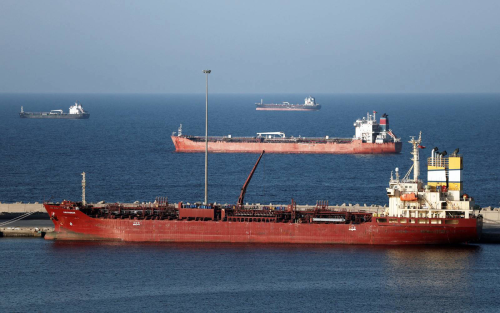
A French-owned container vessel has become the first ship linked to a Western European operator to transit the Strait of Hormuz since hostilities erupted at the end of February, offering the earliest sign yet that limited commercial shipping may be cautiously resuming through the world’s most critical energy corridor.
The CMA CGM Kribi sailed from waters off Dubai toward Iran on Thursday afternoon local time, signalling that its owner was French. It hugged the Iranian coast, moving through the channel between the islands of Qeshm and Larak while openly broadcasting its journey. By Friday morning it was off Muscat, Oman.
The Maltese-flagged vessel is a 5,466 Twenty-foot Equivalent Unit (TEU) containership built in 2014 and belongs to CMA CGM, the world’s third-largest container shipping line. The company is majority-owned by the Saade family and is understood to have coordinated the transit with Iranian maritime authorities. The vessel is believed to be heading toward Pointe-Noire in the Republic of Congo as part of a service linking India, the Middle East Gulf, and Africa.
On the same day, an Omani liquefied natural gas (LNG) tanker, the Sohar LNG, also exited the strait hugging the Omani coastline, becoming the first such vessel to make the crossing since the war began. The vessel had been circling the Persian Gulf for close to a month before successfully navigating the waterway.
A corridor under strain
The crisis began on February 28, 2026, when the United States and Israel launched large-scale strikes on Iran. Tehran retaliated by issuing warnings prohibiting vessel passage through the strait and conducting attacks on commercial shipping, reducing transits to near zero within days. Major container lines including Maersk, CMA CGM, and Hapag-Lloyd suspended services through the waterway.
The disruption has affected roughly 20 percent of the world’s crude oil and LNG supplies, driving up energy prices globally. The blockade has also interrupted exports of petrochemicals, fertiliser, and raw materials used in plastic manufacturing.
Oxford Economics raised its fertiliser price forecast by around 20 percent for the second quarter of 2026 as a direct result, warning that risks remain skewed further upward given the potential for continued disruption to Gulf production.
Wider commodity impact
The Middle East Gulf accounts for 16 to 18 percent of global seaborne fertiliser exports, primarily sulphur and urea, with Saudi Arabia alone shipping close to 14 million tonnes from its eastern ports annually. Qatar and Kuwait have already seen production curtailments.
The United Nations Conference on Trade and Development (UNCTAD) has warned that rising fertiliser costs are threatening agricultural production across import-dependent and economically vulnerable nations. Freight rates for oil tankers have risen by more than 90 percent since late February, bunker fuel prices have nearly doubled, and war risk insurance premiums have surged, with some insurers withdrawing coverage for vessels in the Persian Gulf entirely.
For Ghana, the disruptions have compounded pressures across multiple sectors. The country depends heavily on fertiliser imports routed through the Middle East, raising concerns over planting cycles and food inflation. Raw materials for sachet water production and other everyday consumer goods have also faced supply delays, pushing manufacturers toward potential price increases.
Cautious optimism
Iran is reportedly drafting a protocol with Oman to secure traffic through the strait, with discussions underway about potential transit arrangements including toll payments. US President Donald Trump told NATO allies this week that the hard part of the conflict with Iran was done, urging them to take responsibility for securing oil flows through the waterway.
Analysts caution that even if the strait reopens fully, clearing the backlog of stranded vessels and restoring normal supply chains could take months. For now, the movement of the CMA CGM Kribi and the Omani LNG tanker represents the most concrete sign yet that a partial resumption of commercial traffic through one of the world’s most strategically vital waterways may be underway.

