

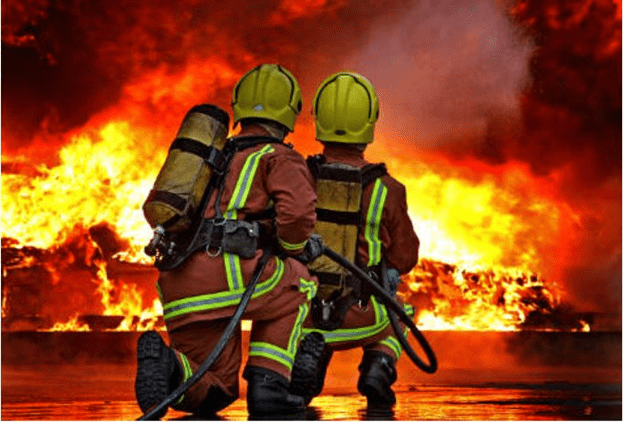
The Ghana National Fire Service (GNFS) has warned that assaults on firefighters and vandalism of fire equipment pose a direct threat to public safety, as the service battles persistent operational challenges that already slow emergency response times.
Speaking on Bullet TV, GNFS Public Relations Officer Divisional Officer (DO) II Desmond Ackah disclosed that the service has recorded more than 30 assault cases against personnel and fire tenders since 2021. He said the attacks come even as firefighters respond to emergencies to save lives and property, straining a service that already operates with limited resources.
Ackah stated that anyone found responsible for physically or verbally attacking fire officers, or for vandalising equipment, will face legal consequences. He stressed that fire engines are aging, costly to repair, and few in number, making each act of sabotage a setback for entire communities that depend on those same vehicles.
The warning comes amid growing national concern over attacks on uniformed personnel. This year’s International Firefighters’ Day, celebrated earlier this week, was themed around ending assaults and protecting firefighters, reflecting how widespread the problem has become.
Beyond security, Ackah identified structural gaps that hinder the service long before any assault occurs. He said many communities lack functioning fire stations or fire tenders, forcing officers to travel from distant districts. Poor road conditions, inaccurate location descriptions from callers, prank calls, and traffic congestion that blocks fire tenders with active sirens all compound delays.
“Every second counts during a fire situation,” he said, urging the public to call the emergency line promptly, avoid false reports, and give clear directions when reporting fires.
He also criticised the common practice of giving vague location references, noting that firefighters cannot rely on informal landmarks to navigate to an active fire scene. Motorists, he added, are legally and morally obligated to clear the way for fire tenders displaying sirens.
To address personnel security, Ackah said the GNFS is training a dedicated fire police wing that will accompany emergency teams and provide protection during operations.
He called on district assemblies and the national government to invest in additional fire stations and modern equipment, arguing that broader coverage would allow the service to meet internationally accepted response times.

