

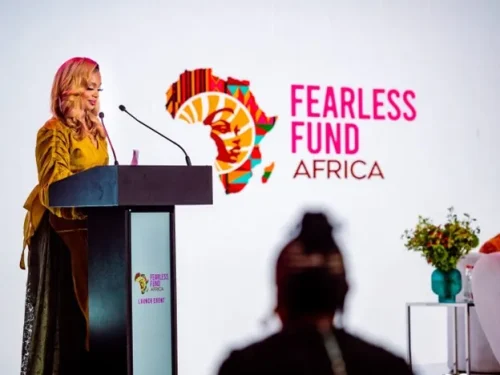
The Fearless Fund Africa formally launched in Accra on Wednesday, with its co-founder and Chief Executive Officer (CEO) Arian Simone presenting new World Economic Forum (WEF) data showing that closing the gender financing gap across the continent could unlock up to $316 billion in additional gross domestic product (GDP), making the economic case for investing in women entrepreneurs one of the most compelling in global development finance.
Speaking at the launch, Ms. Simone said African women entrepreneurs are too often misclassified by conventional lenders. “They are high-return, not high-risk,” she said, noting that Africa records the highest rate of female entrepreneurship globally, with one in three women either running or intending to start a business. In Ghana specifically, she said women own nearly half of all businesses but continue to face structural barriers that prevent them from growing beyond micro-scale operations.
The financing gap, she said, is quantifiable. Women entrepreneurs face a $42 billion shortfall in access to capital and receive less than seven percent of total venture capital inflows on the continent.
In response, the Fund has launched a microfinance initiative in Ghana offering small loans ranging from GH₵10,000 to GH₵30,000, alongside a GH₵100,000 pitch competition targeting women-led businesses in the fast-moving consumer goods (FMCG) sector. The initiative forms part of a broader model that has mobilised over $240 million globally to support under-resourced founders shut out of conventional credit markets.
The Fund’s capacity-building arm, the Get Venture Ready programme, will run alongside the financing component to equip women entrepreneurs with the skills, networks, and mentorship needed to scale internationally. A separate $50 million venture arm targets women-of-colour-led businesses at pre-seed, seed, and Series A stages, while the Fearless Foundation non-profit has committed over $5 million in grants toward mentorship, education and innovation.
Delivering a keynote on behalf of the Deputy Chief of Staff for Administration, Nana Oye Bampoe Addo, government representative Juliana Ama Kplorfia said Ghanaian women own approximately 46.4 percent of businesses nationally, one of the highest ownership rates in the world, yet most operate below their potential due to limited access to capital, markets, and investment-readiness support.
She described the Fund’s entry into Ghana as timely and said the government remains committed to strengthening the enterprise ecosystem through institutions including the Microfinance and Small Loans Centre (MASLOC), the Venture Capital Trust Fund (VCTF), and the Ghana Enterprises Agency (GEA).
“The opportunity is clear. Women-led businesses are already driving economic activity across Ghana. With the right support, they can scale faster, create more jobs and contribute more significantly to national development,” she said.

