

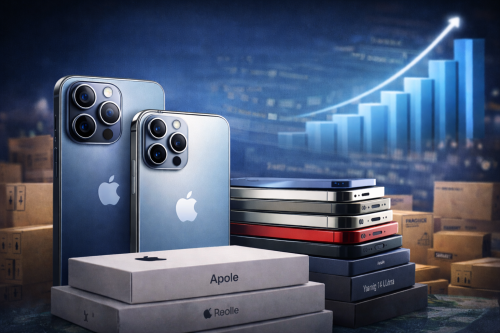
Apple has led the global smartphone market in the first quarter of 2026 for the first time in any opening quarter on record, according to preliminary data published on Friday by Counterpoint Research, even as a severe shortage of memory components pushed overall industry shipments sharply lower.
Global smartphone shipments declined 6 percent year-on-year in Q1 2026, driven by shortages of Dynamic Random-Access Memory (DRAM) and NAND flash memory components. Apple led the quarter with 21 percent market share, growing 5 percent year-on-year, supported by strong demand for the iPhone 17 series, proactive supply chain management, and improved performance in China.
Apple posted a 23 percent surge in China smartphone sales in the first nine weeks of 2026, with Counterpoint attributing the company’s overall performance to its premium positioning and integrated supply chain.
Samsung’s shipments declined 6 percent year-on-year in Q1 2026, leaving the company with a 20 percent market share, as a delayed Galaxy S26 launch and weakness in entry-level devices weighed on volumes. Early momentum for the S26 series was described as strong, however, with the Ultra variant attracting the highest demand.
Not all research firms reached the same conclusion. Omdia, a separate market intelligence firm, placed Samsung back at the top of the Q1 2026 rankings, with Apple in second, citing resilient flagship demand and strong Galaxy S26 series pre-orders as the basis for that assessment. The competing findings reflect the methodological differences common in preliminary market estimates, and both firms agree on the broader industry pressures.
Counterpoint Senior Analyst Shilpi Jain said the decline in shipments was primarily driven by memory manufacturers prioritising artificial intelligence (AI) data centres over consumer electronics, leaving device makers with compressed margins and forcing them to pass increased production costs to consumers. Rising energy prices, higher logistics costs, and Middle East tensions also kept consumer demand subdued and drove interest in refurbished devices.
The memory crisis is reshaping competitive dynamics across the industry. Premium device makers like Apple remained relatively resilient to these pressures, while volume-driven Chinese brands experienced sharper declines, especially in price-sensitive regions.
The outlook for the full year remains weak. The memory crunch may last until late 2027, the report warned, with manufacturers expected to prioritise value over volume, reduce low-margin models, and rely on software and services for growth.
Apple’s Q1 result builds on a strong 2025. The company captured 20 percent of the global market that year with 10 percent year-on-year growth, the highest among the top five brands, as Samsung ranked second with 19 percent share.

