Access Bank Ghana Marks World Sickle Cell Day with Nationwide Blood Drive

0

Access Bank Holdings, the parent company of Access Bank (Ghana) PLC, has launched a coordinated blood donation drive across all its operating countries, demonstrating its commitment to solidarity and social impact.

The initiative is part of the bank’s broader Corporate Social Responsibility (CSR) efforts and commemorates World Sickle Cell Day.

In Ghana, the bank teamed up with the National Blood Service-Greater Accra Regional Blood Center to host a heartfelt donation campaign that brought together staff, customers, and members of the public. Volunteers rolled up their sleeves to support sickle cell patients and others facing life-threatening conditions requiring blood transfusions.

Speaking on the significance of the initiative, Managing Director of Access Bank Ghana, Olumide Olatunji said the bank is committed to helping the health delivery system in the country.

“This is more than a campaign. It is a lifeline. By organizing this blood donation drive, we are not only saving lives, but also reaffirming our commitment to creating a lasting, positive impact in the communities we serve.

At Access Bank, we believe in advancing Africa—not just in the future, but right now—through bold, necessary initiatives like this,” he said.

On his part, Head, Corporate Communications & Brand Management, Edward Nelson-Addy the drive was as much about awareness as it was about action.

“We understand the emotional and physical toll that sickle cell disease takes on families across Ghana. This initiative allowed us to stand in the gap, creating hope where it’s needed most. It’s the kind of purpose-driven work that defines who we are—not just as a bank, but as a committed community partner.”

In continuation of its strategic intent to be a leading sustainability focused Bank and build a healthy Africa, Access Bank continues to invest in the communities it operates, delivering superior value to customers and other stakeholders.

These investments together with its sustainability commitment to impact lives now and in the future, has earned Access Bank enviable industry awards and recognitions including the 2024 Best ESG Bank in Ghana by Euromoney and Most Innovative Bank for Community Engagement in 2023.


Shareholders Back Access Bank’s Inclusive Growth Agenda at 17th AGM

Access Bank (Ghana) PLC held its 17th Annual General Meeting (AGM) on Friday, June 20, 2025, at the Bank’s Head Office in Accra, with shareholders commending the Bank for its resilient performance, strategic innovation, and unwavering commitment to stakeholder value over the past year.

The Board Chairperson of Access Bank (Ghana) PLC, Ms. Ama S. Bawuah, provided an overview of the Bank’s 2024 financial performance and strategic milestones.

In her remarks, she noted, “Despite global and domestic headwinds in 2024, Access Bank Ghana remained steadfast, navigating uncertainties through sound corporate governance, customer-focused solutions, and sustainable business practices.

We continued to deepen our impact across critical sectors while prioritizing financial stability and inclusive growth.”

She indicated that the bank’s total assets grew to 34.6%, from GHS 12.30 billion to GHS 16.56 billion while operating income increased by 22% from 1.613 billion to 1.967 billion while Loans and advances rose by 57.8%.

“These achievements are a reflection of not only our financial and operational performance over the past year but also a testament to our enduring commitment to purpose-driven innovations and sustainable value creation,” she said.

Looking ahead, Ms. Bawuah said “we are resolute in our conviction that sustainable value creation lies at the intersection of innovation, purpose, and responsible leadership. We are committed to building a digitally empowered, customer-first institution that contributes meaningfully to national and regional development goals”.

Over the past year, Access Bank (Ghana) PLC accelerated its digital transformation agenda with a strong emphasis on operational agility, cybersecurity, and customer-centricity.

From deploying Al-powered platforms that enhance decision-making, the Bank’s focus has been on building a future-ready institution that is responsive, resilient, and relevant. Importantly, the Bank anchored its innovative efforts in the needs of its customers and the broader marketplace.

By investing in advanced data analytics, Access Bank deepened its understanding of consumer behaviour, enabling it to personalize banking experiences, anticipate needs, and deliver real-time financial solutions.

These efforts contribute to refining the Bank’s engagement with its customers not as transactional entities, but as partners in progress.

Access Bank (Ghana) PLC recorded steady growth in key financial indicators, including total assets, customer deposits, and profitability. These outcomes, according to the Board Chair, reflect the Bank’s disciplined execution of its strategic agenda and its agility in meeting the evolving needs of customers.

Managing Director, Olumide Olatunji, reiterated the Bank’s optimism, highlighting how Access Bank’s investments in digital innovation, SME empowerment, and regional expansion are translating into meaningful outcomes.

“In 2024, we focused on future-proofing the Bank, building strong systems, expanding our digital touchpoints, and creating tailored solutions for individuals and businesses alike.

Our growth is not just in numbers, but in trust, reach, and relevance. We’re proud of the strides made in our operations, particularly in trade finance and sustainability-driven initiatives.”

Mr. Olatunji further assured shareholders of the Bank’s commitment to long-term value creation, stating that Access Bank remains poised to support national development through innovative financing, job creation, and deepening financial inclusion.

The General Secretary of the shareholders’ group, Mr. Sampson Ashong, praised the Bank’s strategic direction, resilience, and impact on Ghana’s banking industry.

He said, “Access Bank continues to distinguish itself not just as a financial institution, but as a development partner. Its commitment to employee development, sustainability, and customer satisfaction is truly commendable.”

Since 2009, Access Bank has demonstrated a strong commitment to sustainable business practices driving profitable, sustainable growth that is environmentally responsible and socially relevant. These have contributed to the Bank being recognized with various awards in 2024.

These include the 2024 Best ESG Bank by Euromoney Awards, Best Bank in Ghana by Global Finance Awards, Most Innovative Bank for Women Empowerment, and Most Innovative Bank for Community Engagement all from International Finance Awards.

51st OIC FM Council Commends HM the King’s Role as Chairman of Al Quds Committee

0

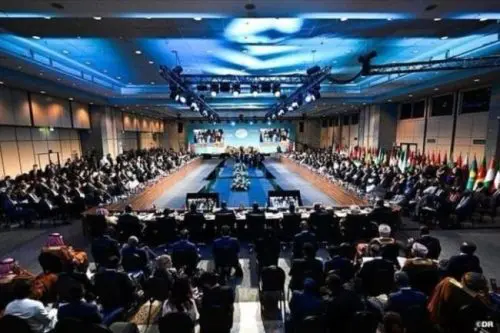
The foreign ministers of the member states of the Organisation of Islamic Cooperation (OIC), meeting on June 21–22 in Istanbul for the 51st session of their Council, praised the ongoing efforts of His Majesty King Mohammed VI, may God assist Him, Chairman of the Al Quds Committee, in protecting the holy sites in Al Quds Asharif.

In their resolution on “The Capital of the State of Palestine, Al Quds Asharif,” the OIC foreign ministers commended the significant role played by the Bayt Mal Al Quds Asharif Agency through the implementation of several development projects benefiting the population of the holy city and supporting its resistance.

The Istanbul Declaration also welcomed the efforts of the Al Quds Committee, under the chairmanship of His Majesty King Mohammed VI, and its executive branch, the Bayt Mal Al Quds Asharif Agency, in preserving the identity of the holy city as a symbol of tolerance and coexistence among the three monotheistic religions, and in upholding its legal status.

The 51st Council of Foreign Ministers of OIC member states concluded its work on Sunday with the adoption of the Istanbul Declaration and several resolutions addressing various political, economic, and cultural issues concerning the Islamic world.

MTN Supports Public Sector Training for Africa’s Transformation

0

Demonstrating its commitment to advancing Africa’s development, the MTN Group supported the 2025 Economic Governance School training for public officials from Ghana, South Africa, and Kenya, held in Accra last week. 

The initiative, the result of collaboration between South Africa’s National School of Government (NSG), the Kenya School of Government (KSG), and the Ghana Institute of Management and Public Administration (GIMPA), is designed to strengthen senior leadership in the public sector and promote inclusive economic governance across the continent.

It brings together legislatures, politicians, and senior officials from all levels of the public service for a week of peer learning, policy dialogue and institutional exchange.

Consequently, the delegation took time to visit the African Continental Free Trade Area (AfCFTA) Secretariat, which is charged with coordinating the creation of a single continental market for goods and services across Africa.

“As a pan-African business, we understand that Africa’s growth depends not only on investment in infrastructure, but also in people and institutions,” said Nompilo Morafo, MTN Group Chief Sustainability and Corporate Affairs Officer.

Since the training took place during MTN Group’s flagship 21 Days of Y’ello Care, the delegation also visited the MTN Ghana-supported Opportunities Industrialisation Centre (OICG), which provides vocational, digital, and entrepreneurial skills training for young people to enable them to earn a decent and dignified living.

Delegate At Oici Addressing Students After A Tour Of Their Facility And Supporting With Their Work
Delegate At OICI Addressing Students After A Tour Of Their Facility And Supporting With Their Work

“At MTN, we believe that everyone deserves the benefits of a modern connected life; therefore, in our view, education, training and strong institutions form the foundation for sustained progress. Also,

when civil servants, policymakers and administrators are equipped with high-quality training, their collective decisions shape a more equitable, innovative and resilient future for their nations.”

MTN’s involvement reflects its broader approach to driving Africa’s progress through investment in leadership and institutional capacity.

In addition to sponsoring the NSG, KSG and GIMPA programme, the Group contributed to the discourse, with senior executives participating in sessions focused on telecommunications, digital transformation, artificial intelligence and infrastructure financing.

MTN Ghana CEO Stephen Blewett and CIO Bernard Acquah joined Morafo in engaging on panels that explored the intersection of technology and governance. Discussions focused on the digital transformation of public services and the role of AI and infrastructure investment in supporting state capacity and economic inclusion.

Pinky Kekana Deputy Minister Department Of Public Service And Administration South Africa

South Africa’s Deputy Minister of Public Service and Administration Ms. Pinky Kekana, described the initiative as a valuable platform for engagement on governance challenges, saying: “The Economic Governance School offers a unique platform for elected and appointed public leaders to engage in critical analysis and reflective dialogue on the complex challenges confronting governance.”

Director of GIMPA, Prof. Samuel Kwadwo Bonsu, welcomed MTN’s contribution and the cross- sector collaboration underpinning the programme: “We are proud as GIMPA to serve, not only as a centre of learning but as a convening ground for critical reflection and collaboration.”

220 former MMDCEs endorse Bawumia as 2028 NPP Flagbearer

0

Former Vice President, Dr Mahamadu Bawumia’s bid to lead the NPP again as Flagbearer for the 2028 Presidential election has received a major boos with the declaration of support for him former metropolitan, municipal and district chief executive offers of the NPP.

Dr. Bawumia held an open interaction with the MMDCEs in Accra Monday morning as part of his stakeholder consultations, and after the interaction about 220 of the MMDCEs present held a press conference to declare their absolute confidence in Dr. Bawumia to lead the NPP again.

“Following extensive consultations with all aspirants, and after a thorough assessment of their vision, competence, and commitment to the NPP’s progress, we are convinced beyond any doubt that Dr. Bawumia is the best candidate to lead the NPP to victory in 2028,” the MMDCEs said in their statement.

“Our endorsement is not merely symbolic; it is a strategic and operational commitment. With 95% of us having previously served as Constituency and Regional Executives—some for over 16 years—we possess an intimate understanding of the NPP’s structures, dynamics, and electoral needs. We will deploy this experience to ensure Dr. Bawumia’s message resonates in every corner of Ghana,” they added.

WHY BAWUMIA

The MMDCEs described Dr. Bawunia as ”a man of proven track record in Piblic Service’ and a man whose appeal ”cuts across demographics”.

”As Vice President, Dr. Bawumia spearheaded transformative policies such as the digitalisation drive (Ghana Card, Mobile Money Interoperability, Paperless Ports), which have enhanced efficiency and formalised Ghana’s economy.”

“His analytical, data-driven approach to governance ensures that policies are evidence-based and impactful, a critical need for Ghana’s next phase of development.”

The MMDCEs also described Dr. Bawumia as a ”unifier and a grassroots mobilise.”

”Dr. Bawumia has demonstrated an inclusive leadership style, engaging all factions of the party and fostering unity. He has proven this trait severally in his approach within the party.”

”His accessibility and humility resonate deeply with grassroots supporters, making him the ideal leader to galvanise the NPP’s base.”

Last week, overwhelming majority of the 88 NPP members of Parliament, numbering about 65, declared their support for Dr. Bawumia.

Below is the full statement of the MMDCEs.


Inside the quiet meetings steering Ghana’s governance transformation

…How strategic engagements with national institutions are laying the foundation for Africa’s next era of compliance 

By Tiffany A. ARCHER, Esq.

At a pivotal moment for governance and risk management in Ghana, a series of high-level institutional engagements is setting the tone—not only for this week’s Executive Forum on Strategic Compliance™, but for the future of ethical leadership and institutional resilience across the region.

In the days leading up to the Forum, three of Ghana’s most respected institutions—the Institute of Directors–Ghana (IoD-Gh), the Ghana Bar Association, and the State Interests and Governance Authority (SIGA)—are holding closed-door sessions focused on strategic alignment, capacity building, and shared governance priorities. These are not ceremonial meetings; they are working discussions rooted in national interest and a vision for stronger, values-driven institutions.

Institutional leadership at the forefront

At the invitation of these institutions, Tiffany A. Archer, Esq.—Founder of the Forum and President of Eunomia Risk Advisory, and a lecturer in law—is participating in the meetings as a knowledge partner, representing Eunomia’s commitment to strengthening governance capacity across high-growth markets.

A former Chief Compliance Officer and Fortune 200 legal executive with nearly two decades of global experience, Archer has advised multinational companies through U.S. DOJ and SEC investigations, overseen cross-border compliance strategies across Africa, Europe, and Latin America for multinational companies operating under U.S. and international regulatory regimes, and guided global companies through complex legal challenges, including court-appointed oversight programs—where an external expert monitors a company’s compliance with laws and ethical standards after major violations. Her expertise sits at the intersection of behavioral science, regulatory strategy, and ethical leadership.

Eunomia’s mission is to equip high-growth markets with the strategic insight and institutional tools needed to embed compliance, elevate governance, and manage risk with foresight. Its work in Ghana reflects that mission in action—engaging with national institutions to advance African-led solutions to complex governance challenges and foster strategic clarity and cultural awareness in a rapidly evolving landscape.

  • At IoD-Gh, President Angela Carmen Appiah and CEO Dr. Alfred Braimah are exploring how board governance practices can be deepened to equip Ghana’s directors with the foresight needed to govern amid economic shifts, regulatory evolution, and digital transformation.
  • At SIGA, the Director-General and CEO, Professor Michael Kpessa-Whyte, along with Head of Governance, Risk and Compliance, Eric Albert Opoku, are leading a discussion on embedding performance-based governance into the oversight of state-owned enterprises—ensuring that SOEs are not just compliant, but positioned to deliver sustained public value.
  • At the Ghana Bar Association, President Efua Ghartey is facilitating dialogue on the legal profession’s role in shaping a culture of preventive compliance, advancing transparency and justice, and helping to close implementation gaps across sectors.

These engagements underscore a broader national imperative: that strong institutions and values-driven governance are not only good practice—they are essential building blocks for Ghana’s long-term development, investment confidence, and regional leadership.

Supporting capacity through knowledge

To support these efforts, Eunomia Risk Advisory is donating copies of Professor Douglas Boateng’s book, Practical Perspectives on Boardroom Governance, to each of the institutions. Recently approved by the National Council for Curriculum and Assessment (NaCCA) as part of Ghana’s national education framework, the book has been praised for its clarity, accessibility, and real-world relevance. It reinforces the critical role governance plays in national development—and offers practical tools to strengthen leadership and institutional performance across sectors.

Professor Boateng, one of Africa’s foremost authorities on corporate and supply chain governance, will also deliver the keynote address at the Forum. His work provides both policy-level frameworks and operational tools to enable institutions to govern with accountability, foresight, and long-term impact.

Strategic compliance as a development lever

As Ghana navigates an increasingly complex governance landscape—from regulatory shifts and ESG demands to digital risk and sanctions enforcement—strategic compliance is no longer a technical obligation. It is a lever for national progress.

The meetings this week are addressing:

  • How to expand board oversight into emerging non-financial risks, including ethics, culture, and cyber resilience;
  • How to institutionalize accountability within public enterprises as part of Ghana’s broader economic transformation;
  • How to elevate the legal profession as a force for transparency, enforcement integrity, and ethical growth.

These discussions reflect Eunomia Risk Advisory’s to helping institutions across the region turn policy into practice and aspiration into implementation—work that is now beginning in Ghana through these foundational engagements. By grounding these conversations in Ghana’s institutional realities, these engagements reinforce a principle too often overlooked: that meaningful compliance begins within, and is sustained through local leadership and ownership.

Laying the groundwork for embedded change

While the Executive Forum on Strategic Compliance™—to be held on 26 June at the Kempinski Hotel—will bring together regional voices to explore AI governance, sanctions, financial crime, and behavioral science, these preliminary engagements ensure the Forum is not simply a convening—but a continuation of collaborative work already in motion. With limited seats remaining, registration is still open at www.executiveforumcompliance.com for those who wish to be part of this timely and impactful conversation.

A Ghanaian-led vision for ethical leadership

As the continent works toward the goals of Agenda 2063, Ghana’s leading institutions are demonstrating that good governance is not a foreign requirement—it is a national imperative, and a sovereign strength.

In the words of one senior leader involved in this week’s engagements, “Strategic compliance is not just about meeting requirements. It’s about building the kind of institutions that will carry this country forward.” Through these dialogues, Ghana is charting a path where ethics, risk intelligence, and institutional credibility form the foundation of competitive advantage—not only for today’s governance landscape, but for generations to come.

We hope to see you there.

>>>the writer is President and Founder of Eunomia Risk Advisor Inc, a specialized advisory firm advancing ethical governance, institutional resilience, and risk foresight across jurisdictions. She is also the Co-Chair of the Executive Forum on Strategic Compliance. 

Skill-Based Education Propels National Development – Hon Bernard Ahiafor

The First Deputy Speaker of Parliament and Member of Parliament (MP) for the Akatsi South Constituency in the Volta Region, Hon. Bernard Ahiafor, has called for a new orientation towards skill-based education, which is undoubtedly the bedrock for the development of every nation, including Ghana. According to the Akatsi South lawmaker, skill-based education has helped countries like Germany, Japan, China, and Singapore to accelerate the pace of their development.

The First Deputy Speaker made the call at the 60th Anniversary Launch of the Abor Senior High School (ABORSCO) at Abor in the Keta Municipality of the Volta Region.

The colourful event, which was under the theme ‘ ‘60 Years of Impactful Journey; Providing Transformative Secondary Education through Indigenous Values and 21st Century Skills’, brought together several dignitaries and old boys who pledged their unwavering support in various ways towards the overall development of the school.

ABORSCO@60

ABORSCO was established on 1st October, 1965 as a community private school through the leadership of the chiefs and people, as well as the members of the Abor Youth Association (AYA). It started with fifteen (15) students and a few teachers. In 1982, the Government of Ghana (GOG) took over the school with fifty-four (54) students with the current Board Chairman of the school, Lawyer Nelson Kporxa being one of the 54 students, nine (9) of whom eventually ended up writing the then General Certificate of Education (GCE) Ordinary (‘O’) Level at Abor.

The First Deputy Speaker of Parliament who is also an old student of ABORSCO, noted that such a practical skill-oriented education from the Basic Education level through the Senior High School (SHS) to the tertiary level is essential so that students would be well-equipped with the needed skills that would enable them set up on their own.

Mr. Ahiafor encouraged graduates as well as artisans such as hairdressers, carpenters, and masons from the Technical and Vocational Education and Training (TVET) space, as well as Science, Technology, Engineering, and Mathematics (STEM) education, to come together to form businesses. This, according to the Akatsi South MP, would make it easier for them to access government support and also source facilities from financial institutions to expand and sustain their businesses, generate employment, and create wealth for the nation.

‘The mission of Abor Senior High School, which is to provide quality education, enabling students to acquire skills for personal and societal development, contributing to poverty reduction and socio-economic growth, is most appropriate. This is the kind of practical and holistic education that Ghana needs in this era of our development, the First Deputy Speaker emphasised.

Hon James Gunu Volta Regional Minister

The Regional Minister, Hon. James Gunu, lauded ABORSCO for producing a lot of Human Resource materials for the region and the country at large. According to him, education is a collective responsibility of all stakeholders in the education space, assuring that government would do everything possible to complement the efforts of the other stakeholders such as the Parent Teacher Association (PTA) and the Old Students’ Association (ASSOSA) to improve infrastructure as well as guarantee effective teaching and learning at the school.

The Regional Director of Education, Mr. Francis Yaw Agbemadi, commended ABORSCO for standing as a shining example of what purposeful vision, dedicated leadership, and strong community collaboration can achieve for six (6) remarkable decades. He was also elated about the discipline values of the school, noting that no student of the school has emerged among the occurrence of the rising tides of students’ substance abuse, violent behaviour, occultism, and attacks on fellow students and even teachers.

Earlier in his address to the gathering, the Headmaster of the school, Rev. Dr. Seth Agbeyome said since its establishment in October, 1965 with 15 students, ABORSCO has grown to hit a student enrolment of more than one thousand, six hundred (1,600) and over one hundred and thirty (130) dedicated teaching and non-teaching staff.

According to him, the school has made significant strides over the years in the areas of academic, sports and moral training, producing all manner of scholars including lawyers, engineers, teachers, health professionals, entrepreneurs, reverend ministers, chiefs, journalists as well as civil and public servants who are impacting lives across Ghana and beyond.

The Headmaster mentioned a lack of teachers’ bungalows, a 65-seater school bus, a multi-purpose assembly hall complex, a fence wall around the school, a technical and vocational department, as well as a basketball court and sports infrastructure, as some of the major challenges facing the school and its development. Rev. Dr. Agbeyome used the opportunity to appeal to the government, the old students, and all stakeholders to come to the aid of the school.

Other dignitaries who spoke at the function included the Municipal Chief Executives (MCEs) for Akatsi South and Keta, Hon. Daniel Dagba and Hon. Wisdom Seade, respectively, the Keta Municipal Director of Education, Mr. Gayheart Avudzivi, as well as the President of the Abor Senior High School Old Students’ Association (ASSOSA), Mr. Raphael Edem Yawlui.

Volta Regional Minister (James Gunu) And Frist Deputy Speaker Of Parliament (Bernard Ahiafor)

The event later saw the grand and joint unveiling of the design and logo of the 60th anniversary cloth by the First Deputy Speaker and the Regional Minister.

The school’s cultural and choreography groups took turns entertaining the gathering, in addition to some performances by the school choir.

Fitch Warns Falling Gold Prices Threaten Ghana’s Economic Stability

0

Fitch Solutions cautions that declining global gold prices could undermine Ghana’s economic progress, potentially eroding international reserves and reversing gains in inflation control and currency stability.

The UK-based research firm’s analysis highlights Ghana’s exposure to gold market fluctuations, noting recent price elevations have aided reserve rebuilding and cedi stabilization.

“Normalization of global trade dynamics or reduced geopolitical tensions could drag gold prices downward,” Fitch stated in its latest assessment. Such a decline would “quickly erode Ghana’s international reserves,” potentially renewing cedi volatility and forcing the Bank of Ghana to maintain high interest rates. “This would keep inflation elevated, lead to a weakening in consumer and investor sentiment,” the report added.

Under Fitch’s alternative scenario, sustained gold price strength could accelerate cedi appreciation, allowing faster inflation reduction and earlier monetary policy easing. The projection anticipates diverging 2025 consumption trends: government spending will contract under Ghana’s IMF-backed reform program, while private consumption may rebound if currency stability persists and import costs decline.

Ghana’s economic trajectory remains closely tied to gold market performance as authorities balance reserve protection against growth objectives. The warning underscores commodity-dependent economies’ vulnerability to external shocks despite domestic policy adjustments.

Ghana’s Tema Oil Refinery Aims Restart Amid US$517 Million Debt

0

Ghana’s state-owned Tema Oil Refinery (TOR) faces $517 million in debt as of December 2024, according to Acting Managing Director Edmund Kombat.

Despite operational dormancy since its main processing units shut down in 2019 and 2021, management confirms efforts to revive the facility. Kombat disclosed the financial position during discussions with Ghana’s Parliamentary Select Committee on Energy in Senchi.

The debt accumulation stems from historical trade obligations, unpaid crude supplies, and financial reclassifications. “There were times that the Ministry of Finance… had given some funds to TOR… as grants,” Kombat stated. “When they entered into the agreement with the IMF, the IMF asked them to reclassify it as debt.” Unhedged past trading activities further exposed the refinery to oil market volatility.

Technical assessments indicate the plant remains structurally sound. “With a few technical works, we could get the plant back,” Kombat confirmed. Internal debt reconciliation has already reduced certain liabilities. Management is addressing institutional challenges, including reviewing over 300 staff petitions and resolving promotion backlogs. The refinery is mobilizing internally generated funds for maintenance while external auditors clear six years of unaudited accounts.

TOR has received partial debt payments through Ghana’s Energy Sector Levies Act (ESLA), with reconciliation ongoing for outstanding amounts. Kombat projected renewed operations: “I can confidently tell you that before the year ends, TOR will be back.” The revival aligns with broader governmental industrial priorities, though the refinery must navigate significant financial and operational constraints to achieve sustainable operations.

Ghana Positions as Strategic Hub Amid Global Economic Shifts

Ghana is navigating complex global economic challenges while leveraging its role as host of the African Continental Free Trade Area (AfCFTA) Secretariat.

The COVID-19 pandemic exposed systemic vulnerabilities, with Ghana accessing a $1 billion IMF Rapid Credit Facility in 2020. Africa’s pursuit of economic self-reliance through the 54-nation AfCFTA—the world’s largest free trade area by country participation—is headquartered in Accra. “The AfCFTA represents Africa’s collective determination to reshape its economic destiny,” stated the IMF in its 2023 Regional Economic Outlook.

Ghana’s economy demonstrates resilience despite recent challenges. Following its 2022 debt crisis and IMF program, the World Bank projects 4.8% growth for 2025. The country has doubled its GDP per capita since 2006, achieving in 16 years what took the UK 154 years. Persistent hurdles include regional inequality between northern and coastal areas, infrastructure gaps costing $1.5 billion annually, and commercial court cases averaging 710 days for resolution.

Economic diversification is underway. Services now constitute 47% of Ghana’s GDP despite natural resources dominating exports. Digital transformation accelerates with mobile penetration exceeding 140% and internet access reaching 59% in 2023, according to Ghana Statistical Service data. The Bank of Ghana reported mobile money transactions totaling GHS 978.3 billion ($71.4 billion) in 2023, facilitated by an interoperability system processing over 5 million daily transactions.

Key sectors show strategic promise. Renewable energy development includes the Bui Power Authority’s 50MW solar installation. Agriculture sees growing value addition beyond cocoa exports, led by processors like Niche Cocoa. Manufacturing gains traction through Volkswagen’s assembly operation and pharmaceutical firms expanding regional capacity under AfCFTA. Venture capital investment in Ghanaian startups reached $40 million in 2023 despite lending rates exceeding 30%.

As global companies like Google establish African research hubs in Accra, Ghana’s combination of relative stability, digital adoption, and AfCFTA leadership offers a critical test case for sustainable development in emerging markets. The country’s economic trajectory reflects broader African ambitions to transform systemic challenges into opportunities through regional integration and technological leapfrogging.