

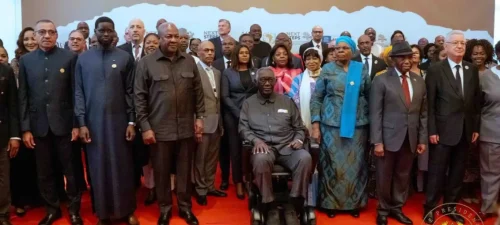
A three day reparations summit in Accra closed with three new working panels and a 19 point declaration, moving past the symbolic UN vote that inspired it in March.
The High Level Next Steps Conference on Reparatory Justice ran in Accra from June 17 to 19, drawing heads of state, AU and UNESCO representatives, and delegates from more than 80 countries. President John Dramani Mahama opened the gathering, building on a United Nations resolution the General Assembly adopted on March 25 declaring the transatlantic slave trade the gravest crime against humanity.
Mahama, who serves as the African Union’s champion on reparations, urged participants not to narrow the circle of engagement. “Narrowing the circle of participation does not strengthen the pursuit of historical justice,” he said, arguing instead that progress depends on dialogue with nations and institutions that approach the issue from different historical or political perspectives.
Beyond the speeches, the conference produced specific institutional commitments. Mahama announced three new working panels: an advisory panel led by heads of state, an expert group focused on restitution, and a legal panel examining the mechanics of reparations claims. Liberian President Joseph Boakai proposed a five point roadmap that included a joint African Union and United Nations expert commission and the restitution of stolen cultural artefacts. The conference closed with a 19 point declaration calling on countries involved in the slave trade to issue full, formal and unconditional apologies as a first step.
Barbados Prime Minister Mia Amor Mottley reaffirmed the Caribbean Community’s support, saying its existing 10 point reparatory justice plan complements African efforts. AU Commissioner for Health, Humanitarian Affairs and Social Development Amma Twum-Amoah said the continental body’s approach covers slavery, colonialism, apartheid and their ongoing effects, including political exclusion and economic exploitation.
Whether declarations of this kind translate into action remains an open question. A similar Accra reparations conference in 2023 proposed creating a Global Reparation Fund, but participants never clarified how it would operate, and momentum stalled until this year’s UN vote. The March resolution itself passed with mixed support, 123 countries in favour, three opposed, including the United States and Israel, and 52 abstentions, including the United Kingdom and the European Union’s member states. Polling in the United States has found limited public appetite for reparations; a 2021 Pew Research Center survey found only about three in ten American adults supported repaying descendants of enslaved people in some form.
Mahama framed the gap between recognition and follow through as the summit’s central task, telling delegates that recognition of the historical wrong creates responsibility for what comes next. Whether the panels and declarations announced this week produce more than the 2023 fund did will likely shape how the next reparations summit is received.

