Home Blog

Full Nominees List For The Ghana Comedy Awards 2026

Creative Republic Limited, organizers of the Ghana Comedy Awards (GCA), has officially unveiled the shortlist of nominees for the sixth edition of the prestigious awards scheme.

The nominees were announced on Friday, 10th July 2026, through the organization’s official social media platforms, recognizing outstanding comedians and key contributors who have made significant impacts across various categories in Ghana’s comedy industry.

The much-anticipated awards ceremony is set to take place on 1st August 2026 at the College of Physicians and Surgeons, Ridge, Accra, where winners will be celebrated for their remarkable achievements and contributions to the growth of comedy in Ghana.

The short listed nominees is open to review and petitions on omissions, corrections or errors as the Board and Management will give room to all Comedians who have sentiment and genuine concerns on the Release for redress and consideration on 11th July to 13th July.

GHANA COMEDY AWARDS 2026 NOMINEES LIST

1. COMEDY SKIT ACT OF THE YEAR
* Comeddy Bwoy
* Ben South
* Jeffrey Nortey
* Al Maleek
* Aka Ebenezer
* Opoku Bilson
* Donske
* Asafo Powers (Killa Ntua)
* Real NKB
* Freedom Official
* Last Hero
* Seniorman Layla
* Big Daama
* Piloolo GH

1. MOST POPULAR COMEDIAN OF THE YEAR
* Dan Kweku Yeboah
* Lekzy Decomic
* Jeffrey Nortey
* Aka Ebenezer
* Clemento Suarez
* Asafo Powers (Killa Ntua)
* Ben South
* DKB

1. STANDUP COMEDIAN OF THE YEAR
* Okokobioko
* Lekzy Decomic
* OB Amponsah
* DKB
* Parrot Mouth
* Foster Romanus
* Jacinta Ocansey
* Oh Joo

1. COMEDY THEATRE ACT OF THE YEAR
* Clemento Suarez
* Jeneral Ntatia
* Monica Awimbono Aitariga
* Efua Dell
* William Odartei Lamptey
* Sylvia Naa Adjeley
* NGO
* Lawyer Amekuji

1. COMEDIAN OF THE YEAR
* DKB
* Clemento Suarez
* Ben South
* OB Amponsah
* Foster Romanus
* Lekzy Decomic
* Jeffrey Nortey
* Dan Kweku Yeboah
* Aka Ebenezer
* Asafo Powers (Killa Ntua)

1. COMEDY ACTOR OF THE YEAR (MOVIE/SKIT)
* Donske
* Aka Ebenezer
* Jeffrey Nortey
* William Odartei Lamptey
* Kyekyeku
* Asafo Powers (Killa Ntua)
* Real NKB
* Oteele
* Papa Kumasi
* Kenya

1. COMEDY ACTRESS OF THE YEAR (MOVIE/SKIT)
* Efua Dell
* Jacinta Ocansey
* Monica Awimbono Aitariga
* Vivian Gil Lawrence
* Ama Pokuaa
* Ama Yeboah
* Asor Yaa

1. COMIC DISCOVERY OF THE YEAR
* Comeddy Bwoy
* Grumma
* Al Maleek
* Sam Qweeku
* Elder Trihoo
* Donske
* Pastor Kwame Ansah
* Boss Majoy
* Last Hero
* Kenya
* Odenkyem
* Visa Bwoy
Comedian Smile

1. COMIC MC/ORATOR OF THE YEAR
* Papayaw Ataamle
* Lekzy Decomic
* Dan Kweku Yeboah
* Okokobioko
* Kwame Oboadie
* Geovani Caleb
* Mr Katah
* Papa Shamo

1. WOMAN IN COMEDY AWARD
* Vivian Gil Lawrence
* Monica Awimbono Aitariga
* Jacinta Ocansey
* Afia Barcelona
* Ekua Official
* Felicia Osei
* Efua Dell
* Ama Yeboah
* Ama Pokuaa
* Asor Yaa

1. COMIC MEDIA PERSONALITY OF THE YEAR
* Dan Kweku Yeboah –PEACE FM
* Odi Ahenkan Kwame Yeboah – PEACE FM
* Kwabena Marfo – PEACE FM
* Atongo – Dadi FM
* Kwame Oboade3 – ADOM FM
* Geovani Caleb – TV3/3FM
* Mr. Katah – Pure FM
* Oliver Kahn the Ship Dealer – PURE FM
* Papa Shamo – ONUA FM

1. AFRICAN COMEDIAN OF THE YEAR
* Layi Wasabi
* Destalker
* Sabinus
* Dezny
* Bovi
* Alpheenomenal
* Brain Jotter

1. ALTERNATIVE COMIC ACT OF THE YEAR
* Shatta Wale
* Kofi Kinaata
* Broda Sammy
* Prophet Kumchacha
* Oheneni Adazoa
* Ebo Noah
* Bukom Banku

1. COMIC INFLUENCER OF THE YEAR
* Quecy Official
* Papayaw Ataamle
* Jeffrey Nortey
* Aka Ebenezer
* Lekzy Decomic
* Donske
* Clemento Suarez
* MJ the Comedian
* Asafo Powers (Killa Ntua)
* Freedom Official
* SDK
Oh Joo

1. COMIC ANIMATOR OF THE YEAR
* Derreq Animations
* Jerry Hay/Hay Toons
* Pencil and Vim

1. COMIC GROUP OF THE YEAR
* Last Hero & Crew
* Aka Ebenezer & Crew
* Asafo Powers & Crew
* Al Maleek & Crew
* Freedom Official & Crew
* Half Serious Crew
Senior Man Layla & Crew

1. COMIC MUSIC ACT OF THE YEAR
* Hyndu & Kweku Bany
* Ablekuma Nana Lace
* Naana Bluw
* OT & Agies
* Godson Cokeman
* Kyei Nwom
* Asafo Powers (Killa Ntua)
* SDK

1. COMIC WRITER OF THE YEAR
* Papayaw Ataamle
* Jeffrey Nortey
* Kojo PJay
* Oh Joo
* Kofas
* Francis Nutakor
* Ken Fiati
* Mawuli Jasparo
* Kofi Nelson

1. COMIC DIRECTOR OF THE YEAR (PLAY/MOVIE/SKIT/EVENT)
* Kofi Asamoah – Kofas Media
* Francis Nutakor – Spafam Network
* Big Ghun
* David Chapman Quayson
* Ken Fiati
* Kofi Nelson
* Mawuli Jasparo

1. COMIC KID OF THE YEAR
* Combos Kids
* Beyou Comedy
* Twiaah Comedy
* Awesoa Comedy

1. COMEDY SERIES OF THE YEAR (TV/ONLINE/RADIO)
* Yayah & Tyson – AMA GHANA PRODUCTIONS
* Wonim Red – Yaa Asantewaa TV
* Mr. KOD – KOFAS MEDIA
* My IN Law – Darling GH
* Steeze On Steeze – Sikafie TV
* Lomo Lomo – Ohiani Ba TV
* Eye Red – KOFAS MEDIA
* Village Girl – KOFAS MEDIA
* Accra Stay by Plan – AKWAABA MAGIC

1. COMIC TV PROGRAM OF THE YEAR
* Half Serious Show – GH ONE/UTV
* The Real News – UTV
* On a More Serious Note – JOY PRIME

1. COMIC RADIO PROGRAM OF THE YEAR
* Weekend City Show – Joy FM Accra
* Mani Agye oo Mani Agye – Dadi FM Accra
* Morning Swing – Ultimate FM Kumasi
* Time with the Ship Dealer – Pure FM Kumasi
* Toa Ebe yi so – Agoo 6.9FM Kwahu
* Around The World – Peace FM Accra

1. COMEDY SPECIAL OF THE YEAR
* DKY Night of Comedy & Music – Dan Kweku Yeboah
* Lasting Long – Okokobioko
* Turd Talks 2025 – Oh Joo
* Greetings From Abroad – OB Amponsah
* Laugh It Off 2025 – PARROT MOUTH
* Romanus Incomplete VII – Foster Romanus
* Funny Boy Innit (F.B.I) – Lekzy Decomic

1. COMEDY CLUB OF THE YEAR
* Laugh In the Golden City – KUMASI
* 2927 Comedy Club – TESANO
* SOHO Comedy Nights – AIRPORT
* Speak Easy – Yaya La Parisiene
* Comedy Bar – KUKUN OSU

1. COMEDY EVENT OF THE YEAR
* Kumasi Comedy Show – Xmas 2025
* New Year Comedy Night – DKB and Friends
* Charity Comedy Show – TARKWA ROTARY CLUB
* 3 Faces of Jeffrey Nortey – Jeffrey Nortey

1. COMIC MOVIE OF THE YEAR (TV/ONLINE)
* Tears Of A Father – WEEZY EMPIRE
* Yonko Do – KODA MEDIA
* Agyapade – KODA MEDIA
* Stubborn Son – KWAPS STUDIOS
* Noko Fio – KOFAS MEDIA
* Money Wahala – KOFAS MEDIA
* Where Is the Money – KOFAS MEDIA
* Last Stop – KWABENA GYANSAH FILM
* Vibes The Movie – PB STUDIOS AFRICA

1. COMIC PLAY/DRAMA OF THE YEAR – NEW
* Honey Moon Hotel – AFRICA ARTS NETWORK
* Prekese Theatre Festival – FEDCREATES STUDIOS
* Better Safe than Sorry – PEREZ EVENTS 360
* In Her Waist – ART NOBLES EXPRESSIONS
* Akwaaba Vs Obaake – Ashanti Global Film Heritage
* I Want to Sue God – KOBINA ANSAH
* Tarkwa We Dey – O-Sid Productions
* In the Chest of A Woman – AFRICA ARTS NETWORK

NEXT RATED COMIC ACT OF THE YEAR
COMEDY FOR SOCIAL GOOD AWARD

Dennis Miracles Aboagye promises fearless communication as he eyes NPP National Communications Director position

0

Communications Director for the Dr. Mahamudu Bawumia campaign team, Dennis Miracles Aboagye, has officially announced his intention to contest for the position of National Communications Director of the New Patriotic Party (NPP).

Announcing his decision, Aboagye said he was offering himself to serve the party at a time when it needed a communications team that was bold, resilient, and capable of defending the NPP’s record.

“Our message is strong. Our record is defensible. What we need now is a communications team that does not flinch or surrender,” he stated.

He further stressed that the party would not allow its opponents or intimidation to shape its identity, declaring, “The opposition and intimidation will not define us. We will define ourselves.”

Calling for unity among party members, Mr. Aboagye urged supporters to “stand shoulder to shoulder” as the NPP works toward returning to power, describing his campaign with the slogan: “Built to Lead. Ready to Win,” alongside the hashtag *#CommandTheNarrative*.

NDLEA Says South African Used Son To Hide Heroin

0

National Drug Law Enforcement Agency (NDLEA) operatives arrested a South African woman, Will Jessica Ann, 38, in Abuja July 6, saying they found 5.75 kilograms of heroin in her luggage.

NDLEA said operatives intercepted the suspect during the inward clearance of passengers from Qatar Airways flight QR1433, which arrived at the Nnamdi Azikiwe International Airport (NAIA) from Doha. The agency’s Director of Media and Advocacy, Femi Babafemi, said officers found 14 blocks of heroin in her checked bags and that she had brought her three year old son along, which investigators believe she used to lower scrutiny at the checkpoint.

Babafemi said the suspect first denied checking in any luggage. Operatives matched baggage tags on the two bags to the claim tags on her passport, after which, he said, “she recounted and admitted ownership of the bags,” telling investigators she had forgotten she checked them in.

She told investigators she had traveled from Cambodia through Doha to Abuja, according to the agency.

NDLEA said preliminary intelligence links the suspect to a transnational drug trafficking network she allegedly runs with her husband or partner, identified as Jan Coenraad De Jager, who is based in Cambodia. The agency described the pair as operating along a route between Cambodia and South Africa, though it gave no information on whether De Jager has been arrested or faces any charge.

The arrest was one of several operations NDLEA disclosed in the same Sunday statement. Agency officers working with Customs and other security agencies seized 8,287 nylon bags of a cannabis strain known as Canadian Loud, weighing more than 4,143 kilograms and valued above 10.3 billion naira, from a container at Apapa port in Lagos on July 10. In a separate case, NDLEA placed a 48 year old commercial motorcycle rider under observation for three days after he excreted 13 additional wraps of methamphetamine, bringing the total recovered from him to 100 wraps weighing 1.715 kilograms.

NDLEA chairman Mohamed Buba Marwa commended officers involved in the week’s operations and urged commands nationwide to sustain both enforcement and public awareness efforts against drug trafficking.

There is no indication yet that Will Jessica Ann has been formally charged, and neither she nor a lawyer representing her has issued a public response to the allegations.

LCB Worldwide Fumigates Accra Markets After Floods

0

LCB Worldwide Ghana and the Ghana Health Service fumigated markets and terminals in Accra’s Korle Klottey area Saturday, part of a flood recovery push to prevent cholera.

The event fell on the second day of the government’s National General Cleaning Exercise, called after floods on June 29 killed at least 12 people and affected about 38,800 residents in the capital region. Ghana Health Service officials have warned since late June that stagnant water and blocked drains raised the risk of cholera and typhoid, though the agency’s Director General, Dr Samuel Kaba Akoriyea, said Saturday the agency had not recorded any cholera cases so far. “Fortunately as I talk today, we haven’t recorded any cholera outbreak,” he said, adding that prevention is far cheaper than treating an outbreak once it starts.

Fiifi Buabeng-Baiden, LCB Worldwide’s Lead for Partnerships and Programmes, said the company treats community fumigation as separate from its core work disinfecting cargo and travelers at Ghana’s ports and airports, framing Saturday’s exercise as part of a long running corporate responsibility programme that has covered schools, markets and government offices, including Covid era disinfection of holding centres.

Korle Klottey Municipal Chief Executive Alfred Allotey-Gaisie welcomed the exercise but said sustaining its benefits will require continued fumigation, naming Tema Station Market, Odawna and Osu as other areas still needing attention.

The company’s role in Accra’s cleanup follows scrutiny of its main disinfection contract with the Ghana Health Service at national ports and airports. In a half year report released in January, the Office of the Special Prosecutor said a corruption risk assessment found LCB Worldwide had retained port disinfection fees in private accounts without adequate government oversight, an arrangement it estimated cost the state 345 million cedis, including 25 million cedis in uncollected value added tax. Special Prosecutor Kissi Agyebeng ordered a suspension of payments to the company pending a forensic audit and gave the health service until March 31 to submit a corrective plan.

Civil society groups renewed criticism of the arrangement in June, alleging the disinfection service fell short of standards despite the fees collected. A separate coalition defended the company days later, arguing the Special Prosecutor’s report identified governance risks rather than proven wrongdoing and that the criticism lacked supporting evidence. LCB Worldwide has not issued its own public response to the Special Prosecutor’s findings.

LCB Worldwide representatives described Saturday’s fumigation as unrelated to the ports contract, saying it falls under the company’s separate community outreach programme, which has also disinfected schools, market centres and Covid holding centres in past years.

Anyidoho Urges NDC To Block Any Third Term Bid

0

Former National Democratic Congress (NDC) deputy general secretary Samuel Koku Anyidoho urged the party Sunday to bar any third term candidacy, amid a Supreme Court case on repeat terms.

His intervention lands amid signs of division inside the NDC itself. While senior officials have rejected any third term ambition for President John Dramani Mahama, other party voices have said openly they would back such a bid if judges rule in the president’s favor.

Ganiwu Alhassan, a teacher from Kpandai in the Northern Region, filed the case at the Supreme Court on July 9 against the Attorney General. Alhassan is asking the court to rule that Article 66(2) of the 1992 Constitution bars only two consecutive terms, not two terms overall, a reading that would allow a former president to seek office again after time away.

Anyidoho rejected that reading outright. He said the party should refuse to sell nomination forms to anyone who tries to use such a ruling to seek the presidency again. “The NDC shall not be a vehicle for carrying the obnoxious ambition,” he wrote on X. He added that a candidate determined to run despite the party’s refusal could start a new party or contest as an independent.

Party leaders have already stated their position. Mahama told reporters in Singapore in August last year that he would respect the two term limit and would not contest in 2028. NDC national chairman Johnson Asiedu Nketiah has said the party has no plans to present him for a third term, and general secretary Fiifi Fiavi Kwetey branded growing calls for one as flattery driven by career ambition during a December address.

Pressure for a third term bid persists inside the party. NDC communications team member Hamza Suhuyini said this month he would celebrate a third term bid if the Supreme Court allows it, adding he has no link to the pending suit. NDC member Kojo Adu Asare argued in November that Mahama’s first term should not count against the limit and urged the party to test the constitutional question in court. The dispute turned personal in January, when NDC activist Yakubu Tony Aidoo publicly confronted Kwetey over his sycophancy remark, accusing him of disrespecting grassroots members who back a third term.

The opposition New Patriotic Party has also weighed in. Spokesperson Akosua Manu urged the Supreme Court Saturday to dismiss the suit entirely, warning judges to weigh the long term consequences of any ruling that opens the door to repeat presidencies.

The Supreme Court has not scheduled a ruling. Mahama has not repeated or withdrawn his pledge to step aside in 2028.

Ritual Invocation Video Escalates Bantama NPP Feud

0

A viral video of a man invoking traditional deities against anyone who defies a court injunction has escalated tension in Bantama, a day after violence disrupted the constituency’s NPP election.

In the video, posted online Saturday night, a man identifying himself as Kwame Poku breaks an egg and pours schnapps while invoking traditional deities, including Antoa and Akonedi, and calling for punishment on anyone who proceeds with the New Patriotic Party’s (NPP) Bantama constituency executive election in defiance of a reported court injunction.

The video follows Saturday’s disruption of the same election at the Kumasi Cultural Centre, where a group of men destroyed ballot boxes and papers and assaulted officials overseeing the vote. One officer suffered a foot injury and was treated at Komfo Anokye Teaching Hospital. Police arrested three people, including the constituency organiser, and declared the venue a crime scene.

A Kumasi High Court injunction had already put the election on uncertain footing before the violence. Judge Aberinga Anafo George granted a 10 day order sought by three party members who said long serving delegates had been dropped from the constituency’s register and replaced with unapproved names. The order named constituency chairman Fiifi Mensah among the respondents, restraining officials from proceeding with the vote.

The dispute traces back to a clash weeks earlier at the constituency office, where Mensah accused Bantama Member of Parliament Francis Asenso-Boakye of assembling a team to alter the delegate album in favour of preferred candidates, a claim Asenso-Boakye has not publicly addressed. Mensah has said he locked up the office’s album records to stop further changes while the matter was resolved. “If the elections are free, fair, and peaceful, whoever wins deserves the victory,” he said.

A day after the violence, a group calling itself Concerned Bantama Youth petitioned the Ashanti Regional Police Command for tighter security ahead of any resumption of voting. The group said Mensah should be treated as a person of interest only if investigations link him to any future violence, stressing it was not assigning blame in advance.

The Bantama vote was part of a nationwide round of NPP constituency executive elections held over the weekend at 385 centres. NPP flagbearer Mahamudu Bawumia urged unity as the process unfolded, saying the elections should strengthen the party and position it for the tasks ahead.

No charges have been announced against those arrested, and police have not commented on the video. Bantama is one of several constituencies where NPP elections this cycle have been contested in court, adding the invocation of traditional deities to a dispute already before both the police and the courts.

Ghana’s Women’s Teams Win Big, Bonuses Lag Behind

0

Every Ghanaian women’s national team qualified for a major tournament this year, a sweep now shadowed by unpaid bonuses and fresh calls for football federation president Kurt Okraku to resign.

The Ghana Football Association (GFA) has overseen qualification for global and continental tournaments at every women’s age group this year, from the Under 15 Black Damsels to the senior Black Queens, even as the men’s Black Stars’ early exit from the 2026 FIFA World Cup renewed pressure on Okraku’s leadership.

The age group results form a clean sweep. The Under 15 Black Damsels defended their title to win back to back CAF African Schools Football championships. The Under 17 Black Maidens qualified for the Fédération Internationale de Football Association (FIFA) Under 17 Women’s World Cup. The Under 20 Black Princesses booked a place at the FIFA Under 20 Women’s World Cup in Poland this August and September. The senior Black Queens qualified for the Confederation of African Football (CAF) Women’s Africa Cup of Nations (WAFCON) in Morocco, now rescheduled for July 25 to August 16, a tournament that also feeds into 2027 FIFA Women’s World Cup qualification. At club level, Ampem Darkoa Ladies will represent Ghana at the West African Football Union (WAFU) Zone B qualifiers in August, chasing a spot in the CAF Women’s Champions League.

That run of qualifications sits against a rockier backdrop for Okraku himself. The Black Stars went out of the 2026 World Cup in the Round of 32 on July 3, losing 1-0 to Colombia, and the hashtag GetOkrakuOut gained traction online in the days after. Much of the criticism has also revived objections to a GFA Congress vote in August 2025 that extended the presidential term limit from two four year terms to three, opening the door for Okraku to seek re-election. National Sports Authority Director-General Yaw Ampofo Ankrah said this month that administrators back Okraku even as fans push for his removal, telling Joy Prime TV that “football people are happy with Kurt.”

The women’s success story has its own unresolved friction. Black Queens players withheld cooperation before an October 2025 WAFCON qualifier over $9,500 each in bonuses owed from the 2024 tournament, a standoff that Okraku and Sports Minister Kofi Adams settled only after visiting the team’s camp directly. A similar dispute followed the Black Princesses’ World Cup qualification in May 2026, when players stayed in their hotel over unpaid per diems; the Sports Ministry cleared payments tied to their final qualifying round but allowances from an earlier round remained outstanding as of the most recent update.

Both threads point to the same underlying question facing Ghanaian football administration: whether investment and results at the level of team performance are being matched by consistent, timely support for the players delivering them. Ghana’s women’s teams now carry that test into the tournaments themselves, with the Black Queens opening WAFCON on July 25 and the Black Princesses departing for Poland weeks later.

Ghana Built a Sanitation Scorecard Before the Floods Hit

Ghana’s two day flood cleanup ended Saturday, but the sanitation scorecard meant to keep communities clean was already built weeks before the rains fell.

The floods of June 28 and 29 tore through seven regions, Greater Accra, Volta, Central, Western, Western North, Ashanti and Eastern, prompting President John Mahama to declare July 10 and 11 as National General Cleaning Days. The government backed the response with a GH¢350 million package, put the Ghana Armed Forces at the front of the operation, and ordered shops in affected areas to stay shut from 6am to 1pm on both days so residents could join the effort.

That order to close shops is itself a small preview of the larger question this exercise raises. Every hour of lost trade during the cleanup was a real cost paid by market women and small traders, and it will count for little if the drains they helped clear silt up again by the next rainy season.

There are early signs the government does not intend to walk away once the two days end. Local Government Minister Ahmed Ibrahim said Saturday that tricycles deployed for waste collection had grown from 400 to 600, with more trucks arriving to finish evacuating refuse over the following week. He said crews would return to a vehicle still stuck in a drain at Alajo once the main heaps were cleared. “We are not ending today,” he said.

The more interesting fact is that Ghana did not wait for these floods to start building an accountability system for sanitation. Weeks earlier, the Local Government Ministry announced that sanitation performance would become an official Key Performance Indicator (KPI) for Metropolitan, Municipal and District Chief Executives (MMDCEs), a shift confirmed by Deputy Minister Rita Naa Odoley Sowah at a sanitation policy conversation in Accra in June. Officials cited the scale of the problem behind that move: roughly 40 percent of Ghanaian households still lack access to toilet facilities, and open defecation remains common in parts of the country.

A separate relaunch of National Sanitation Day the previous September had already added a monitoring dashboard, a public hotline and a requirement that assemblies file monthly sanitation reports through their Regional Coordinating Councils. On paper, the tools this moment calls for, measurable targets, routine enforcement, a way to track which districts are backsliding, already exist.

What does not yet exist is a published record showing whether any of it works. Sanitation analyst Attah Arhin has called on the ministry to publish an annual sanitation scorecard for every Metropolitan, Municipal and District Assembly (MMDA), so residents and businesses can see which local governments are actually enforcing the rules rather than announcing them. That step has not been taken.

The drainage question sits inside a similar gap. Clearing silt from a blocked gutter solves this week’s flooding but not the design limits of the channel underneath it, and responsibility for that engineering now sits with the Ministry of Works, Housing and Water Resources, a separate agency from the one running the cleanup. Coordinating the two will matter more than either ministry acting alone.

None of this is free for the private sector. Flood damage and forced closures hit logistics, inventory and staff time directly, and companies operating in flood prone districts have as much reason as any assembly to want drains that hold and rules that get enforced. Investors reading Ghana’s sanitation record are, in effect, reading a proxy for how predictable the operating environment will be the next time the rains are heavy.

The two day exercise cleared visible waste from seven regions in a matter of days. Whether it produces anything lasting depends on whether the KPI system, the monitoring dashboard and the sanitation hotline built earlier this year get used the way they were designed to, once the trucks currently working through Alajo have moved on and the cameras have gone home.

Ghana’s Economic Calm Yet to Ease Business Costs

0

Ghanaian businesses are still battling high loan rates and freight costs despite easing inflation and a steadier cedi, economists and industry leaders said at an Accra forum on Thursday.

The second edition of the Channel One Economic Quarterly, held July 9, brought together economists, bankers, traders and manufacturers to review Ghana’s economy at the midpoint of 2026 and weigh what comes next.

The gap between improving macro numbers and real business costs matters most for small manufacturers waiting on factory loans and traders whose shipments sit stranded overseas, since neither group says the stability has reached their books yet.

Ghana Statistical Service data show headline inflation climbed to 5.3 percent in June, a third straight monthly rise from 3.7 percent in May, though the rate remains far below the 13.7 percent recorded a year earlier. Independent Bank of Ghana figures also placed the interbank dollar rate near GH¢11.39 in early July, close to the GH¢11.30 level cited by traders at the ports.

Economist and University of Ghana Business School lecturer Prof. Agyapomaa Gyeke-Dako told the forum that Ghana’s second quarter performance had weakened compared with the first, though she called the broader outlook stable. She traced part of the cedi’s recent pressure to foreign firms repatriating profits after closing their books, a pattern she said typically repeats each second quarter. She also pointed to the conflict in the Middle East, noting that a large share of global crude passes through the Strait of Hormuz, which pushes up oil prices and import costs when disrupted.

Gyeke-Dako urged commercial banks to pass falling inflation and money market rates on to borrowers through lower lending rates.

Ghana Union of Traders Association (GUTA) President Clement Boateng agreed credit needed to get cheaper, but said the bigger problem was not access. Businesses with proper paperwork can usually get a loan, he said; the trouble is the price. Boateng said “facilities are accessible, they are not affordable.” He acknowledged banks’ worries about slow court recoveries from defaulters, but said high rates continue to hold back investment.

Andrews Akoto, Head of Trading for Global Markets at Absa Bank Ghana Limited, said falling rates already have banks positioning for more lending, and predicted stronger loan growth as conditions turn more accommodative. He said small and medium enterprises (SMEs) stand to benefit most, but warned that access to money alone will not be enough. Many small firms will need help tightening their books, meeting lending standards and preparing to grow, potentially as far as the stock exchange’s alternative market, he said. Akoto added that ordinary bank loans often do not fit businesses planning factories or major expansion, since those projects need patient, long term capital. He urged lenders to help such businesses raise money directly from investors in the capital markets, noting some firms found better borrowing terms on the domestic debt market even during Ghana’s recent debt restructuring than government paper offered.

Association of Ghana Industries (AGI) Chief Executive Officer Seth Twum-Akwaboah said the bigger question for manufacturers is whether improving indicators can support actual production. He said Ghanaian factories can compete internationally when they get reliable, cheaper inputs, pointing to a member tile maker that exports to the United States and Europe even as Ghana imports tiles from Italy. That company gained an edge through a direct supply arrangement with Ghana Gas, which cut its production costs, he said.

Twum-Akwaboah said the lesson applies broadly: Ghana can export more if production costs fall and the business climate improves, a point he tied to government plans for a 24 hour economy. Building a factory alone can take six months to a year even when work moves quickly, he said, so financing for that kind of expansion needs longer tenors, lower rates and enough repayment grace for firms to construct, test and start earning before loan payments begin.

Tax policy added another pressure point as Ghanaian manufacturers compete under the Economic Community of West African States and the African Continental Free Trade Area. Twum-Akwaboah welcomed the recent reduction and unification of Value Added Tax (VAT) to 20 percent, which lets businesses reclaim the full amount, but said the rate still sits well above regional rivals. He noted Nigeria charges 7 percent VAT, meaning companies operating across the continent can choose to manufacture where costs run lower and still export duty free or quota free into other African markets. He added that Ghana’s own currency stability has, ironically, made some imports cheaper and harder for local factories to match.

For traders, shipping costs added to the strain. Boateng said rising freight charges, especially on goods sourced from the United Arab Emirates, stem from vessels rerouting around the Middle East conflict. One of his own containers sat locked in the UAE for months before shippers arranged a new route in late June. He also said import duties, though paid in cedis, are calculated using the foreign exchange rate in effect when the goods were purchased abroad, a rate reviewed weekly at the ports.

Konfidants Managing Partner Michael Kottoh, also speaking at the forum, flagged four global developments he said could still reshape Ghana’s outlook this year, including continued uncertainty from United States tariff policy and shifting international trade alliances. He urged policymakers and businesses to track those external pressures alongside domestic gains.

The Bank of Ghana is due to hold its next policy meeting later this month, a decision investors and business owners will watch for signs of whether the current easing cycle, and the cheaper credit riding on it, continues into the second half of the year.

Arrest of NPP Aspirant Sparks Chaos at Ashanti Poll

0

Police arrested radio personality and parliamentary aspirant Okatakyie Afrifa Mensah on Sunday after a court injunction dispute erupted into chaos at a New Patriotic Party (NPP) constituency poll in Wiamoase, Ashanti Region.

The confrontation matters beyond one arrest. It shows a paperwork fight over candidate eligibility turning into an armed standoff at a live constituency election, and it raises fresh questions about how court orders get enforced inside the main opposition party’s internal contests.

Afrifa is reportedly seeking the NPP’s parliamentary nomination for Afigya Sekyere East, according to local reports. Witnesses said he arrived at the Wiamoase polling centre attempting to serve police officers on duty with a document he described as a court injunction against the vote. Armed officers blocked him from entering the station and took him into custody instead.

A Kumasi High Court had separately issued a related order on June 19, restraining the NPP from further processing the constituency’s polling station executive album, following a suit filed by party member Adu Mensah. It was not immediately clear whether that order was the same document Afrifa tried to serve on Sunday, or whether it covered the executive vote itself.

Videos circulating online showed Afrifa being placed in a police vehicle, which left the venue for an undisclosed location. His exact whereabouts remained unconfirmed as of Sunday evening, according to local reports.

The arrest triggered a confrontation between officers and Afrifa’s supporters. Witnesses said several members of his team were also detained, and footage reviewed by local outlets showed police firing warning shots as they made the arrests. It was not immediately clear whether anyone was hurt. Heavily armed personnel reinforced the polling centre afterward, briefly disrupting proceedings before the vote continued.

The Ashanti Region police command had not issued a statement on the arrest or the disputed injunction by the time of publication.

The Wiamoase clash adds to a wider run of legal disputes trailing the NPP’s constituency elections this year. Separate court injunctions have already halted polls in Sunyani East and Tarkwa-Nsuaem and held up the party’s Central Regional chairmanship race, part of a pattern tied to disputes over delegate rolls and candidate vetting ahead of the 2028 general election.

DVLA Drops Major Security Upgrade: Smart Number Plates Are Coming to Ghana

0

Story By: Felix Ernest Odamtten / Muhammad Faisal Mustapha….

The Driver and Vehicle Licensing Authority (DVLA) has announced a major transformation of Ghana’s vehicle registration system with the introduction of smart number plates designed to strengthen national security, improve vehicle traceability and bring the country’s transport management framework in line with global technological standards.

The initiative, described by industry observers as one of the most significant reforms in Ghana’s vehicle administration history, forms part of a broader digitalisation agenda aimed at ensuring that every vehicle operating on Ghanaian roads can be accurately identified, verified and linked to its legitimate owner.

“Every vehicle on Ghana’s roads must have a clear identity, a traceable ownership record and a secure digital footprint. This reform is about protecting citizens, strengthening national security and building confidence in our transport system.” Mr. Julius Neequaye Kotey, Chief Executive Officer, DVLA.

Speaking at the official unveiling of the new registration regime, the Chief Executive Officer of the DVLA, Mr. Julius Neequaye Kotey, said the reform was driven by the urgent need to address challenges associated with outdated vehicle records, cloned vehicles and difficulties faced by security agencies in tracing vehicles connected to criminal activities.

According to Mr. Kotey, although the DVLA has the statutory responsibility of maintaining a comprehensive national vehicle database, gaps still exist due to inaccurate records, incomplete registration information and some vehicles operating without proper documentation.

“When security agencies request vehicle information during investigations, the system must provide accurate and reliable data. The smart registration regime will close these gaps and ensure that vehicles can be traced quickly and efficiently.” Mr. Julius Neequaye Kotey

He explained that concerns raised by institutions including the Ghana Police Service, the Customs Division of the Ghana Revenue Authority and other state agencies highlighted the need for a more advanced identification system capable of providing real time and dependable vehicle information.

As part of the new measures, the DVLA has already introduced a Vehicle Identification Number (VIN) clone detection system before vehicle registration. Mr. Kotey disclosed that within the first month of implementation, approximately 80 suspected cloned vehicles had been intercepted and referred to Customs authorities for further investigations, including verification of duties and ownership status.

He added that additional vehicles had subsequently been impounded under the same monitoring system, demonstrating the effectiveness of technology driven enforcement in identifying irregularities within the vehicle registration chain.

The upcoming smart number plates will incorporate advanced scanning technology, including Radio Frequency Identification (RFID) features, which will allow authorised institutions to access essential vehicle information electronically while improving the ability of security agencies to detect fraudulent registrations.

Mr. Kotey appealed to motorists, transport operators, commercial drivers and the general public to embrace the initiative, stressing that the reform was not only about enforcement but also about creating a safer, more organised and accountable road environment.

Delivering a technical presentation, the Director of Driver Training, Testing and Licensing (DTTL), Mr. Kafui Semeve, explained that the RFID enabled plates would contain critical information relating to vehicle ownership and registration details, allowing authorised officers to verify information without unnecessary physical inspections.

“Technology will help us move from manual identification to intelligent vehicle management. A properly registered vehicle should be recognised instantly, while irregular vehicles should be detected before they become a threat to public safety.” Mr. Kafui Semeve.

Mr. Semeve noted that the smart registration system would also support improved traffic management, future electronic toll collection initiatives and instant identification of vehicles with expired roadworthiness certificates, insurance challenges or other regulatory violations.

In a significant policy change, the DVLA announced that vehicle number plates will now belong to individual owners rather than vehicles. Under the new arrangement, when ownership changes, the existing number plate will be returned to the original owner, while the new owner will receive a fresh plate registered under his or her name.

The former owner will have the opportunity to reuse the returned plate for another vehicle within a five year period before it eventually returns to the general registration pool, creating a more personalised and accountable vehicle identification system.

The authority has also introduced new categories of number plates covering private vehicles, commercial vehicles, government vehicles, diplomatic vehicles, electric vehicles, trailers, heavy duty equipment, motorcycles, tricycles and commercial motorcycles, with each category featuring distinct designs, security markings and identification codes.

Beyond ordinary vehicle registration, the DVLA is strengthening controls over dealer (DV) plates, which have historically been vulnerable to misuse. The new system will introduce QR codes, RFID technology, expiry dates and company identification features to ensure dealer plates are issued and used strictly for authorised purposes.

Temporary registration stickers valid for six months will also be introduced for imported vehicles awaiting full registration, providing a controlled identification mechanism while ensuring that every vehicle entering Ghana’s road network has a traceable record.

The DVLA believes the smart number plate project represents a defining moment in Ghana’s journey towards a secure, intelligent and digitally managed transport system. With increasing concerns about vehicle related crimes and road safety challenges, the reform is expected to provide security agencies with stronger tools while giving motorists a more efficient registration experience.

Dr. Kofi Anokye Blames Chiefs, Family Heads for Ghana’s Flooding Crisis

0

By: Felix Ernest Odamtten/Muhammed Faisal Mustapha…

An environmental specialist and Chief Executive Officer of Koans Estate, Dr. Kofi Anokye, has argued that traditional authorities and heads of families who sell land without proper planning should bear significant responsibility for the recurring flooding in many parts of Ghana.

According to him, while governments have an obligation to provide storm drains and other public infrastructure, indiscriminate land sales and unplanned developments have become one of the biggest drivers of urban flooding across the country.

Speaking in an interview, Dr. Anokye said many communities have expanded without approved layouts, allowing buildings to spring up on waterways, wetlands and drainage corridors.

“The number one cause of most urban flooding is poor planning. Chiefs and heads of families own much of the land and continue to sell plots without proper planning and approved layouts. When development catches up, government struggles to provide drains because buildings have already occupied waterways,” he stated.

He explained that several government-planned communities, including Achimota, Tesano, Kanda and parts of Dansoman, have generally experienced fewer planning-related flooding challenges because development followed approved layouts.

However, he argued that many privately developed communities have suffered from poor planning, narrow access roads and blocked drainage channels due to uncontrolled land sales.

Dr. Anokye stressed that traditional landowners should not be excluded from discussions on flood prevention, insisting that they play a central role in determining how their lands are developed.

He said chiefs and family heads often sell land before engaging professional planners or securing the necessary approvals from local planning authorities, making it difficult for Metropolitan, Municipal and District Assemblies to implement proper drainage systems after houses have already been constructed.

“When there is no approved layout, government cannot simply move in to construct drains. Any attempt to demolish buildings creates conflict because people have legally purchased the land and built on it,” he noted.

The environmental specialist called for stricter legislation to discourage the sale of land without approved planning schemes.

He proposed making the sale of land without approved layouts a criminal offence, arguing that such a law would compel landowners and developers to comply with planning regulations before any construction begins.

“There must be penalties for selling land without approved planning. Environmental destruction affects everyone, not just the individuals involved. Criminalising the practice will serve as a deterrent,” he said.

Dr. Anokye also urged government to strengthen the enforcement of environmental laws, saying Ghana’s legal framework is generally adequate but implementation remains weak.

Drawing comparisons with the United States, he said environmental offences there are often handled under stricter systems, creating stronger deterrence against environmental crimes.

He further called for reforms that would strengthen environmental enforcement in Ghana, including tougher sanctions for illegal developments, encroachment on waterways and other activities that contribute to flooding.

The comments come amid renewed public debate over the causes of persistent flooding in Accra and other major cities, with experts increasingly pointing to poor land-use planning, encroachment on waterways, weak enforcement of planning regulations, inadequate drainage infrastructure and indiscriminate waste disposal as major contributing factors.

Dr. Anokye urged policymakers to involve traditional authorities more directly in addressing the country’s urban planning challenges, insisting that sustainable development can only be achieved when landowners, developers, local assemblies and government institutions work together to ensure proper planning before land is sold and developed.

A Status Change Cut Ghana’s Bulk Power Discount

0

Bulk industrial electricity customers in Ghana saw their tariffs jump 48 percent within a single month after ECG reclassified their billing status, the Association of Ghana Industries said this week.

Seth Twum-Akwaboah, chief executive of the Association of Ghana Industries (AGI), told Channel One TV’s Quarterly Economic Outlook on July 9 that bulk consumers, the highest volume electricity users, had negotiated a status through the Energy Commission that let them buy power at lower per unit rates, following the standard principle that larger buyers pay less per unit. That arrangement changed without warning. “The electricity tariffs went up by 48% for those who are bulk customers,” he said, after the Electricity Company of Ghana (ECG) altered their billing classification.

Twum-Akwaboah said electricity costs sit largely outside manufacturers’ control since tariffs are set by the Public Utilities Regulatory Commission (PURC) and ECG enforces payment regardless of any dispute over how a rate was reached. He said industry groups have been raising the reclassification with stakeholders since the start of the year. He did not say whether PURC had signed off on the change itself, leaving open whether the increase went through the commission’s normal tariff review process or arrived through a billing category change that sidestepped it.

The timing matters for how much weight the complaint carries. Electricity costs have topped AGI’s own Business Barometer survey as the industry’s leading challenge for two consecutive quarters, ahead of financing and other production cost pressures, and Twum-Akwaboah said higher input costs feed directly into inflation and the price of goods made in Ghana.

Financing was his second concern. Even with lending rates down from levels above 30 percent in recent years, Twum-Akwaboah said commercial banks still offer mostly short tenor loans with short moratorium periods unsuited to factory projects that can take six months to a year to build before generating revenue. He argued manufacturers need facilities running five to ten years to make industrial investment viable, and called for institutions such as Development Bank Ghana and the Ghana EXIM Bank to carry more of that long term lending, since cutting rates alone does not fix the mismatch between loan tenor and how long a factory takes to pay for itself.

He pointed to Ghana’s ceramic tile exporters, including Twyford, as evidence local manufacturers can compete with European and American producers once costs come down, crediting their direct supply arrangement with Ghana Gas for keeping production costs low. Extending similar arrangements to other manufacturing subsectors, he argued, could unlock export growth still held back by weak value chains and high production costs elsewhere in industry.

Ghana’s Falling Inflation Hasn’t Cut Loan Rates Yet

0

Ghana’s inflation and money market rates have fallen this year, but banks have not passed the relief on to borrowers, economists and traders said at a mid year economic review.

The discussion took place on Channel One TV’s Quarterly Economic Outlook on July 9, under the theme “A Mid-Year Review of the Ghanaian Economy,” bringing together economists, bankers and private sector leaders to weigh whether the country’s macroeconomic stabilization is reaching businesses and households. Prof. Agyapomaa Gyeke-Dako of the University of Ghana Business School argued Ghana has shifted from managing a crisis to managing a recovery, but said that shift stays fragile without policy aimed squarely at productive sectors rather than the headline numbers alone.

Gyeke-Dako called directly on commercial banks to lower lending rates, arguing that falling inflation and declining money market rates give them room to cut the cost of credit, since rates typically stay elevated when inflation is high or expected to rise. Ghana Union of Traders’ Association President Clement Boateng agreed with the direction but said the change has not shown up where it matters for his members, describing loans as accessible without being affordable.

Inflation itself became a point of reassurance rather than alarm. The rate stood at 3.2 percent in March, below the Bank of Ghana’s target band, before climbing to 5.3 percent by June, the figure Gyeke-Dako addressed directly at the forum. She attributed the increase to global oil prices pushed up by tensions in the Middle East, which she said were feeding into transport fares and food costs rather than reflecting domestic weakness, and pointed to core inflation, which strips out food and energy, as remaining comparatively subdued.

Andrews Akoto, Head of Trading, Global Markets at Absa Bank Ghana, pushed manufacturers toward the capital market rather than conventional bank loans for long term expansion, arguing that projects like factory construction need patient capital that standard bank financing is not built to provide. He pointed to companies that raised bonds at rates cheaper than government securities even during Ghana’s 2022 to 2023 debt crisis as evidence the market can function under stress, while cautioning that companies seeking that route need stronger governance and a tolerance for public scrutiny.

Boateng separately raised freight costs, tying recent increases to Middle East related shipping disruptions that have forced vessels to reroute. He described one of his own shipments sitting in the United Arab Emirates since March before a rerouting arrangement was finally reached weeks ago, and argued that freight charges, exchange rates and insurance costs need to be weighed together rather than blamed individually for the price businesses ultimately pass to consumers.

Mobile Money Fraud Cases Top 24,000 in Ghana

0

Payment service providers accounted for 97 percent of all fraud cases reported across Ghana’s financial sector in 2025, even as banks and rural lenders cut their own fraud numbers sharply.

The Bank of Ghana’s 2025 Fraud Report, covering banks, Specialised Deposit-Taking Institutions (SDIs) and Payment Service Providers (PSPs), found total fraud cases across all three sectors jumped 48 percent to 24,778 from 16,733, with total value at risk rising to GH¢101 million from GH¢99 million. Almost all of that growth in case volume traces to one place. PSP fraud cases climbed 54 percent to 24,124 from 15,673, meaning mobile money and digital wallet fraud alone outnumbered every fraud case reported by banks and SDIs combined, 654 cases between them, by more than 36 to 1.

Money at risk in the PSP sector nearly doubled, rising 95 percent to GH¢37 million from GH¢19 million. The Bank of Ghana attributed the jump to the rapid expansion of digital financial services, rising transaction volumes and evolving cyber enabled fraud techniques, compounded by digital literacy levels among users that have not kept pace with adoption.

The pattern is not new, just accelerating. Between 2022 and 2025, PSP fraud cases rose 98 percent and value at risk climbed 42 percent, while banks and SDIs moved in the opposite direction over the same four years, cutting both their case counts and financial exposure. Regulators describe the shift as fraud migrating toward the digital payment ecosystem as traditional institutions tighten internal controls and mobile money platforms absorb a larger share of everyday transactions.

Banks and SDIs still posted real improvement in 2025 on their own terms. Bank fraud cases fell 34 percent to 472 and value at risk dropped 24 percent to GH¢57 million. SDI cases fell 47 percent to 182, though value at risk there still rose 77 percent to GH¢8 million, driven largely by a single unnamed institution’s GH¢4.1 million loss to forged documents. Even with those gains, banks and SDIs together recovered only GH¢3.7 million of a combined GH¢68.2 million value at risk in 2025, about 5 percent, leaving roughly GH¢64.5 million unrecovered. The report does not break out a comparable recovery figure for the PSP sector specifically, leaving open how much of the GH¢37 million lost to mobile money fraud has actually been clawed back.

The Bank of Ghana said addressing the shift toward digital fraud will require sustained collaboration between financial institutions, regulators, law enforcement and the public, adding that stronger internal controls, enhanced supervision and continuous public education will be necessary as digitalisation accelerates.

Ghana’s New Cyanide Plant Meets an Old Water Crisis

0

Ghana signed a preliminary deal this month for a $700 million sodium cyanide plant, in a country where illegal mining has already contaminated 60 percent of its water bodies.

The 24-Hour Economy and Accelerated Export Development Authority (24H+) signed a Memorandum of Understanding (MoU) with Petrochemical Holding GmbH (PCH) covering two projects: an integrated chemical complex producing sodium cyanide and chlor-alkali caustic soda, valued at roughly $700 million, and a separate gold tailings recovery and environmental remediation platform. Both would run through GreenRock Petrochemical Ghana Limited, a joint venture between Gulf based GreenRock and PCH, a German chemical group with more than three decades of industrial project experience. Using salt as feedstock, the complex would let Ghana produce sodium cyanide and caustic soda domestically for the formal mining sector instead of importing them, with officials saying it could also supply the wider West African market and produce chlor-alkali products for water treatment and disinfection.

The announcement lands in a country where cyanide already carries heavy political weight, for reasons that have nothing to do with this deal. Illegal small scale mining, known locally as galamsey, has introduced cyanide and mercury into major rivers including the Pra, Ankobra, Birim and Offin. Assessments cited by the Wilson Center and Ghana’s own water utility put the resulting contamination at roughly 60 percent of the country’s water bodies, forcing some treatment plants to shut down and prompting warnings that Ghana could need to import fresh water within the decade if the trend continues.

The proposed complex is aimed at supplying regulated, formal sector mining rather than the illegal operators driving that contamination, and the same MoU pairs it with a gold tailings recovery and remediation platform explicitly meant to identify polluted sites and support cleanup. Even so, a large scale domestic cyanide production facility is likely to draw scrutiny over storage, transport and site selection in a country where mishandling of the chemical is already tied to a documented public health crisis.

Officials have described the agreement as an early step rather than a settled investment. PCH chief executive Iakov Goldovskiy said the next phase would involve feasibility studies, regulatory and environmental approvals, definitive agreements and a final investment decision for both projects, meaning the $700 million figure is attached to a proposal that has not yet cleared Ghana’s environmental or financial regulatory review.

“An economy that works for everyone, every hour,” is how Goosie Tanoh, the Presidential Adviser on the 24-Hour Economy, described the goal behind the partnership.

The deal fits into the government’s wider push to attract large industrial investment under the 24-Hour Economy Programme, running alongside a separate enforcement effort against illegal mining. This year’s budget allocated GH¢150 million to the National Anti-Illegal Mining Operations Secretariat for raids, cleanup and land restoration, a parallel track to the environmental remediation this new MoU also promises.

UTRAK Savings Posts Negative Capital Ratio, Wider Loss

0

UTRAK Savings and Loans posted a negative 12 percent capital adequacy ratio for 2025, prompting its auditors to raise doubt about its ability to continue as a going concern.

The Bank of Ghana requires deposit taking institutions to hold a capital adequacy ratio of at least 10 percent. UTRAK’s audited financial statements for the year ended December 31, 2025, put the company more than 22 percentage points below that floor. The finding appeared in an Emphasis of Matter paragraph from independent auditor J.A. Abrahams and Co, led by engagement partner Daniel Wilson Addo, who otherwise issued an unmodified opinion confirming the statements give a true and fair view of the company’s financial position.

The auditors noted the ratio “is below the regulatory minimum requirements of 10%,” tying the company’s ability to continue operating to whether it can improve profitability, strengthen liquidity and lift the performance of its investment portfolio.

UTRAK’s net loss widened to GH¢12,018,790 in 2025 from GH¢7,920,908 the year before, after a loss before tax of GH¢14,548,686 and a tax credit of GH¢2,529,895. The company grew its core business over the same period: operating income rose 27 percent to GH¢11,623,681 and gross interest income nearly doubled to GH¢15,565,720 from GH¢8,676,432. Operating costs grew faster, climbing to GH¢25,507,000 from GH¢18,070,920, driven by employee benefit costs of GH¢14,788,941 and other operating expenses of GH¢10,718,059.

The balance sheet told a more positive story. Total assets grew 32.1 percent to GH¢102,690,615, loans and advances to customers nearly doubled to GH¢41,589,058, and customer deposits climbed 51.2 percent to GH¢80,349,304, a level of deposit growth that suggests customers kept placing money with the institution even as it posted an operating loss. Shareholders’ equity rose to GH¢19,529,402, helped by a GH¢15,000,000 injection recorded as a deposit for shares.

The Board said shareholders remain committed to injecting further capital to stabilize the ratio and bring the company back into regulatory compliance. No dividend was declared for 2025, matching 2024, and the company reported GH¢15,500 in corporate social responsibility spending for the year. The statements were approved by the Board on April 26, 2026, and signed on its behalf by Director Dr. Kojo Debrah.

Africa Makes What It Trades at Home, Not Abroad

More than 60 percent of Africa’s trade with itself is manufactured goods, but that share drops below 17 percent once exports leave the continent, Afreximbank’s 2025 effectiveness report found.

The bank’s Annual Trade Development Effectiveness Report estimates Africa could unlock an additional $77 billion in intra-African trade by closing market and policy gaps under the African Continental Free Trade Area (AfCFTA), provided the continent moves faster on industrialization, regional value chains and trade finance. Afreximbank said it deployed $22.4 billion across 183 investments in 2025, mobilized $13.1 billion more in co financing and issued $6.2 billion in guarantees, activity it credits with facilitating $8.7 billion in intra-African trade, supporting $2.8 billion in manufactured exports, creating nearly 209,000 direct jobs and reaching more than 10 million people.

The manufactured versus primary split is the report’s clearest evidence for why deepening trade between African countries, rather than simply growing exports overall, may be the faster route to industrialization. Trade within Africa already looks structurally closer to what the continent wants its economy to become. Trade with the rest of the world does not. The bank named minerals and mineral processing, machinery, motor vehicles, electrical equipment, food processing, chemicals and plastics as the sectors with the largest unrealized export potential under AfCFTA.

Africa’s trade finance gap remains a persistent constraint, though the size of that gap depends on which Afreximbank report is doing the measuring. The effectiveness report puts it above $120 billion annually, while the bank’s separate flagship African Trade Report, released a year later, estimated the same shortfall at roughly $74 billion for 2025, a reminder that even the bank’s own research divisions arrive at different numbers for the same problem depending on methodology. By the effectiveness report’s own measure, Afreximbank narrowed that gap by 18.7 percent in 2025 through $4.8 billion in trade finance lines extended across 26 countries, generating almost 59,000 sub loans to small and medium sized enterprises, many owned by women and young entrepreneurs.

The bank also pointed to progress in trade infrastructure. The Pan-African Payment and Settlement System (PAPSS) processed cross border payments through 72 commercial banks in 27 countries during the year, while the African Medical Centre of Excellence in Abuja treated more than 2,000 patients after opening in June 2025. Special economic zones backed by the bank in Benin and Togo attracted hundreds of millions of dollars in investment and created thousands of jobs.

The 2025 Intra-African Trade Fair (IATF) in Algiers drew more than 112,000 visitors and 2,190 exhibitors and generated $49.94 billion in trade and investment deals, according to the report, which found every dollar invested in the fair facilitated $2.20 in intra-African trade and supported 42 additional jobs for every $1 million invested. Afreximbank said it has now met close to 89 percent of the goals under its current five year strategic plan, which runs through the end of 2026, a pace that matches language in the bank’s own first quarter results describing itself as “way ahead” on most targets under the same plan.

Why Not Teach Nkoko Nkitinkiti in Schools

0

Ghana’s chicken distribution programme has become a target for blame after some recipients ate the birds, but the real fix may be turning the project into an agricultural training tool.

Eric Opoku, Minister for Food and Agriculture, told Parliament’s Assurance Committee on July 9 that some Nkoko Nkitinkiti beneficiaries slaughtered and ate chicks meant for breeding, some even sending him videos of themselves doing it. The programme has procured about 3 million birds for roughly 80,000 households, with 200 beneficiaries chosen per constituency, and has expanded from an 11 region rollout into Ghana’s five northern regions after what officials called a successful pilot.

Not every account fits neatly into a story about carelessness. One beneficiary, a woman named Enyo who received chicks in Weija Gbawe, described on a Rainbow Radio phone in segment how her group reared the birds until feed costs became unaffordable, at which point they shared and ate the chickens rather than let them die. Separately, a lawmaker told Joy FM that distribution itself has been uneven, with some constituencies receiving as few as two birds per beneficiary against a stated allocation of fifty, a gap that complicates any single explanation for why households consumed rather than reared what they got.

The disclosure has also turned partisan. A communications team member for the National Democratic Congress has accused some opposition members of staging chicken eating videos to mock the programme, an allegation the ministry has not yet addressed.

“This is not meant for immediate consumption,” Opoku told the committee, framing the pattern as a departure from the programme’s goal of building household poultry businesses.

IMANI Africa president Franklin Cudjoe has pushed for a more punitive response, urging the ministry to identify beneficiaries who ate their birds and require them to replace or pay for them, while acknowledging the ministry should have arranged market access before distribution began. That fix treats the problem as one of individual accountability. A structural alternative worth weighing instead folds the programme into agriculture curricula at senior high schools and universities, where students would manage the birds through a complete production cycle, from brooding through sale, as part of coursework rather than a household handout. That version would build the record keeping, market planning and reinvestment habits a one time distribution struggles to teach on its own, and could double as a pipeline linking agriculture graduates directly to the government’s existing financing programmes.

The programme keeps expanding regardless of how the consumption debate resolves. The European Union and the Food and Agriculture Organization have donated a further 150,000 birds to vulnerable households in six northern districts, and Opoku has proposed extending the scheme to Members of Parliament themselves, a plan still awaiting formal approval.

Real ECG Losses Already Beat Ghana’s Loss Benchmark

0

Ghana’s electricity distributor is already losing more power than the 21.5 percent tariff benchmark assumes, IMANI Africa says, raising doubts about the 2027 plan to privatise ECG’s management.

The Public Utilities Regulatory Commission (PURC) legally tolerates a 21.5 percent technical and commercial loss rate in the formula it uses to set electricity tariffs, meaning the cost of that lost power gets built directly into consumer bills. In a policy brief, IMANI Africa said the benchmark is already generous by international standards, where efficient grids typically lose between 5 and 8 percent of the power they distribute. The bigger problem, the think tank argued, is that Ghana is not even meeting its own inflated number. Independent analysis submitted to Parliament earlier this year put the Electricity Company of Ghana’s (ECG) actual distribution losses above 30 percent, past both the benchmark and the West African average.

IMANI traced the gap to what it called an information asymmetry between PURC and the utilities it regulates. The commission has no independent, real time way to check grid performance and depends largely on ECG’s own reporting to judge whether reported losses reflect genuine technical constraints or fixable inefficiency. Without outside verification, the think tank said, the regulator has limited ability to challenge a number it cannot independently confirm.

“Forcing the ordinary Ghanaian to underwrite systemic waste,” is how IMANI described the effect of building the 21.5 percent tolerance into the tariff structure.

The think tank also pointed to what it called a double payment. A 9.86 percent tariff increase took effect in January specifically to fund new transformers and other grid upgrades, meaning consumers are already covering the cost of fixing the network. IMANI said loss charges tied to the old inefficiency have not come down on bills since, so customers are paying for both the repair and the original damage. The group has separately challenged a 3.49 percent tariff increase that took effect July 1, arguing PURC leaned on a small cedi depreciation to justify it even as inflation and natural gas costs both fell over the same period.

The government has framed private management of ECG, expected by 2027 and encouraged in part by International Monetary Fund recommendations, as a path to lower losses and better service. IMANI’s concern is timing. If the same tariff structure carries over, a private operator would inherit a system that already recovers a large share of losses from consumers automatically, leaving less financial pressure on the operator to chase down waste aggressively.

IMANI wants PURC to require ECG to mirror its smart meter and billing data directly to the regulator through real time access rather than periodic self reporting, and to install independent monitoring equipment at bulk supply points and substations, pointing to the United Kingdom’s Ofgem model as a reference. The recommendation is not the think tank’s first pushback on the privatisation plan. IMANI’s leadership proposed an alternative reform model in 2025 that argued for fixing ECG’s management under state ownership rather than bringing in a private operator at all.

Miss Ghana Contestants Join National Flood Cleanup

Contestants of the 69th Miss Ghana pageant joined a nationwide cleanup in East Legon, Bawaleshi and Shiashi Saturday, part of the government’s response to deadly flooding.

The exercise fell on the second of two National General Cleaning Days that President John Dramani Mahama ordered for July 10 and 11, after floods on June 29 killed at least 12 people and affected about 38,800 residents across seven regions. The Post Flood Mitigation Committee coordinated the effort, which focused on desilting drains and clearing debris ahead of the next heavy rains.

Miss Ghana Foundation chairperson Inna Mariam Patty, Esq. led contestants alongside members of the Bus Stop Boys group and staff of BOST Energies, clearing gutters, streets and public spaces in the three Accra neighborhoods.

Patty said the work reflected the pageant’s Beauty with a Purpose initiative, which pushes contestants toward volunteering and community projects beyond the competition itself. “Clean communities are healthier, safer and more attractive for investment and tourism,” she said.

She credited the Bus Stop Boys and BOST Energies for their example and urged Ghanaians to treat sanitation as a daily habit rather than a periodic exercise tied to government directives.

The pageant, organized by Exclusive Events Ghana and now in its 69th year, runs under the theme Empowering Women, Enduring Legacy. It carries backing from Multimedia Ghana’s radio and television brands, along with a wider list of corporate and media partners. The eventual winner represents Ghana at Miss World and continues foundation projects such as Saturday’s cleanup.

Mahama, inspecting cleanup work in Alajo on the same day, said the government would follow up to collect debris cleared from drains so it does not wash back during the next rains.

Fifi Kwetey, Barbara Asamoah Under Fire Over Awutu Senya East Cover up Claims

0

Some supporters of the governing National Democratic Congress (NDC) in the Awutu Senya East Constituency have alleged that the party’s General Secretary, Hon. Fifi Fiavi Kwetey, and Deputy General Secretary, Hon. Barbara Asamoah, are influencing the party’s handling of the ongoing controversy involving the constituency chairman, Mr. Stephen Ofosu Agyare, and the Member of Parliament for Awutu Senya East, Hon. Phillis Naa Koryoo Okunor.

The controversy stems from an audio recording widely circulated on social media in which Mr. Ofosu Agyare allegedly made inappropriate remarks and claimed to have had intimate relations with the Member of Parliament, who is a married woman. The comments have generated widespread criticism from sections of the public and some party supporters, who have called for disciplinary action.

Speaking on condition of anonymity, some NDC Qsympathisers in the constituency claimed that they had heard Mr. Ofosu Agyare and some of his associates boasting that the matter would not result in any disciplinary action because, according to them, assurances had been received from the party’s General Secretary and Deputy General Secretary that the issue would eventually die down.

The supporters argued that the perceived silence of the party’s national leadership has fuelled speculation that certain influential officials are shielding the constituency chairman from sanctions.

According to the anonymous party members, they believe the prolonged lack of an official response has undermined confidence in the party’s disciplinary processes. They alleged that if the party leadership fails to act decisively, it could send the wrong signal that some party officials are above the rules.

The supporters further accused the national leadership of failing to demonstrate fairness in handling disciplinary matters, insisting that every member, regardless of position, should be held accountable for actions that could damage the image of the party.

The group further claimed that, in the alleged WhatsApp voice recording, Mr. Ofosu Agyare stated that no one within the party could sanction him. They argued that if the recording is authentic, such comments could be interpreted as suggesting he enjoys protection from influential figures within the party.

The supporters therefore called on the National Executive Committee of the NDC to conduct an impartial investigation into the matter and take appropriate action based on its findings, stressing that a transparent process would help preserve party unity and public confidence.

As of the time of filing this report, neither Hon. Fifi Fiavi Kwetey, Hon. Barbara Asamoah, Mr. Stephen Ofosu Agyare nor Hon. Phillis Naa Koryoo Okunor had publicly responded to the latest allegations.

Cocoa Bloc Grows as Core Alliance Struggles

Ghana, Nigeria, Cameroon and Côte d’Ivoire will sign a cocoa alliance in Abuja on Tuesday, expanding a two country pact strained by a severe price collapse.

The four countries are due to sign the Abuja Declaration at the Cocoa Value Addition Summit 2026, held under the theme “From Bean to Brand” at the BAT International Conference Centre in Abuja. Nigeria’s Federal Ministry of Industry, Trade and Investment is organizing the event with the Bank of Industry as co convener. The resulting Cocoa Value Addition Alliance will let the four nations, source of roughly two thirds of global cocoa production, coordinate policy, harmonize standards and negotiate with international buyers as a single bloc.

Tuesday’s signing extends an arrangement that already exists between just two of the four. Ghana and Côte d’Ivoire, which together supply close to 60 percent of the world’s cocoa, renewed their bilateral cocoa initiative at a summit in Abidjan on June 16, where presidents John Mahama and Alassane Ouattara agreed to open the pact to other African producers, the step Abuja formalizes for Nigeria and Cameroon.

That expansion comes as the underlying Ghana Côte d’Ivoire relationship shows real strain. Cocoa prices fell from close to $12,900 a tonne in late 2024 to around $3,000 by early this year, forcing Ghana to cut producer prices by 28.6 percent and Côte d’Ivoire to cut its mid crop price by 57 percent. The gap between those cuts has fed cross border smuggling, with beans moving toward whichever country pays more. Analysts have also pointed to a structural mismatch between how the two countries run cocoa marketing, Ghana through COCOBOD and Côte d’Ivoire through its own coffee and cocoa council, as a source of friction the two governments have yet to resolve.

“For a hundred years, Africa has sent its cocoa to the world in sacks,” said John Owan Enoh, Nigeria’s Minister of State for Industry, who is set to deliver the summit’s keynote address.

Nigeria is adding a domestic layer to the regional deal. Alongside the Abuja Declaration, it will sign a separate Cocoa Value Addition Accord binding its federal government, cocoa producing state governors, farmer groups and development financiers to yearly public progress reports. The summit will also spotlight a 70,000 metric tonne cocoa processing plant under construction in Sagamu, Ogun State, expected to become Nigeria’s largest when it is commissioned in 2027.

One of the alliance’s early priorities is coordinating a response to the European Union Deforestation Regulation (EUDR), which requires cocoa entering the EU to be traceable to individual farms and takes effect for large and medium operators on December 30, 2026. Producing countries have argued the compliance costs should not fall disproportionately on smallholder farmers, who grow most of the region’s cocoa. Whether the four nation alliance can deliver may depend less on Tuesday’s signing than on whether Ghana and Côte d’Ivoire first settle the price and marketing gaps still unresolved in the pact it is built on.

Afreximbank Adds Global Partner to Trade Training Push

Afreximbank signed a partnership with IBDL Learning Group in Cairo this week to expand trade skills training and close gaps officials say could blunt Africa’s free trade agreement.

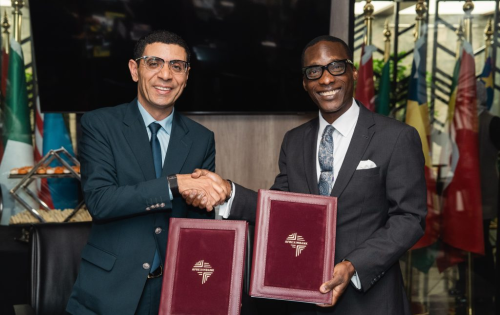
Stephen Kauma, Afreximbank’s managing director for human resources, and Khaled Khallaf, chief executive of IBDL, signed the memorandum of understanding (MoU) on July 10 at the bank’s Cairo headquarters. The programme will run through Afreximbank Academy (AFRACAD), the bank’s training arm, and target professionals, entrepreneurs, businesses and public institutions working in trade and industrial development.

Under the deal, AFRACAD and IBDL will build joint certification programmes covering intra-African trade, industrialization and trade intelligence, alongside boot camps on supply chain management and e-commerce delivered with corporate partners. The two will also expand an African diplomacy certification that first launched in 2024 and add new trade and economic masterclasses aimed at non-African diplomats.

This is not Afreximbank’s first attempt at closing the same gap. AFRACAD launched in October 2022 as the bank’s proprietary academy, and in June it ran a third AfCFTA specific training programme in Cairo with the American University in Cairo and the AfCFTA Secretariat. Organizers of that programme said limited understanding of the trade pact’s technical provisions has slowed its adoption among businesses, the same constraint the IBDL partnership now targets through standing certifications rather than one off workshops.

IBDL brings an international angle to the arrangement. Founded in 2014, the group focuses on international business education and will help AFRACAD pursue full accreditation from Missouri State University as part of the deal. Selected IBDL courses will also be added to AFRACAD’s online learning platform, and the two organizations plan joint marketing to widen access to the material.

“This partnership represents a tangible investment in the continent’s future trade leaders,” Kauma said, describing skills development as a critical enabler of Africa’s economic transformation. Khallaf said IBDL’s role reflects a shared commitment to building the practical capabilities African professionals need to make use of the African Continental Free Trade Area (AfCFTA), which aims to create the world’s largest free trade area by number of participating countries.

Tinubu Presses Afreximbank as Bank’s Capital Grows

President Bola Tinubu urged Afreximbank to accelerate funding for African industry on Tuesday, days after the bank posted a new investment grade rating and a $49.4 billion balance sheet.

Tinubu made the appeal while receiving a delegation led by Afreximbank President and Chairman George Elombi at the State House in Abuja. He argued that industrialization could no longer stay a talking point, pointing to his administration’s removal of the fuel subsidy and unification of the exchange rate as difficult but necessary steps toward a more productive economy. He also pressed the bank to work with Nigeria’s Bank of Agriculture to strengthen value chains in cocoa, palm oil and other export crops.

Elombi has made a similar case in public before. Speaking to reporters in March around the signing of Nigeria’s trade fair hosting agreement, he put it plainly: “You can’t import all the time. The only thing you can do is produce.”

The bank’s Nigeria portfolio, which Elombi briefed Tinubu on, includes a $2 billion commitment to the country’s cotton and garment industry, financing tied to the Lagos Calabar Coastal Highway and the Kano Maradi Railway, and the African Medical Centre of Excellence in Abuja, which Elombi invited the president to visit. Afreximbank has put between $15 billion and $20 billion into the Nigerian economy over the past five years across trade, agriculture and healthcare, according to figures Elombi shared at the meeting.

The appeal lands at a moment when Afreximbank has more room to act on it. S&P Global Ratings assigned the bank a BBB+ long term and A-2 short term issuer credit rating this quarter, and its first quarter 2026 results showed total assets and contingencies at $49.4 billion, shareholder funds of $8.6 billion and a capital adequacy ratio of 23 percent. The bank also closed a $2 billion equivalent syndicated facility in the same quarter, drawing 31 lenders from Europe, the Middle East, Asia and Africa.

Some of what Tinubu is pushing for is already locked in. Nigeria signed the host agreement for the Intra-African Trade Fair (IATF) 2027 in March, committing Lagos to stage the event alongside this year’s Creative Africa Nexus program, with organizers targeting $50 billion in trade and investment deals and 100,000 visitors. Minister of State for Industry John Owan Enoh described the push as part of the government’s Eight Point Renewed Hope Agenda to reduce Nigeria’s dependence on crude oil revenue.

Customs Brokerage Sector Welcomes Transformational Leadership

0

Story By: Muhammed Faisal Mustapha/Felix Ernest Odamtten….

The Customs House Agents Association, Ghana (CHAAG), on Thursday, July 9, 2026, officially inaugurated its newly elected national executives at a colourful ceremony held in Accra under the theme, “Advancing Professional Customs Brokerage and Trade Facilitation.”

The event brought together customs house agents, freight forwarders, industry stakeholders, government officials and business leaders to usher in a new leadership expected to strengthen professionalism, improve collaboration with key state institutions and promote efficient trade facilitation in Ghana.

One of the major highlights of the inauguration was the appointment of Chief Ibrahim Mojo, a highly respected veteran customs house agent and clearing professional, as the Vice President of the Customs House Agents Association, Ghana (CHAAG).

Chief Ibrahim Mojo’s appointment has been widely welcomed by industry players, who describe it as a significant milestone for Ghana’s shipping, logistics and customs brokerage industry. Having spent many years in the freight forwarding and customs clearance sector, he has built an enviable reputation for integrity, professionalism and mentorship.

Beyond his distinguished career in customs brokerage, Chief Ibrahim Mojo also serves as the Greater Accra Grushie Chief, a traditional leadership role through which he has championed community development, unity and the welfare of his people. His ability to combine traditional leadership with professional excellence has earned him widespread respect both within the maritime industry and among traditional authorities.

His elevation to the vice presidency is expected to bring a wealth of practical experience and strategic leadership to the association as it seeks to modernise customs brokerage practices and deepen collaboration with the Ghana Revenue Authority (Customs Division), the Ghana Ports and Harbours Authority, shipping lines, freight forwarders and other stakeholders.

Throughout his career, Chief Ibrahim Mojo has consistently championed ethical business practices, compliance with customs regulations and the continuous training of young clearing agents. His leadership style, grounded in experience, humility and dedication to service, has earned him the admiration of colleagues across the maritime and logistics industry.

The inauguration ceremony reaffirmed CHAAG’s commitment to building a stronger and more professional customs brokerage industry capable of supporting Ghana’s growing international trade and economic development. The association also reiterated its determination to enhance trade facilitation, improve operational standards and advocate policies that promote efficiency at the country’s ports.

Many participants expressed confidence that, with experienced leaders such as Chief Ibrahim Mojo serving as Vice President, CHAAG is well-positioned to become an even stronger voice for customs house agents while contributing significantly to Ghana’s ambition of becoming a leading trade and logistics hub in West Africa.

Industry observers believe Chief Ibrahim Mojo’s appointment represents not only personal recognition for decades of dedicated service but also a renewed hope for greater professionalism, unity and innovation within Ghana’s shipping and clearing fraternity. They also believe his dual role as a respected traditional ruler and seasoned customs professional will further enhance his capacity to build consensus, promote ethical leadership and inspire the next generation of customs brokers, helping to shape a more efficient, transparent and globally competitive trade environment.

One Institution Drove SDI Fraud Losses Up 77%

0

A single unnamed institution’s GH¢4.1 million loss from forged documents drove most of a 77 percent jump in SDI fraud exposure in 2025, Bank of Ghana data show.

The Bank of Ghana’s 2025 Fraud Report found that fraud cases across Specialised Deposit-Taking Institutions (SDIs) fell 47 percent, from 344 in 2024 to 182 in 2025. Money at risk moved the opposite way, climbing from GH¢4.5 million to GH¢8 million over the same period, an increase the central bank traced almost entirely to one category.

Forgery and manipulation of documents jumped from just GH¢10,000 in 2024 to GH¢4.2 million in 2025, overtaking cash suppression as the sector’s costliest fraud type. The Bank of Ghana said one institution, which it did not name, accounted for GH¢4.1 million of that figure on its own. By contrast, cash suppression involved 109 separate cases across the sector and still totaled only GH¢1.7 million, meaning a single documentation failure outweighed the combined losses from every cash suppression case reported that year.

The spike sits inside a longer arc that is otherwise improving. Combined losses across banks and SDIs peaked at roughly GH¢79.7 million in 2024 before falling to GH¢64.5 million in 2025, though only about GH¢3.7 million of that, near 5 percent, was ever recovered.

The Bank of Ghana presented the findings at a media briefing in Accra, where Dr. Kwasi Osei Yeboah, director of its Financial Stability Department, pushed back against alarmist framing of the numbers. “We are here to protect the public, the consumers,” he said, arguing that new products naturally carry early fraud risk while customers learn to use them safely. John Awuah, chief executive of the Ghana Association of Banks, pointed to an industry campaign running alongside the central bank to tighten document verification and internal controls at member institutions.

The identity of the institution behind the GH¢4.1 million loss remains undisclosed, leaving depositors at that SDI without confirmation of which lender was involved or what corrective steps, if any, have followed.

China Beats US to Market on Brain Implants

0

China has cleared two commercial brain computer interfaces (BCI) for sale this year. The United States, home to Neuralink, has approved none, leaving every American implant confined to research trials.

China’s National Medical Products Administration (NMPA) approved a device from Neuracle Technology in March for adults with partial paralysis from spinal cord injury, helping patients grip and hold objects again. It followed that with clearance for NEO, a device about the size of a coin developed by NeuraMatrix and researchers at Tsinghua University, which places electrodes on the membrane covering the brain in a procedure lasting about 90 minutes. No BCI implant holds full commercial approval from the Food and Drug Administration (FDA) in the United States, where Neuralink and its rivals still operate under research protocols.

The gap traces back to how each country treats the technology. In the United States, BCI development rests on a small number of billionaire funded companies willing to bet on surgery reaching commercial scale over a decade or more. China has instead folded BCI into state planning. This year’s national government work report named the technology a key future industry for the first time, placing it alongside quantum computing and semiconductors under the current Five Year Plan, one of only a handful of frontier technologies to make that list, according to an analysis by China policy researcher Dirk van der Kley.

Seven ministries jointly issued an implementation plan for the sector, and provincial governments have layered on their own targets since. One regional plan calls for registering three invasive and five noninvasive BCI products by 2027 and treating more than 50,000 patients a year, scaling to 3,000 invasive procedures annually nationwide by 2030. Regional authorities are also exploring pricing for BCI treatment under basic medical insurance, a step that would move the technology from experimental procedure to reimbursable medical category.

Capital has followed the policy signal. Chinese BCI financing hit 551 million dollars across 17 deals in the first quarter of 2026 alone, already surpassing the 212 million dollars raised across all of 2025, according to venture data platform IT Juzi. Much of that money is coming from major Chinese internet firms rather than specialist deep tech investors, a financing pattern that mirrored the buildout of the solar and electric vehicle industries a decade earlier. Neuralink, by comparison, has raised roughly 1.85 billion dollars in total funding since its founding.

“China is strong at translating basic research into practical uses,” said Max Riesenhuber, a neuroscience professor and codirector of the Center for Neuroengineering at Georgetown University Medical Center, pointing to solar panels and electric vehicles as precedents for how the country turns research into scaled industry.

Not everyone agrees noninvasive wearables are the better bet technically. Implant proponents argue that only devices placed inside or against the skull can achieve the signal precision needed for complex motor control, and investment bank Jefferies has similarly flagged limits on how much noninvasive systems can capture. Tech Buzz China founder Rui Ma has gone further on the commercial side, arguing that the much discussed prospect of using BCI to enhance healthy cognition remains far closer to science fiction than an actual product roadmap, even as therapeutic applications for injury and disability show real progress.

Underlying both national bets is a demographic pressure neither government controls. Neurological disorders affect more than 3.4 billion people worldwide, and Parkinson’s disease alone affected an estimated 11.77 million people as of 2021, a number still climbing as China, Japan and Western populations age. That disease burden, more than any single scientific breakthrough, is what is expected to determine how large the market for therapeutic brain interfaces ultimately becomes.

Rural Banks Bear Brunt of Cash Fraud Losses

0

Rural and Community Banks made just over half of the SDI sector’s cash suppression cases in 2025, but nine in ten cedis lost to it came from them.

The Bank of Ghana’s 2025 Fraud Report puts the number at 56 cash suppression cases at Rural and Community Banks (RCBs), 51 percent of the 109 such cases recorded across all Specialised Deposit-Taking Institutions (SDIs) during the year. The concentration is sharper in money terms. RCBs accounted for 90 percent of the GH¢1.7 million lost sector wide to cash suppression, meaning the fraud type hit rural lenders harder on both counts, not just more often but for larger sums each time.

That pattern sits inside an otherwise improving picture. Fraud cases across the SDI sector fell 47 percent to 182 in 2025 from 344 the year before, and cash suppression cases specifically dropped 59 percent from 267 to 109. Fewer incidents were getting through.

Money at risk moved in the opposite direction. Total exposure across SDIs climbed 77 percent to GH¢8 million from GH¢4.5 million, driven mainly by forgery and document manipulation, which jumped from just GH¢10,000 in 2024 to GH¢4.2 million in 2025. A single institution, which the central bank did not name, accounted for GH¢4.1 million of that figure on its own. Burglary losses added to the exposure too, rising from GH¢730,000 to GH¢1.18 million over the same period.

The numbers point to a sector where fewer people are getting caught committing fraud, but the incidents that do happen are costing more, concentrated in cash handling and paperwork rather than the digital fraud reshaping banks and payment providers. For RCBs, which remain the main formal banking contact in many communities without branch access to larger lenders, that concentration puts pressure on internal controls that customers in those areas depend on for deposit security.

Only a Third of Fraud Staff Were Fired

0

Ghana’s banks dismissed just 34 percent of staff implicated in fraud last year, even as a single cash suppression case pushed insider losses to GH¢40.7 million, regulators say.

The figures come from the Bank of Ghana’s (BoG) 2025 Fraud Report, published by its Financial Stability Department. Reported fraud cases at banks fell to 472 in 2025 from 716 the year before, and the total value at risk dropped 24 percent to GH¢57 million from GH¢75 million. On paper, that looks like progress. The staff numbers tell a different story.

Employees implicated in fraud across banks and Specialised Deposit-Taking Institutions (SDIs) fell 40 percent, from 365 to 219. But dismissals fell even faster, down 52 percent to 75, meaning fewer than four in ten implicated staff actually lost their jobs. Of those dismissed, 44 cases, or 59 percent, involved cash theft or cash suppression, the practice of withholding or misappropriating cash by someone with direct access to it.

Cash suppression itself drove most of the damage. Its value at risk jumped to GH¢40.7 million from GH¢2.3 million, an eighteenfold increase that the central bank attributed largely to one case worth GH¢36 million. The category also revealed a sharp mismatch between frequency and severity: banks accounted for only 22 percent of cash suppression cases recorded across banks and SDIs combined, yet those cases made up 96 percent of the money at risk from the category, meaning the few incidents that did happen inside banks were far more costly than similar cases elsewhere in the sector.

Other categories moved in different directions. E-money fraud rose to GH¢4.6 million from GH¢3.5 million, and fraudulent withdrawals climbed 118 percent to GH¢3.97 million. ATM and point of sale fraud fell 41 percent to GH¢2.43 million from GH¢4.14 million, one of the report’s few unambiguous improvements.

The bank level gains sit inside a sector wide picture that is getting worse, not better. Total fraud cases across banks, SDIs and Payment Service Providers (PSPs) rose 48 percent to 24,778 from 16,733, driven almost entirely by electronic fraud in the PSP sector, where cases climbed 54 percent to 24,124 and value at risk nearly doubled to GH¢37 million from GH¢19 million. The Bank of Ghana said fraud activity is migrating toward digital payment platforms as transaction volumes grow faster than users’ digital literacy. Of the sector’s total GH¢68.2 million exposure, only GH¢3.7 million, about 5 percent, was recovered.