
Food Keeps Nigeria’s Inflation Rising for Third Month

0

Nigeria’s annual inflation rose for a third straight month to 15.93% in May, driven by food prices, even as the monthly pace of increases eased.

The National Bureau of Statistics (NBS) reported on Monday that headline inflation climbed from 15.69% in April. Food did most of the damage. Food and non alcoholic beverages were the largest single contributor, adding 6.38 percentage points to the rate, ahead of restaurants and transport.

The pressure is concentrated where households feel it most. The bureau tied the rise to costlier staples including onions, maize, tomatoes, pepper, yam, cassava products and crayfish, the everyday items that fill Nigerian markets and kitchens.

There was one sign of relief, but it is thinner than it looks. Month on month, headline prices rose 1.75% in May, slower than April’s 2.13%, pointing to a gentler pace of increases. Underneath, the trend ran the other way. Core inflation, which strips out volatile food and energy, sped up on a monthly basis to 1.94% from 1.03%, a sign of stronger underlying price pressure.

Step back, though, and the longer trend looks far healthier. May’s 15.93% sits well below the 26.06% recorded a year earlier, part of a steady cooling helped by a rebasing of the consumer price index. The revised index now uses 2024 as its base year.

For policymakers, the third straight monthly rise complicates any move toward cheaper credit. The Central Bank of Nigeria (CBN) held its benchmark rate at 26.50% at its most recent meeting, keeping borrowing costs high to bear down on prices, and the latest reading gives Governor Olayemi Cardoso little reason to ease.

What comes next rests largely on food supply and the cost of moving it. Transport added 1.70 percentage points to inflation in May, so any fresh jump in fuel or freight would feed straight back into prices. For Nigerian households, where food takes the biggest share of spending, real relief still looks some way off.

Cape Verde Hold Spain as Vozinha Becomes World Star

0

A 40 year old goalkeeper from a nation of half a million held Spain scoreless at the World Cup on Monday, then woke to millions of new followers.

Cape Verde, the smallest country at the tournament and a World Cup debutant, frustrated one of the favourites in Atlanta. Spain piled up 27 shots with seven on target, but Josimar Dias, known to everyone as Vozinha, turned them all away for a clean sheet and the player of the match award.

The fame arrived within hours. Vozinha began Monday with roughly 50,000 Instagram followers and passed eight million by the next day, more than ten times the population of his country, with many of the new fans coming from Brazil before the wider football world joined in.

His rise followed a long, unglamorous road. Vozinha turned professional at 25 and spent his career with clubs few fans would recognise, in Moldova, Angola, Cyprus and Slovakia, winning a single trophy along the way, and has represented Cape Verde since 2012. He had once thought about walking away from the national team, he said afterwards, but stayed for the dream. “We deserve to be here,” he said.

The result rippled into the betting markets. On the prediction platform Polymarket, one user staked close to $999,000 on Spain to win at about 92 percent odds and lost the lot. Another, who put $400,000 on Spain not to win, walked away with roughly $4.7 million.

The nickname Vozinha, Portuguese for little grandmother, came from older children who beat him on the pitch as a boy and mocked him for running home to his grandparents. He has since made it his own. Cape Verde face Uruguay and Saudi Arabia next, and a win in either match would push a country that arrived chasing history toward the knockout rounds.

Lord Paper Signs Management Deal with Actress Lovia Ansah


Ghanaian musician Lord Paper has officially entered a new phase of his career following the signing of an exclusive management agreement with Ghanaian actress and media personality Lovia Ansah, popularly known as Nana Adjoa Lovia.

The agreement, which was officially signed on 8th June 2026, marks the beginning of a strategic partnership aimed at repositioning the artiste’s brand, expanding his audience reach, and creating new opportunities within Ghana’s entertainment industry and beyond.

The partnership comes at a crucial time as Lord Paper prepares to release new music and embark on an ambitious promotional campaign designed to strengthen his presence in the music space. The strategy will focus on media engagements, digital marketing, influencer collaborations, live performances, brand partnerships, and overall business development.

Under the new management structure, Lovia Ansah will oversee the business and promotional aspects of Lord Paper’s career while working closely with industry stakeholders to secure opportunities that align with the artist’s long-term vision and growth.

Known for her work as an actress and media personality, Nana Adjoa Lovia brings her experience, industry network, and passion for entertainment management to the role. Her appointment reflects a shared commitment to building a sustainable and impactful brand around Lord Paper’s music and public image.

Speaking on the new collaboration, both parties expressed excitement about the future and confidence in the direction of the partnership. With a clear vision, renewed focus, and a dedicated team in place, Lord Paper is poised to begin an exciting new chapter in his career.

The signing ceremony, held in Accra, symbolizes more than just a business agreement—it represents a shared ambition to elevate the Lord Paper brand, expand his influence, and create lasting success within the entertainment industry.

Photo Caption: Ghanaian musician Lord Paper and Ghanaian actress and media personality Lovia Ansah, popularly known as Nana Adjoa Lovia, during the signing of their exclusive artist management agreement on 8th June 2026 in Accra, Ghana.

Ghana Eye Winning Start Against Panama at World Cup

0

Ghana open their World Cup campaign against Panama in Toronto on Wednesday, needing a strong start in a tough group after encouraging results from other African sides.

The opener carries weight. England and Croatia, the group’s heavyweights, come later, so analysts treat Panama as the match Ghana cannot afford to lose. The expanded 48 team tournament sends the top two from each group, plus the eight best third placed teams, into the round of 32, which keeps a route open even in a demanding section. Panama are no pushovers, though. Back at the World Cup for a second time, they came through regional qualifying unbeaten and bring organisation and discipline.

Fans have drawn confidence from how other African teams began. Côte d’Ivoire beat Ecuador by a single goal through a late Amad Diallo strike, and Morocco held five time champions Brazil to a one all draw while dominating long stretches. Egypt added to the run by taking a point off Belgium.

Abel Manomey, a lecturer at the University of Ghana’s Department of Sports and Physical Education, said the squad can handle Panama despite the group’s difficulty, cautioning that “no opponent should be overlooked” in the modern game.

Ghana arrive under new management. Carlos Queiroz took the job after Otto Addo was dismissed at the end of March following heavy friendly defeats, and the federation chose him from more than 600 applicants with a mandate to reach the quarter finals. The coach has leaned on defensive structure, and how quickly the players absorb it may decide their tournament.

He blends youth with experience, though one worry lingers before kick off. Mohammed Kudus, troubled by a quadriceps injury, remains a fitness doubt, while Jordan Ayew, Antoine Semenyo and Iñaki Williams give the attack proven quality.

This is Ghana’s fifth World Cup, after 2006, 2010, 2014 and 2022. The team reached the quarter finals in 2010, its best run, and now sits 74th in the world rankings. A positive result against Panama on Wednesday would carry real value, setting up the harder tests against England and Croatia with points already banked.

Half of Ghanaians Have Witnessed a Road Crash, Study Finds

0

More than half of Ghanaians have seen or been in a road crash, and most consider the country’s safety enforcement too weak to stop the next one, a new CUTS International Accra survey of 1,795 consumers found.

The number sits at the alarming end of the study. Some 53.38 percent of respondents had witnessed or been involved in a road accident, and among them, 63.92 percent said ambulances and police were slow to respond. For a country where road transport carries most daily commuters, that points to a safety system failing at both prevention and rescue.

Confidence in the rules is thin. About two thirds of respondents, 65.54 percent, do not believe current traffic regulations and safety measures are adequate, and 54.4 percent rate law enforcement as ineffective or very ineffective. The verdict matters because the same survey shows how heavily people depend on the roads. Some 41.55 percent ride public transport such as tro tros, buses or taxis every day, exposure that turns weak enforcement into a daily personal risk.

Part of the problem is that few drivers and passengers ever engage the system meant to protect them. Only 16.55 percent said they had ever reported a road safety violation to the authorities, and just 20.61 percent had taken part in any road safety education campaign, while 62.5 percent had not. People who do not know the rules, or doubt that reporting changes anything, rarely push back when standards slip.

Road safety is one slice of a wider picture, and the report frames the same failure across eight sectors that Ghanaians use constantly. The study covered telecommunications, banking, electricity, water, e commerce, waste management, aviation and road safety, and the recurring theme is that heavy use has not produced strong consumer power. In e commerce, the gap is stark. Some 34 percent of online shoppers reported encountering fraud or unauthorized transactions, and more than three quarters were unaware of any law protecting them. In telecoms, most users did not know where to take a complaint.

CUTS argues the missing piece is a single law with teeth. The think tank has pressed the government to pass a comprehensive Consumer Protection Act and to set up an independent national authority to enforce it, replacing the patchwork of sector regulators that consumers struggle to navigate. Appiah Kusi Adomako, the organization’s West Africa regional director, has framed disclosure and accountability as the core fix.

The report was produced with seed funding from the National Communications Authority (NCA) and drew on focus groups alongside the survey, which spanned 10 regions. Its central claim is uncomfortable but simple. Ghanaians are buying more services than ever, on the roads and online, yet they remain largely unprotected and unaware of the few rights they already hold. Until that changes, the report suggests, providers face little pressure to improve.

Only Four African Countries Rank in Global Payments Top 50

Kenya, Nigeria, South Africa and Egypt are the only African countries among the world’s top 50 for cross border payments, a Thunes index published June 2 found.

The short list is the story. Africa runs some of the world’s most advanced domestic payment systems, yet only four of its markets cleared the bar for moving money smoothly across borders. Kenya led the continent at 36th globally with a score of 4.2 out of 10, with Nigeria, South Africa and Egypt completing the African presence. Ghana, despite deep mobile money penetration, did not make the list.

That absence matters for a country that has built much of its financial life around digital wallets. Strong local payment rails, the report argues, do not automatically translate into easy connections abroad, which is precisely the gap Ghana and most of its neighbours fall into.

The barrier is structural rather than a lack of innovation. Thunes pointed to international banks cutting back correspondent banking relationships in African corridors, which thins the continent’s links to global networks even as homegrown fintech advances. Fewer of those banking ties means more friction and cost on every international transfer.

The contrast with the leaders is stark. Denmark topped the ranking at 8.8, with eight European countries in the global top 10, powered by the Single Euro Payments Area (SEPA) network that settles cross border euro transfers within 10 seconds across more than 40 countries. That coordinated regulation is the edge Africa lacks, where rules and infrastructure differ sharply from one border to the next.

The report’s sharpest finding is that the problem is now global, not African. More than a billion people still wait days for international funds, even though half of recipients rank speed as their top concern. Mathieu Limousi, chief marketing officer at Thunes, put it bluntly: “We are witnessing a great contradiction in global finance.” Domestic systems have gone instant while cross border payments stay slow and fragmented.

One African data point stood out for what it reveals about workarounds. Mobile wallets and apps are now the main channel for sending money abroad, used by 48 percent of respondents worldwide, while 11 percent use cryptocurrency platforms, a figure that jumps to 40 percent in Nigeria. That heavy crypto use points to people routing around traditional banking channels where those channels fall short.

For Ghana, the takeaway is less about this year’s ranking than the road to the next one. The index drew on a survey of 6,763 consumers and businesses across 10 markets conducted by Juniper Research in April, alongside World Bank data. Closing the gap will take more than faster local apps. It will require rebuilding the banking ties and regulatory alignment that connect a country’s payments to the rest of the world.

Starlink Tops African ISPs on Download, Trails on Latency

0

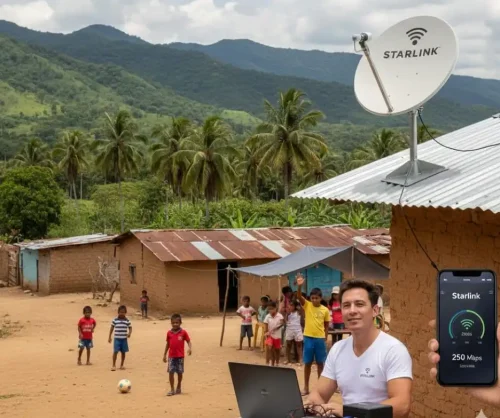
Starlink delivers faster downloads than local providers in nearly every African market it serves, but trails them on lag and price, Ookla data released Monday shows.

The headline number is lopsided. Across 23 markets in the region, Starlink posted higher median download speeds than local Internet Service Providers (ISPs) in 22, with Madagascar the only exception, where strong private fiber investment keeps homegrown networks ahead. In 16 of those 23 countries, Starlink cleared 50 Mbps in the first quarter of 2026, though only Eswatini, Botswana and Senegal topped 100 Mbps.

For Ghana, the picture is more mixed, and it matters to anyone weighing the dish against a fiber line. Starlink’s monthly plans undercut local providers on price here. But where fiber to the home is widespread, terrestrial networks win on upload, and in Ghana, Zimbabwe and Madagascar local ISPs push median upload speeds at least three times faster than Starlink. Anyone who uploads heavily, from video creators to remote workers, may still be better served by a cable.

Latency is where the satellite consistently gives ground. The signal has to travel to orbit and back, and even after heavy investment the physics shows. In Sierra Leone and the Democratic Republic of Congo, local providers deliver latency below 19 ms, against Starlink’s 127 ms and higher, a gap that hurts video calls and gaming.

Ground infrastructure is closing part of that gap. Starlink has built relay points in Lagos, Nairobi and Johannesburg, and the effect is visible. Local gateways have helped pull latency down sharply in served markets, but countries without them pay a steep penalty.

Karim Yaici, the Ookla analyst behind the report, framed the contest plainly. The speed gap with terrestrial networks is widening, he said, “though local ISPs retain a clear advantage in latency and price.”

The more telling shift is how mobile operators have come to treat the satellite. Rather than fearing it, they are signing with it. Airtel Africa has partnered with SpaceX to distribute Starlink and offer a Direct to Device (D2D) service across its 14 African markets, while Vodafone and Orange have struck deals with rival constellations to carry traffic from remote towers. High kit costs and weak indoor coverage keep satellite from threatening mobile networks directly, so the two are knitting together instead.

That partnership model may matter more for closing Africa’s rural connectivity gap than any single speed figure. Starlink’s next generation V3 satellites, due late this year, are expected to lift downlink capacity tenfold per satellite, which could ease the congestion that forced sign-up pauses in cities such as Lagos, Nairobi and Harare. For now, the choice between dish and cable still depends on what a user needs most: raw download speed, or the responsiveness and cheaper uploads that fiber can offer.

Politics, Not Demand, Holding Back African Aviation, IATA Says

0

Africa’s airlines fly more passengers each year than the global average, yet the continent loses money on aviation, and a senior industry figure blames politics rather than the market.

Kamil Al-Awadhi, the International Air Transport Association (IATA) regional vice president for Africa and the Middle East, told Ecofin Agency that the sector’s troubles trace back to government decisions, not weak demand or thin capacity. He said many officials who shape airline profitability do not fully grasp how airlines operate or the damage certain decisions cause.

The paradox matters because it points to a fixable problem. Traffic is rising fast, so the constraint sits in policy choices that governments could change, including protectionism and a reluctance to open national airspace to neighbours.

That reluctance has stalled the continent’s flagship integration plan. The Single African Air Transport Market (SAATM) was meant to create one open sky, but progress has been slow. “You have 54 countries, each with its own interests, and not all are willing to cooperate,” Al-Awadhi said, faulting weak enforcement and limited transparency from the bodies meant to track which states are dragging their feet.

West Africa offers a live test of whether reform can stick. ECOWAS agreed to cut aviation taxes, fees and charges by up to 25 percent, a move that took effect on January 1, 2026, and is legally binding on all 15 member states. Al-Awadhi praised the decision. But he called it disappointing that so far only one member state has applied it. Without broad adoption, he argued, passengers will not see lower fares, and he warned governments against adding new fees that would cancel out the gains.

The cost problem runs deeper than taxes. As of March 2026, African countries held the largest share of blocked airline funds in the world, totalling $774 million, with Algeria the single biggest holder. Money trapped in one country makes carriers wary of flying there at all, which chips away at the connectivity governments say they want.

Al-Awadhi sees one resource Africa is underusing: its land. He argued the continent could become a major producer of Sustainable Aviation Fuel (SAF), drawing on its farming base and lower production costs, and framed the investment as a matter of energy security rather than environmental box ticking. Awareness among policymakers, he said, remains thin enough to slow the decisions that would unlock it.

His most immediate prescription costs little. Nearly half of intra-African travel still requires a visa before departure, and easing those rules, he argued, could lift passenger traffic by as much as 8 percent. For a sector held back by politics rather than economics, a stroke of the pen may go further than any new runway.

Gabon Opens First National Data Centre This Month

0

Gabon will inaugurate its first data centre on June 30 at the Nkok Special Economic Zone (SEZ) near Libreville, ending years of reliance on foreign servers to hold the country’s information.

The project answers a problem common across the continent. Much of Africa’s public and private data still sits on machines in Europe, the United States and South Africa, leaving governments with limited control over where their records live. Gabonese operator ST Digital built the facility to Tier III standards, meaning redundant power and cooling for high reliability, and it will offer colocation, cloud and AI ready hosting to government bodies, businesses and individuals.

For Gabon, the stakes are sovereignty over its own data. Hosting locally promises tighter control of strategic records, faster digital services and lower costs on the international transfers that hosting abroad requires. Digital Economy Minister Mark-Alexandre Doumba confirmed the June 30 date as part of the country’s digital transformation roadmap.

The company behind it is not new to this. ST Digital has already built similar Tier certified facilities in Cameroon, experience that gives the Nkok project a track record to lean on. Its chief executive, Laïka Mba, describes the site as the country’s first eco responsible data centre, a nod to growing pressure over the heavy power use of digital infrastructure.

Security arrangements drew in the data protection regulator before launch. The head of the personal data protection authority, Joël Dominique Ledaga, met Doumba and ST Digital officials, who walked through the safeguards planned for the site, including partitioned computing environments and access controls. Bringing the regulator in early signals that the project is meant to anchor, not bypass, the country’s data protection rules.

Whether it pays off depends on scale. With a population of around 2.5 million, Gabon’s home market alone may not be enough to make the facility profitable, so ST Digital wants to turn Nkok into a regional hub serving governments and businesses across Central Africa, where demand for cloud and sovereign infrastructure keeps rising.

That ambition is the real test. A data centre sized only for Gabon would struggle, but one that draws customers from neighbouring states could make the country an unexpected node in the region’s digital map. For now, the June 30 switch on is the first step.

Most Nigerians Now Shop With AI, Visa Finds

0

Most Nigerian shoppers now lean on artificial intelligence (AI) to help them buy online, but half were hit by a scam in the past year, a Visa study released on June 11 found.

The two findings sit uneasily together. Some 88 percent of Nigerian consumers have used AI tools to shop, and 97 percent say new technology has made buying online faster and easier. They reach for it to check reviews and ratings (56 percent), compare prices (54 percent) and find gift ideas (53 percent). Yet the same survey records a fraud problem that has kept pace with the convenience.

Where consumers draw the line is at handing AI their wallet. Only 34 percent trust AI agents to complete a checkout on their behalf, even though 89 percent expect the technology to become critical to fraud protection in future. That gap between using AI to browse and trusting it to pay is the report’s central tension, and it matters as banks and payment firms push toward automated, agent driven shopping.

The fraud figures explain the caution. Some 83 percent of respondents have bought directly through social commerce, and among those who were scammed, 57 percent said the incident happened on social media, making it the single largest channel for fraud in the survey.

The risk reaches children. Some 76 percent worry that children struggle to recognize scams, and 62 percent have seen a child fall victim while gaming or shopping online. The draft figures put this alongside a third of parents reporting that their children can already reach mobile payment apps or digital wallets, a combination that leaves young users exposed.

On who should keep them safe, consumers point outward rather than at themselves. Just 7 percent think individuals should bear primary responsibility for fraud protection, while 64 percent say alerts when something looks suspicious would help them feel more secure paying online.

Irene Auma, Visa’s Head of Risk for the sub-region, framed the results around trust. Consumers embrace the convenience AI brings but “remain cautious when it comes to AI completing purchases on their behalf,” she said.

The study carries weight because of its reach. Wakefield Research conducted it for Visa between January and February 2026, surveying 5,800 adults across 17 markets in Central and Eastern Europe, the Middle East and Africa. Nigeria’s appetite for AI shopping runs ahead of several peers in that group, which makes its fraud exposure a useful warning for the region’s fast growing digital economies.