Fifteen burnt to death in Nigeria land feud

0

Fifteen people were burnt to death inside a house in Nigeria’s Niger State this week as a long land dispute between two ethnic communities killed 18, police said.

Police spokesperson Wasiu Abiodun said suspected attackers set a two bedroom flat ablaze late on Wednesday at Angwan-Baago, near Godoro village in Rafi Local Government Area, killing 15 people trapped inside. Another person was killed elsewhere the same night.

The bloodshed began on Monday, June 29, when suspected gunmen shot dead Ibrahim Musa, aged 25, at Godoro, according to the police account. A local vigilante group known as Yansakai then blocked a road and killed Bashir Mazi, aged 28, in what police called a suspected reprisal.

Police linked the violence to a protracted land dispute between two ethnic groups and said the attackers had not been identified. Investigators are still working to trace those responsible.

A reconciliation committee led by Rafi council officials is working with security agencies to calm the area. “Joint Police and military patrols have been deployed to the area to restore peace,” Abiodun said.

Niger State lies in Nigeria’s north central belt, a region that has seen repeated deadly clashes over land, grazing rights and community boundaries in recent years.

Ghana, South Africa give clashing accounts of killing

Ghana and South Africa have given clashing accounts of the killing of a Ghanaian man in Cape Town this week, disagreeing over his name, where he died and why.

Ghana’s Foreign Affairs Ministry said on July 1 that a Ghanaian aged 40, named Bashiru Isak, was shot dead in the Khayelitsha area of Cape Town on June 30 during demonstrations against foreign nationals. It condemned the killing as xenophobic and demanded that South Africa arrest and prosecute those responsible.

The South African Police Service (SAPS) rejected that version on Thursday. Provincial police in the Western Cape said the man they are investigating, named as Kwabena Boagen and aged 35, was shot on Monday, June 29, at the Nyanga Terminus, a different part of Cape Town, and that early findings point to extortion rather than xenophobia.

Police also said they had no trace of the incident Ghana described. “The South African Police Service has no record of the alleged murder in Khayelitsha,” the statement said, asking Accra to share details so the case could be checked.

It is not clear whether the two governments are describing the same death or two separate shootings. SAPS said a murder case had been opened in Nyanga and that detectives were working to trace the gunmen, who have not been arrested.

The dispute lands amid renewed unrest in South Africa, where anti migrant groups had set June 30 as a deadline for undocumented migrants to leave. South Africa’s government has publicly condemned the violence. Ghana has evacuated 979 citizens in three batches and, days before the killing, told nationals to avoid protest areas.

Ghana said it had lodged a protest with South Africa’s Department of International Relations and Cooperation and that its petition to the African Union over attacks on African nationals remained active. Arrangements were underway to bring the body home.

Flood Rescue In South Tongu

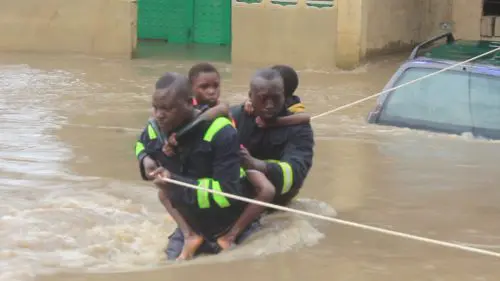
More than 300 people, including nearly 80 children, have been rescued from devastating floodwaters in the South Tongu District of Ghana’s Volta Region. The joint operation was carried out by the Ghana National Fire Service, the Ghana Navy’s Squadron Boat Unit, and the National Disaster Management Organisation after hours of torrential rainfall submerged homes and displaced hundreds of residents.

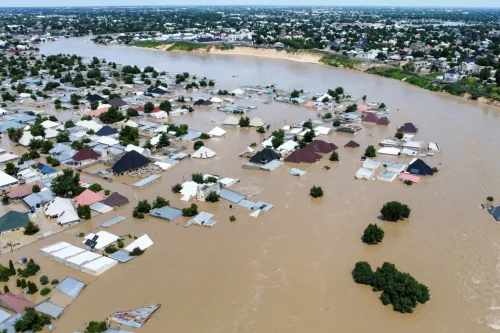
The flooding, described by locals as one of fear and destruction, affected several communities across the southern Volta Region. In Sogakope, the district capital, homes and businesses were inundated, forcing residents to abandon their properties. Areas such as the Sogakope Y-Junction, Gloverkope, Eli-Eli Restaurant, SOGASCO Down, and the vicinity of the Total Child Preparatory School were among the worst hit. Other communities including Dabala Junction, Hikpo, Agbagorme, and Agbugbla also suffered severe damage, with many houses completely submerged. Displaced residents sought refuge with relatives and friends on higher ground.

The scale of the disaster prompted District Chief Executive Hon. Victoria Dzeklo to request reinforcement from the Naval Training Command at Nutekpor. Speedboats were deployed to evacuate stranded residents in Agbugbla and Hikpo. The rescue operations drew large crowds of anxious onlookers, many of whom were moved to tears as families, especially children, were brought to safety.

Residents expressed shock at the magnitude of the flooding, noting they had never experienced such conditions in their years living in the area. The District Commander of the Fire Service, DO I Ernest Fanam Ekor, acknowledged the challenges of the operation but emphasized the fulfillment of saving lives. He also warned against the growing practice of building on waterways, which worsens flooding risks. Hon. Dzeklo described the disaster as one of the worst in recent years and praised the collaboration between security services, NADMO, the Ambulance Service, and community volunteers. She urged residents in flood-prone areas to relocate to safer grounds when waters rise and pledged intensified public education on disaster preparedness.

Meanwhile, Hon. Michael Tettey, Assembly Member for Tosukpo-Agbugbla, revealed that two of his three communities had been completely devastated, with losses running into millions of Ghana cedis. The flooding has also spread into neighboring districts, including the Shime enclave of Anloga, underscoring the widespread impact of the disaster.

Free pads keep 250 Fanteakwa girls in school

Insurer Imperial General Assurance and World Vision Ghana gave 250 girls in seven Fanteakwa schools a six month supply of menstrual pads in June, helping them stay in class during their periods.

In the Fanteakwa North and South districts, many girls miss school during their periods because pads cost too much or are hard to find, according to World Vision Ghana. The charity distributed more than 2,000 pads to 790 girls across five communities in the same area in 2022, and the new partnership widens that reach.

The pupils received a supply covering June to December 2026 under the Imperial Girl, the insurer’s corporate social responsibility programme on period poverty. The Ghana Health Service and the Ghana Education Service ran lessons on safe menstrual hygiene, and a quiz on menstrual health handed certificates to pupils from both districts.

The beneficiary schools were Abourso Roman Catholic, Obooho, Akoradako, Ahomahomaso, Adjeikrom, Bosuso and Saamang, covering primary and junior high levels. The handover took place at Begoro Presbyterian Senior High School to mark this year’s Menstrual Hygiene Day.

Managing Director Harry Ofori-Attah said the work reflects the company’s focus on the health and education of girls in rural communities. “The Imperial Girl is not a side project for us,” he said.

Felix Apeti, Fanteakwa cluster programme manager for World Vision Ghana, welcomed the partnership and urged other companies to back the campaign so it can reach more girls.

COBOD Releases GH¢2.6 Billion to Clear Cocoa Farmers’ Outstanding Payments

The Ghana Cocoa Board (COBOD) wishes to inform all cocoa farmers and the general public that an amount of Two Billion, Six Hundred Million Ghana Cedis (GH¢2.6 billion) has been released to Licensed Buying Companies (LBCs) for payment to cocoa farmers for cocoa purchases across all cocoa regions.

Since the beginning of the 2025/26 Crop Season, COCOBOD has paid an amount of GH¢34,523,447,255.64 to Licensed Buying Companies (LBCs) for onward payment to farmers. Accordingly, out of the GH¢2.6 billion released today, approximately GH¢1.4 billion has been earmarked to clear the remaining balance LBCs owe cocoa farmers for cocoa taken on credit.

COBOD is working closely with the Licensed Buying Companies to ensure that all affected farmers receive their payments. The Board has also instituted monitoring mechanisms to ensure that the funds reach the farmers who are owed.

COBOD acknowledges the patience, resilience, and understanding demonstrated by cocoa farmers during this challenging period and wishes to assure all cocoa farmers that no farmer will be denied payment for cocoa legitimately sold through the approved cocoa purchasing system.

Farmers with outstanding payments are encouraged to engage the relevant Licensed Buying Company through which they sold their cocoa. COCOBOD will continue to work with all stakeholders to ensure the full settlement of outstanding obligations.

The release of these funds underscores the Government’s commitment to safeguarding the welfare of cocoa farmers and preserving the integrity of Ghana’s cocoa industry. COCOBOD remains committed to protecting farmers’ interests and ensuring that they receive the full benefits of their hard work.

COBOD expresses its sincere appreciation to all cocoa farmers for their continued dedication and invaluable contribution to Ghana’s economy. The Board will continue to work with Government and industry stakeholders to strengthen the cocoa value chain, improve farmer welfare, and ensure the long-term sustainability of Ghana’s cocoa sector.

A historic ascent: Ghana’s flag rises over Chicago

0

Source: Sankofaonline

What unfolded on July 1, 2026, at Daley Plaza was more than a ceremonial gathering. It was a defining moment when heritage, civic recognition, and community pride converged as the Ghana National Council of Metropolitan Chicago (GNC) hoisted the Red, Gold, and Green, crowned by the Black Star, into the Chicago skyline.

For the Ghanaian community, this was not simply an event; it was an affirmation of identity and a celebration of decades of cultural contribution.

What began under the Kassim Abubakari administration, delayed once by rain, finally reached its historic fulfillment under President Effah Ameyaw.

The President delivered a dignified and resonant address, describing the day as a powerful symbol of Ghanaian resilience, unity, and community spirit. He emphasized that the ceremony reflected the invaluable contributions of Ghanaians to Chicago’s cultural, social, and economic fabric. He expressed gratitude to the City of Chicago for recognizing the community in such a meaningful way and called for continued unity and partnership. His closing words, “God bless Ghana. God bless Chicago. God bless the Ghanaian community”, captured the spirit of the day.

Illinois State Comptroller , Susana A. Mendoza , offered a heartfelt tribute, noting that the ceremony represented far more than raising a flag. She highlighted the Ghanaian community’s more than 50‑year legacy in Chicago, marked by music, traditions, entrepreneurship, and cuisine. Mendoza connected Ghana’s 1957 independence to America’s upcoming 250th Independence Day, underscoring shared values of democracy, opportunity, and service. She affirmed that Ghanaian Americans strengthen Illinois every day as business owners, healthcare professionals, educators, public servants, and community leaders.

A representative of Cook County Board President , Toni Preckwinkle, delivered remarks that linked Ghana’s history to the broader African‑American experience.

The Ghana flag was officially raised at Daley Plaza, and the day was proclaimed Ghana Flag Raising Day for the 5.2 million residents of Cook County. The speech honored the deep historical ties between Ghana and Black African Americans, referencing West African roots, W.E.B. Du Bois, and the Pan‑Africanist movement.

The ceremony was framed as a tribute to those who fought for mental and physical liberty across the globe.The declaration marked a profound civic recognition: Ghana’s story is woven into the American narrative.

The President of the Ghanaian Council of Chiefs and Chief of the Fante Benevolent Society, Nana Kwame Bayin Okutseaku VIII, offered a stirring reflection. He expressed pride in celebrating Ghana’s Republic Day in Chicago and affirmed that the Ghanaian flag represents the gateway of Africa, the Black Star of Africa. His remarks reinforced the symbolism of the Black Star as a beacon of unity, independence, and global identity.

The celebration was enriched by traditional Ghanaian cultural performances, including Adowa, Kpalogo, and a captivating stilt dancer.

The Daley Plaza was transformed into a vibrant display of Ghanaian heritage, drawing modest spectators from across the city.

This historic flag raising was not merely ceremonial. It was a recognition of Ghanaian contributions to Chicago’s civic and cultural life, a celebration of Ghana’s role in inspiring African independence movements, and a reaffirmation of shared democratic values between Ghana and the United States. July 1, 2026, now stands as a landmark date in the history of Illinois and the Ghanaian diaspora.

The Ghanaian flag flying over Chicago signals a new chapter—one of strengthened partnerships, increased cultural visibility, renewed pride among Ghanaian youth, and a foundation for annual celebrations and educational initiatives. The Black Star rose, and with it, the aspirations of a community that continues to enrich the city and state.

Five MSMEs Emerge Winners in MTN Ghana’s SME Business Pitch Competition

Five Ghanaian small businesses have secured GH¢30,000 each in funding under MTN Ghana’s SME Business Pitch Competition, as the telecommunications company intensified efforts to strengthen entrepreneurship through financing, digital innovation and business development support.

The winners, Tahir Field Recycling, Edible Treats, Dyluri Beauty, Manehlla Foods and Tropical Snacks—emerged from a competitive pitching session involving 10 finalists selected from hundreds of applications received nationwide during activities marking this year’s World MSME Day in Accra.

Beyond the cash awards, the winning entrepreneurs will participate in MTN Ghana’s 13-week Mini MBA programme, delivered in partnership with NOVA Business School, while also gaining access to digital business solutions and continued mentorship through the company’s SME Accelerate Programme.

The five remaining finalists 10-10 Foodie, Awhenepa Cookery, House of Lush, Bubune Africa Limited and Lebenam Skin received GH¢2,000 each together with MTN Business support packages, including the Y’ello Biz Router, MiFi devices and other digital tools designed to improve business operations.

Senior Manager For Sme Sales At Mtn Ghana Mohammed Abubakari Sidick
Senior Manager For SME Sales At MTN Ghana Mohammed Abubakari Sidick

Speaking to News Ghana ,Senior Manager for SME Sales at MTN Ghana, Mohammed Abubakari Sidick, said the initiative reflects the company’s long-term commitment to helping small businesses overcome barriers to growth through access to finance, digital technology and business education.

He noted that while hundreds of entrepreneurs applied for the competition, only 10 businesses advanced to the final pitching stage before an independent panel of judges.

“SMEs remain the backbone of Ghana’s economy because they create jobs and drive innovation. At MTN, we understand their journey because the company itself started as an SME,” he said.

Mr. Sidick explained that the competition forms part of MTN Ghana’s year-round SME Accelerate Programme, which continues to provide entrepreneurs with business advisory services, digital solutions and financing opportunities through the company’s Mobile Money platform.

He said the latest competition marks the third edition under the programme this year, following earlier pitch events held during the MTN Women’s Summit in Accra and AshantiFest in Kumasi.

For overall winner Tahir Field Recycling, the recognition represents a major boost for a business transforming used engine oil into reusable products.

Chief Executive Officer Tahiru Umar said the idea originated from childhood memories of watching waste engine oil being discarded whenever his grandfather serviced his vehicle.

He explained that the observation later inspired his university research project before evolving into a commercial recycling enterprise.

“This recognition confirms that persistence and innovation pay off. We are grateful to MTN Ghana and its partners for believing in our vision,” he said.

Mr. Umar said the GH¢30,000 prize would be invested in acquiring a vacuum pump and expanding the company’s supply of waste engine oil to increase production capacity.

He added that the expansion is expected to create more employment opportunities, with plans to recruit at least two additional workers in the coming months and up to six more before the end of the year.

The company currently employs 30 workers, comprising seven permanent and 23 temporary staff.

Mr. Umar also called for more public and private sector initiatives that support young entrepreneurs, saying increased investment in start-ups and small businesses could accelerate job creation and economic growth across Ghana.

Sme


New counsellors graduate in Kasoa amid mental health gap

0

The Goodlife School of Counselling and Psychology graduated a new class of certified counsellors in Kasoa on June 30, expanding a workforce that reaches few Ghanaians needing mental health care.

Ghana counts about 39 psychiatrists and roughly 244 psychologists for a population above 30 million, according to World Health Organisation figures. WHO estimates put the number of Ghanaians living with a moderate to severe mental disorder at 3.8 to 6.6 million, yet only about 2 percent receive formal treatment.

The graduates completed the school’s Certificate in Counselling Programme. Trained lay counsellors work in churches, schools and hospitals, where they support distressed people and point those in crisis toward professional help. They also carry a duty to refer clients who need advanced care.

The Ghana Psychology Council accredits the school to run structured counselling and psychology courses for people entering the profession. The June 30 event was its third graduation.

Professor Nyuiemedi Agordzo Edoh-Torgah, Head of the Department of Counselling Psychology at the University of Education, Winneba, told graduates that skilled counsellors help individuals and communities make sound decisions under stress. Apostle William Kojo Edzorhoho, Area Head of the Church of Pentecost, Downtown Ofaakor Area, urged them to hold to professionalism and integrity.

Elder Acheampong Obo, Chief Executive Officer of the school, said it would keep training ethical and compassionate counsellors. The ceremony ran on the theme “Building Competent Counsellors for Positive Impact and Social Transformation.”

Prosper Kweku Gamor of Cohort Five finished as overall best student. Dr Oliver Mills topped Cohort Four and David Kofi Opoku led Cohort Six.

The graduating class included Mrs Mildred Siabi-Mensah, a deaconess and senior editor at the Ghana News Agency.

The Netherlands Overtake England, Spain in Most World Cup Penalty Shootout Defeats… After Morocco’s Defeat

The ghost of tournaments past returned to haunt the Oranje on Monday night, but this time, it brought a historic statistic that no nation ever wants to claim.

With their grueling Round of 32 exit at the 2026 FIFA World Cup, the Netherlands have officially overtaken England to claim the grim milestone of the most penalty shootout defeats in World Cup history.

How the Curse Continued:

The Dutch initially looked poised to advance when talisman Cody Gakpo broke the deadlock in the 72nd minute.

However, an exquisite Issa Diop header in the 91st minute levelled the score for Morocco, forcing an uneventful extra-time period where the Netherlands notably retreated into a conservative, defensive shell.

That gamble backfired catastrophically from 12 yards. While Morocco’s Atlas Lions held their nerve, the Dutch collapsed under the psychological weight of the spot-kick.

Justin Kluivert, Quenten Timber, and finally Crysencio Summerville, whose critical strike was batted away by Morocco’s hero goalkeeper Yassine Bounou, all failed to convert.

Midfielder Ismael Saibari stepped up next, sending a low rocket into the bottom left corner to seal a 3-2 shootout victory for Morocco.

The defeat sent the Dutch to their earliest World Cup exit in national history, knocking them out before the Round of 16 for the very first time.

The Grid of World Cup Heartbreak (Most Shootout Losses)

  1. NETHERLANDS 5 Losses (1998, 2014, 2022, 2026)
  2. SPAIN 4 Losses
  3. ENGLAND 4 Losses
  4. ITALY 3 Losses

Passing the Unwanted Crown

For generations, England and Spain carried the heaviest psychological scar regarding major tournament penalty shootouts. But while the Three Lions have slowly stabilized their spot-kick record in recent years, the Dutch are now on a miserable run of four consecutive World Cup shootout defeats.

The Oranje’s legacy of penalty trauma now paints a painful historical timeline:1998 Semifinal: Lost 4-2 to Brazil, 2014 Semifinal: Lost 4-2 to Argentina, 2022 Quarterfinal: Lost 4-3 to Argentina, and 2026 Round of 32: Lost 3-2 to Morocco.

While Morocco celebrates another historic chapter in their fairytale World Cup saga, becoming the most capped Arab and African team in tournament history, the Dutch squad leaves Mexico heavily burdened by a deep historical scar that has only widened.

Penalty shootouts were introduced in the World Cup for games drawn after extra time in 1978, although the first shootout did not take place until 1982.

Since then, there have been more than 30 World Cup penalty shootouts.

By: Franklin ASARE-DONKOH

GWJN Calls for urgent action to end Accra’s perennial flooding crisis

The Ghana WASH Journalists Network (GWJN) has called for urgent and sustained national action to address Accra’s recurring flooding, describing the situation as unacceptable and preventable.

In a statement issued on July 1, 2026, and signed by the National General Secretary, Samuel Asamoah, the Network expressed sorrow over the latest floods that hit Accra and surrounding communities, which claimed lives, destroyed property, and displaced thousands of residents. It extended condolences to bereaved families and sympathised with victims whose livelihoods have been affected.

According to GWJN, the repeated flooding incidents reflect long-standing failures in planning, enforcement, environmental management, and urban governance, despite years of interventions, reports, and emergency responses.

The Network identified key drivers of flooding in Accra, including encroachment on wetlands and waterways, weak land-use planning, poor drainage systems, indiscriminate waste disposal, unregulated urban expansion, and inadequate maintenance of existing drainage infrastructure. It also cited weak coordination among institutions responsible for flood management.

GWJN stressed that flooding should no longer be treated as a seasonal emergency but as a permanent national development issue requiring comprehensive engineering solutions and strict enforcement of planning regulations.

It urged key state institutions, including the Ghana Hydrological Authority (HYDRO), Metropolitan, Municipal and District Assemblies (MMDAs), the Land Use and Spatial Planning Authority (LUSPA), and the Environmental Protection Authority (EPA), to strengthen protection of wetlands and drainage corridors.

The Network further called for mandatory hydrological and drainage assessments for all road projects, insisting that infrastructure must be designed to safely channel storm water into rivers, lagoons, and the sea to prevent community flooding.

GWJN also raised concerns about the status of recommendations made by a government Anti-Flood Taskforce established in March 2025, chaired by Deputy Chief of Staff (Operations), Stanislav Xoese Dogbe. It questioned what progress had been made in implementing its findings and called for transparency and accountability.

The Network urged government to take firm action, including strict enforcement of planning laws, removal of structures obstructing waterways, reclamation of wetlands, and improved engineering standards for public infrastructure projects.

While emphasizing government responsibility, GWJN also called on citizens to stop dumping waste into drains and engaging in illegal construction along waterways, noting that public behaviour contributes significantly to flooding.

It added that it will intensify media advocacy on sanitation, drainage protection, and flood prevention, and work with stakeholders to expose violations that worsen the crisis.

GWJN further urged authorities to ensure safe water supply in affected communities and to test and treat contaminated water sources following flood incidents. “The time to act decisively is now,” the statement concluded.

Below is the full statement

GWJN Flood press release