Ghana Coach Queiroz Warns Expanded World Cup Losing Value

0

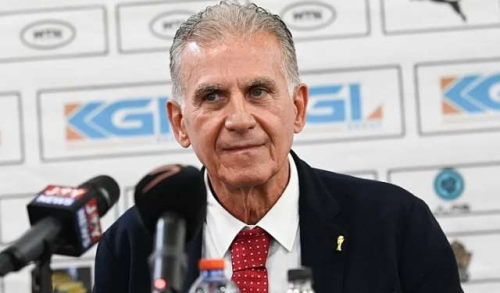
Ghana coach Carlos Queiroz questioned Sunday whether expanding the World Cup to 48 nations has drained it of meaning, speaking after his side fell 2-1 to Croatia in Philadelphia.

Queiroz, who has coached national sides on four continents, said football’s governing body risked turning the tournament into something routine. The argument carries a specific irony: Ghana is one of nine African nations at the 2026 finals, up from five when the field was capped at 32.

“Where we used to talk about football, it is now moneyball,” Queiroz said.

He contended that scarcity is what gives the World Cup its weight. Tough qualification, he said, is not incidental to the competition’s prestige. It is the point. Once most nations can qualify, the prize shifts.

The 2026 tournament, hosted across the United States, Canada, and Mexico, is the first under the new structure, which the Fédération Internationale de Football Association (FIFA) approved in 2017 under president Gianni Infantino. Expansion was pitched as a way to bring more of the world into football’s biggest event.

Ghana remain in the running despite Sunday’s defeat. Queiroz, who guided Portugal through two World Cups and also took charge of Iran and Colombia before arriving with the Black Stars, did not frame his comments as post-match frustration. His challenge was to the format itself.

Minority Leader Says Gold Focus Hurts Ghana’s Farmers

0

Minority Leader Alexander Afenyo-Markin has accused the government of neglecting agriculture to fund its gold programme, though his loss figure went well beyond what the International Monetary Fund (IMF) reported.

Speaking to members of the Tertiary Students Confederacy (TESCON), the New Patriotic Party’s student wing, the Minority Leader said the government had poured its energy into the Ghana Gold Board, known as GoldBod, while letting farming slide. Money lost on gold, he argued, could have supported farmers and brought down food prices.

His central figure does not match the record. The Minority Leader said the IMF had reported losses above nine billion. The Fund’s December report actually put them at about 214 million dollars, roughly 2.4 billion cedis, and tied them to the Bank of Ghana’s gold for reserves programme rather than to GoldBod. The board’s chief executive, Sammy Gyamfi, says GoldBod itself made a surplus.

The losses have been a running argument. The IMF flagged the 214 million dollars as a risk to the central bank’s finances and urged the government to record them on the national books. GoldBod and the central bank dispute how the figure should be treated, noting that the gold programme earned more than 10 billion dollars in foreign exchange in 2025 and helped steady the cedi.

The Minority Leader ranged wider, questioning why the government had not advanced Agenda 111, the previous administration’s hospital programme, and pointing to a reported rift between the agriculture and finance ministries. On food, he said local staples were losing to imports. “It is cheaper to import rice than to locally produce rice,” he told the students.

The government has not cast gold and farming as a choice between the two. It presents GoldBod as a way to build reserves and support the cedi, and points to its own agriculture plans. The exchange adds to a months long clash between the Minority and the gold board over how Ghana’s gold earnings, and their costs, should be counted.

Mahama Backs Five Year Terms for Political Office

0

President John Mahama says his government intends to extend the terms of Ghana’s political office holders from four to five years, reviving a contested constitutional reform during his regional tour.

Mahama made the remarks at a stakeholder engagement in the Central Region during his Resetting Ghana tour. He said members of parliament, the President, assembly members and district chief executives should all serve five year terms, arguing that four years leaves a government too little time to govern, with the first year lost to setting up and the last consumed by campaigning.

The idea is not new. It is the headline recommendation of the Constitution Review Committee (CRC), the eight member body chaired by Professor Kwasi Prempeh that handed its report to Mahama in December. The committee judged Ghana’s four year term too short and below the regional and global norm, and proposed five years for the presidency.

Two points temper the announcement. The committee’s chair has said the longer term would not apply to Mahama himself, who was elected under the current four year rules and must leave office in 2029. And because the presidential term is entrenched in the 1992 Constitution, any change would need a national referendum, not just a vote in Parliament.

The review went wider than tenure. It also recommended barring members of parliament from serving as ministers and electing district chief executives, who are now appointed. The five year term has drawn open opposition, with some lawyers and politicians arguing that four years is enough and that Ghana’s problems lie in waste and weak delivery, not the length of a term.

Mahama has promised to publish the full report and to carry the review into an implementation phase that would turn its proposals into draft amendments. Whether the five year term becomes law will rest with Parliament and, on the entrenched clauses, with voters at a referendum.

Young Ghanaians Offer Five Point Roadmap to Create Jobs

0

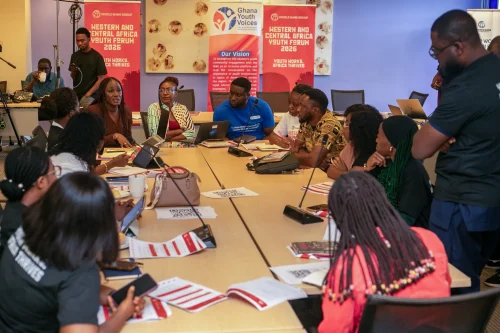
Young Ghanaians at a World Bank youth forum in Accra have put forward a five point plan to turn the region’s young population into job creators rather than job seekers.

The delegates were among about 300 young leaders the World Bank gathered for its Western and Central Africa (AFW) Youth Forum, held in Accra last Monday and run at the same time across seven countries under the theme Youth Works, Africa Thrives. Ghana’s session focused on entrepreneurship and youth led innovation, and its proposals fed into a regional dialogue with delegates from Côte d’Ivoire, Cameroon, Guinea, Niger, Nigeria and Senegal.

The forum met against a stark backdrop. The World Bank counts about 196 million young people in the region and says a child born there today will reach only 38 percent of their productive potential, a shortfall it blames on weak education and training.

The young people built their plan around five moves. The first targets mindset: campaigns and platforms to convince students they can solve problems and to ease their unease about artificial intelligence, which many see as both a threat to jobs and a source of new ones. The second urges universities, technical schools and employers to design courses together so graduates leave with skills firms actually use. The third calls for better storytelling about African invention, through media, film and music, to shift a perception that innovation happens elsewhere.

The fourth seeks training matched to each stage of a young person’s path, from secondary school through tertiary study and into work, rather than one size programmes. The fifth tackles money: anchor funds that cut the risk for lenders and steer patient capital to untested ideas, easing the collateral barriers that lock many young founders out of credit.

The convening World Bank official, Michelle Keane, tied the agenda to partnership. “Sustainable job creation happens when policy, investment and entrepreneurship come together,” she said. The youth proposals form Ghana’s input to a regional plan the bank intends to carry to its leadership.

The recommendations are advice, not commitments, and Ghana’s own figures show the scale of the task. Numbers presented at the forum put new jobs over the past decade at about 435,000 against some 3.7 million young people who joined the labour force. Whether the roadmap shifts that balance will depend on what governments, schools and investors now do with it.

Fintech Widens SME Credit but Africa’s Gap Persists

Ten years of digital lending have widened credit for Africa’s small and medium sized enterprises (SMEs), yet a financing gap the International Finance Corporation (IFC) puts near 330 billion dollars remains unclosed.

The IFC estimates that micro, small and medium sized firms across the developing world face an annual credit shortfall of about 5.2 trillion dollars, including roughly 330 billion in Sub Saharan Africa, though some World Bank figures put the regional gap lower. The region’s small firms generate most of its jobs and a large share of output, yet only about one in ten holds the records a bank needs to lend against.

Digital lenders have chipped at that barrier by reading alternative data, mobile money records, utility bills and online sales, to judge borrowers who lack formal accounts. World Bank researchers say such methods can cut the cost of serving a small loan sharply and shorten approval from weeks to minutes.

The shift has not matched early promises. In Kenya, the birthplace of mobile money, digital lenders advanced only a fraction of what banks lent to small firms, a sign that technology has so far complemented traditional credit rather than replaced it.

Speed has carried a cost. Some mobile lenders charge fees that, annualised, run into triple digits, and parts of the market have drifted towards over indebtedness. Regulators in several African countries have started tightening rules on pricing disclosure and data use.

Development finance institutions are trying to widen the funnel. The IFC has launched a platform of about 4 billion dollars to back banks, non bank lenders, microfinance houses and digital startups that serve smaller firms, part of an effort to draw private capital into a market it has long called underserved.

Whether that narrows the gap will turn on more than technology. Patchy internet, unreliable power and thin records still keep many businesses out of reach, and lenders concede that data driven credit only works where the data exists. The tools have widened the door. They have not yet opened the market.

Ghana Risks Repeating Gold Failures With Lithium, Expert Warns

0

Ghana risks wasting its coming lithium wealth as it did with gold, a transparency expert warned, unless it fixes how mining money is spent and why supply contracts leak abroad.

Dr. Steve Manteaw, a co chair of the Ghana Extractive Industries Transparency Initiative (GHEITI), spoke at a media and civil society workshop on corruption risks in Ghana’s lithium sector, organised by the Natural Resource Governance Institute. With Ghana preparing to mine lithium at Ewoyaa, he said the gold sector’s record should serve as a warning.

Successive GHEITI reports, he said, show royalties meant for local development being spent on recurrent costs that leave little behind. In the Wassa area, he added, community royalty shares went towards funeral donations, while assemblies elsewhere put the money into canopies and event logistics ahead of elections and presidential visits.

Sanitation swallows much of the rest, he argued, even though assemblies are meant to fund it from property rates. He called the pattern an abuse and pressed for binding rules that would steer royalties into lasting projects rather than day to day spending.

His sharper point concerned procurement, which he called the largest share of mining’s value, about a third of a company’s spending and far bigger than taxes. Ghana lists 56 categories of goods and services miners should buy locally, he said, yet the policy is hollow in practice. “When Ghanaians get the contract, they go to China,” he said, importing the goods and pocketing the margin instead of building local industry.

The result, he said, is a mining sector barely connected to the rest of the economy. Lithium would change nothing, he warned, if Ghana carried the same habits into Ewoyaa, and success should be judged by the jobs, businesses and infrastructure mining leaves behind, not by export earnings alone.

He drew a contrast with what mining firms spend themselves, noting that Gold Fields built the road from Damang to Tarkwa after paying its taxes, while the public share of benefits showed less to point to. Manteaw urged journalists and civil society groups to probe how resource revenues are used, rather than stopping at contracts and royalty figures. He wanted to open a newspaper one day, he said, and read about why Ghana has not built a Johannesburg of its own.

Mahama Expands Sentuo Refinery to Curb Fuel Imports

0

President John Mahama has broken ground to more than double the Chinese built Sentuo refinery in Tema, part of a drive to refine Ghana’s own crude and cut fuel imports.

Mahama cut the sod on Thursday for the second phase of the Sentuo Oil Refinery, which will lift processing capacity from 40,000 to 100,000 barrels a day. Energy and Green Transition Minister John Jinapor attended, alongside China’s ambassador to Ghana and Sentuo’s executive chairman, Xu Ningquan.

The expansion is set to raise the plant’s workforce from about 700 to 1,500 and add roughly three million tonnes of annual refining capacity, placing Tema among the larger refining sites in West Africa.

The bigger prize for the government is value. Ghana exports crude oil yet spends heavily importing petrol, diesel and other refined fuels, and Mahama framed the expansion as a way to keep more of that value at home. “Ghana must increasingly process its own resources,” he said, pointing to a recent decision to allocate one million barrels of Jubilee field crude for refining at Sentuo.

He set a wider goal of turning Ghana from a fuel importer into a supplier to its neighbours. At full capacity, and trading under the African Continental Free Trade Area, the country could sell refined products across West Africa, where demand is climbing.

Whether the plant delivers will turn on steady crude supplies, competitive costs, reliable power and clear pricing rules. Ghana’s record offers reason for caution. The state owned Tema Oil Refinery has been hobbled for years by debt and breakdowns, and private refiners will only retain value at home if they can run efficiently against established rivals abroad.

Much will also hinge on how far Ghanaian firms win the engineering, maintenance and supply work the refinery generates. Mahama has tied the plant to a revived state refinery and to new onshore drilling in the Voltaian Basin, which the national oil company plans to begin before the end of 2026, as part of a wider bet on Ghana’s petroleum chain.

World Bank Economist Tells Ghanaian Youth to Stop Waiting

0

A World Bank economist has urged Ghana’s youth to stop waiting on government for jobs and build their own opportunities, warning that a decade of growth has barely dented unemployment.

Dr. Ashwini Sebastian, the World Bank’s Senior Agriculture Economist for Ghana and West Africa, spoke at the bank’s Western and Central Africa Youth Forum in Accra last week. She said Ghana’s economy, growing at around 6 percent a year over the past decade, had added only about 435,000 jobs while some 3.7 million young people joined the labour force.

Waiting for the state to close that gap, she argued, was futile. “Depending on the government to solve your problem, it won’t get solved,” she told the forum, pressing young people to treat initiative and enterprise as the surer route to a livelihood.

She was blunter still about civic engagement. After four years in Ghana, she said, she had seen far less youth advocacy than in other African countries, pointing to Kenya, where young people staged mass protests, as a sign that frustration should turn into pressure rather than silence.

Her prescription leaned on enterprise. Young people with a strong idea, she said, should learn the field, start small and trust that financing follows effort rather than comes before it. She cited Hello Tractor, an African platform that links farmers with tractor owners through an app, arguing its founders built and proved the business before chasing scale.

She questioned why Ghana had not produced more ventures of that size, saying the ideas exist but founders must aim past the startup stage.

The forum ran across seven countries in the region under the theme Youth Works, Africa Thrives. By the World Bank’s estimate, a child born in West or Central Africa today will reach only 38 percent of their productive potential, a shortfall it blames on gaps in education and workforce preparation.

Employers Spend More on Wellbeing but Gains Stall

United States employers are pouring more money into staff wellbeing, yet workforce health and productivity have stalled, new research shows, as controlling health care costs becomes their main motive.

MetLife’s 2026 Employee Benefit Trends Study, based on surveys last October of about 2,480 human resources leaders and 2,541 full time workers, found 60 percent of employers had raised benefit spending and 62 percent had widened non medical offerings such as dental, disability and financial wellness plans. Employers expect $2.30 back for every $1 put into employee health, through higher output, stronger retention and lower medical bills.

The payoff has been elusive. Only 44 percent of employees describe themselves as in good overall health, and engagement, productivity and loyalty scores sat flat against the previous year even as spending climbed. For the first time since 2022, employers named controlling health care costs their top benefits goal, ahead of productivity, loyalty and hiring.

Cost is the pressure behind both the spending and the caution. More than eight in ten employees rank rising living and medical costs as their main source of stress, half put off care because of out of pocket bills, and workers lose about six days a year to health problems.

Wellbeing specialists argue the money works only when it changes how a company runs. The Global Wellness Institute said leading employers are moving away from standalone perks and instead building health into leadership, workflow design and performance reviews, a shift it expects to define 2026.

MetLife’s head of United States group benefits, Todd Katz, urged employers to invest “beyond simply expanding the menu of options,” tying a stronger workforce to smarter design rather than longer benefit lists.

Researchers have long tied healthier workforces to better balance sheets. Work by the University of Oxford found firms with higher employee wellbeing scores tend to post stronger profits and stock returns. The harder part, analysts say, is that those gains follow real changes to workload and culture, not one off perks.

Nigeria’s Olodo uprising: An assault on critical thinking

A sheep was passing and saw a lion crying inside a cage, trapped and helpless. The lion begged the sheep to rescue him, promising not to kill or eat it. The sheep refused at first, knowing fully well that a lion does not become a vegetarian because of captivity. But after much persuasion, emotional blackmail, and the sheep’s own gullibility, it opened the cage.

Now the lion was very hungry, having stayed in the cage for days without food. It quickly pounced on the sheep and was about to kill and eat it, but the sheep reminded him of his promise.

They were still arguing when other animals came passing. They sought to know what had happened. Both the lion and the sheep narrated their own sides of the story, but because of fear, convenience, and the desperate need to gain favour in the sight of the lion, all the animals took sides with the lion, except the tortoise, who claimed not to understand the whole scenario.

The tortoise asked the lion to show them where exactly he was before the sheep rescued him. The lion pointed at the cage.

The tortoise asked again, “Were you inside or outside when the sheep arrived?”

The lion replied, “I was inside.”

The tortoise then said, “Okay, enter and let us see how difficult it could be inside, because I am not getting the whole scenario.”

The lion entered, and immediately, the tortoise locked the cage. The lion was trapped again.

That story is not just folklore. It is a national diagnosis.

Nigeria today is full of trapped lions, gullible sheep, frightened animals, and very few tortoises. We have many people with opinions, but few with discernment. Many with certificates, but few with comprehension. Many with titles, but few with thought. Many who can quote policy, scripture, law, and ideology, but cannot ask the simple question that prevents disaster: “Wait first, how did we get here?”

That question is the beginning of critical thinking. Sadly, it is becoming an endangered species.

The easiest and most attractive national pastime remains buck-passing, especially with the bunch of leaders we have, some of whom can hardly peel a banana nor wash an already white handkerchief. Not many of us want to take responsibility for anything, from personal life to family life, from community life to national life. The blame is always on the system, as if the system descended from the sky and imposed itself on innocent citizens.

We do not need to create demons out of our leaders because, in too many instances, they have behaved like ready-made specimens of public demons. So, we hang our sins on them, sometimes appropriately, sometimes lazily. Unfortunately, their behaviour has made it easy for the critic to descend on them. They loot loudly, lie casually, perform empathy only when cameras are present, and govern as though the people are background noise in their private banquet.

But there is a deeper tragedy. The lion is not our only problem. The sheep too must be examined. The other animals must be questioned. Even the silence of the forest must stand trial.

This is where the Olodo Syndrome enters.

In Nigerian street language, “Olodo” is often used to describe a dull person, someone slow to understand, someone who fails where basic reasoning should have saved them. But in this essay, Olodo is not merely the person who did not go to school. No. Nigeria has produced a more sophisticated creature: the educated olodo. The certificated illiterate. The graduate who cannot reason beyond slogans. The public officer who mistakes grammar for intelligence. The citizen who forwards nonsense with confidence. The analyst who mistakes noise for insight. The leader who confuses movement with progress. The voter who sells tomorrow for rice today, then spends four years complaining that the pot is empty.

Olodo, therefore, is not the absence of schooling. It is the failure of judgment.

It is what happens when a nation rewards mediocrity and punishes thought. It is what happens when people who ask serious questions are labelled troublesome, while those who clap for madness are called loyal. It is what happens when dumb, crazy things move the needle, while wisdom is treated like an old man coughing in the corner. It is what happens when unintelligent people do not merely exist, but are celebrated, promoted, defended, and installed as gatekeepers over those who still dare to think.

This is Nigeria’s Olodo Uprising.

It is an uprising not of the poor against the rich, nor of the uneducated against the educated. It is an uprising of shallow thinking against depth. An assault on memory, logic, accountability, and consequence. It is the national habit of refusing to connect action to outcome. We open the cage, release the lion, and then begin a prayer meeting when the lion remembers its appetite.

We talk, write, and discuss the Nigerian myth with a sense of fatalism. “This is Nigeria,” we say, as if that phrase is both an explanation and excuse. If everyone thought as much about justice and fairness, life would be better. I am a critic, yes, but I am also a critics’ critic. I remain an unrepentant believer that one of the ways to keep the government on its toes is to keep harping on its flaws so that it can improve. But criticism without self-examination becomes entertainment. It becomes pepper soup politics, the kind we enjoy at drinking joints, suya spots, WhatsApp groups, and television studios where every table has a parliament and every loud voice is mistaken for a constitution.

Often, I say I believe the things I write on are important for our nation, as they are for other nations. But when it appears to me that Nigerians, especially those in authority, do not react to these issues as people in other lands do, I repeat them in new essays to remind old readers and recruit new ones to participate in the continuing dialogue.

Because repetition, sometimes, is not lack of creativity. It is the burden of memory in a country addicted to forgetting.

Sadly, this is Nigeria, where nothing works and no one cares. When it works, it is often because someone’s interest is about to be served or is already being served, not because the people’s interest has suddenly become sacred. We talk about our institutions despairingly. Our leaders do not watch network news except when their faces will appear at their sons’ or daughters’ weddings, birthdays, burials, thanksgiving services, or self-sponsored ceremonies of public praise. They do not need newspapers anymore because too many pages are already full of their lies, paid adverts, and noisy banters dressed as governance.

A country that destroys thinking will eventually be governed by instinct.

That is why the Olodo Syndrome is dangerous. It does not only make people ignorant. It makes them confidently ignorant. It gives stupidity a microphone and asks wisdom to apply for permission to speak. It converts public debate into shouting contests. It turns leadership recruitment into ethnic arithmetic, religious panic, stomach infrastructure, and emotional blackmail. It makes citizens defend their oppressors because the oppressor speaks their language, attends their church, worships in their mosque, comes from their zone, or once gave them transport money.

This is how the other animals sided with the lion.

Not because the lion was right. They knew he was wrong. But fear is a powerful editor of truth. Hunger is a wicked lawyer. Proximity to power is a dangerous intoxicant. In Nigeria, many people do not support injustice because they are confused. They support it because they are calculating. They are asking themselves, “What if the lion remembers me tomorrow? What if I need a favour? What if I condemn him now and he becomes minister, governor, chairman, commissioner, vice chancellor, senator, president?”

So, they betray the sheep.

Government bashing remains a national pastime, and every drinking joint and suya spot has a sitting parliament with an expert on every issue. But we forget that no matter the input, if the politicians and actors on our national scene have questionable lives both at personal and domestic levels, nothing will change. The best government policy cannot change the individual when the policies themselves are formulated on a bad foundation by people with warped thinking.

A corrupt mind cannot midwife a clean system.

When a witch proclaims her presence, and an invalid does not make away, he must have money for sacrifices at home. Nigeria has been warned too many times. We have seen the witch. We have heard the announcement. Yet we remain seated, arguing about who invited her, who offended her, which village she came from, and whether her witchcraft is constitutionally recognised.

This is not merely leadership failure. It is civic laziness. It is moral cowardice. It is intellectual surrender.

The tortoise in the story represents the rare citizen who does not join the chorus. The one who pauses the noise. The one who asks for sequence, evidence, context, motive, and consequence. The tortoise is not the loudest animal. It is not the strongest. It does not roar. It does not bleat. It thinks.

That is what Nigeria needs now: more tortoises.

Not slow people, but thoughtful people. Not cowards hiding under shells, but citizens who understand that speed without thought is national self-harm. We need people who can ask leaders: Where were you before power? What did you promise? What have you done? Who benefits? Who pays? What happens tomorrow? We need teachers who teach children to question, not merely cram. We need voters who examine character before currency. We need religious leaders who produce conscience, not crowds. We need journalists who investigate, not decorate. We need institutions that reward competence over loyalty, substance over noise, and courage over convenience.

Because the lion will always be hungry again.

That is the part Nigeria refuses to learn. Appeasing bad leadership does not end its appetite. Excusing mediocrity does not transform it into excellence. Rewarding foolishness does not make it wise. If we allow the lion to eat the sheep today because we are afraid, hungry, tribal, religiously sentimental, or politically invested, we have not solved the hunger problem. We have only postponed our own turn.

In amazement, the other animals asked the tortoise “why” and the tortoise replied. “If we allow him to eat the sheep today, he will still go hungry tomorrow and we don’t know what will be eaten tomorrow—May Nigeria win