Kasoa Court Grants Bail to Man Behind Viral Video Against Mother and Child Hospital

0

The Ofaakor High Court in the Awutu Senya East Municipality has granted bail to George Kwakye, the man at the centre of a viral video alleging medical negligence at the Kasoa Mother and Child Hospital.

Kwakye was granted bail in the sum of GH₵50,000 following his recent arrest over the video, which triggered widespread public outrage and brought national attention to the hospital’s operations.

In the controversial video, Kwakye accused nurses at the facility of negligence, claiming their actions had contributed to multiple patient deaths. His claims sparked a media investigation, which later confirmed that at least three patients had reportedly died due to alleged lapses in care by medical staff at the hospital.

The incident led to growing public calls for accountability and reforms at the health facility, which has faced mounting criticism in recent months.

Representing Kwakye in court, lawyer for Gifty Ankomah argued that the bail granted was a fair reflection of the seriousness of the allegations and the public interest involved. He insisted that the hospital administration could not use his client as a scapegoat simply for raising legitimate concerns.

“The court carefully considered the circumstances surrounding the case. The bail amount reflects the weight with which the court views the allegations. The hospital cannot silence individuals who speak out about systemic failures,” the lawyer stated.

The case has reignited debate over standards of care in public hospitals and the rights of citizens to hold healthcare providers accountable. Many observers believe the legal proceedings could set an important precedent for whistleblower protection and medical accountability in Ghana.

GCTU Equips Business Students with Cutting-Edge Accounting Software Skills to Bridge Industry Gap

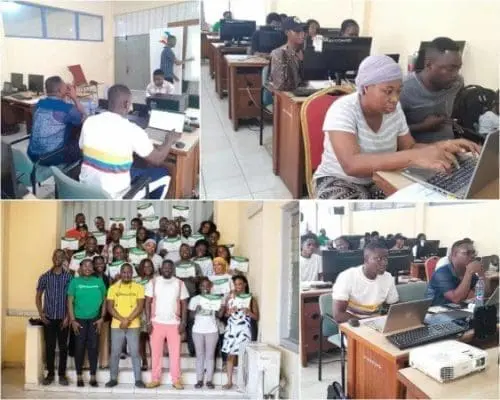
In a strategic move to address industry demands, Ghana Communication Technology University’s (GCTU) Business School, Department of Accounting, Banking and Finance is training final-year students in advanced accounting software.

The intensive 4-day program, organised by the Department of Accounting, Banking and Finance in collaboration with Prymage Consultancy Ltd, targets BSc Business Administration (Accounting with Computing), BSc Banking and Finance, and Level 200 Diploma students.

Dr. Emmanuel Attah Kumah Amponsah, Senior Lecturer and Head of Department, emphasised the critical need for this hands-on training during an exclusive interview. “Industry consistently highlights a skills gap between academia and practice. We’re moving beyond traditional bookkeeping – today’s world demands paperless, software-driven accounting,” he stated.

Key Training Highlights:
1. Software Focus: Students master Tally Prime 5.0 (Version 3), the latest industry-standard software, enabling efficient invoicing, financial reporting, expense tracking, and auditing.
2. Industry Alignment: Dr. Amponsah stressed that graduates without these skills risk unemployment: “Companies use accounting software universally. If our students lack this proficiency, they cannot perform effectively.”
3. Beyond Accounting: The software’s modules – including payroll, production, sales, and distribution – benefit HR, marketing, and operations roles, making it essential for all business disciplines.
4. Built-In Auditing: A major advantage highlighted is the software’s automated auditing function. *”It minimises human error and audits every transaction in real-time, reducing the need for extensive
internal audit teams,” Dr. Amponsah explained.

Call to Action for Universities:
Dr. Amponsah urged all universities offering business programs to integrate similar soft-skills training: “GCTU recommends this model nationally. Adding practical software skills ensures graduates are job-ready and can immediately add value in the workplace.”

Accessibility for All:
Pyramid Consult, the facilitating partner, also offers public access to this training. “Anyone can enrol online via Pyramid Consult’s platform,” Dr. Amponsah noted. “This certification enhances your employability. GCTU is committed to holistic, quality education – we equip students to excel.”

GCTU Business School Dean Urges Final Year Accounting Students: “Practice Makes Skills Permanent”

Professor George Oppong Appiagyei Ampong, Dean of the Business School at Ghana Communication Technology University (GCTU), delivered a compelling call to action for final year Accounting students during a specialized training session on accounting software this week. Emphasizing the critical gap between theoretical knowledge and practical skill, Prof. Ampong stressed that consistent practice is non-negotiable for career readiness.

Addressing the students, the Dean drew from personal experience: “I record that I have had advanced Excel before, but as I’m speaking to you, I don’t remember any… if you learn and don’t practice, that is lost.” He underscored the fundamental distinction crucial for their IT-based Accounting program: “The difference between knowledge and skill is the fact that knowledge is kept and with skills, You have to do it. You have to practice it.”

Prof. Ampong framed the intensive training – whether one, two, or three days – as an essential “ritual” designed to bridge this gap. He warned against complacency, urging students: **”Don’t learn it and leave it on your own. Be practicing it every day until you get the things free.”To ensure mastery, he announced GCTU’s commitment to ongoing support: “We will do refreshers until you leave school in order to reinforce whatever you are learning within your program so that everything will become hardwired before you.”

Beyond proficiency, the Dean focused sharply on employability. He instructed students to prominently feature the specific software training on their CVs, revealing an employer’s perspective: “Some of us are employers, and we know what we look for. It’s not your first class certificate that we look for. It is about these [practical] things that we look for.”

However, merely listing the skill wasn’t enough. Prof. Ampong challenged the students to proactively apply their learning in a real-world context: “After all the exercises that you did, you should look around the campus and you yourself come and say that you want to create a system for the Abeka campus of GCTU. By the time you finish that trial, you might have gotten it.”He highlighted the dual benefit – gaining practical experience while contributing value to the university.

Concluding his remarks, Prof. Ampong expressed his satisfaction with the initiative: “I’m glad that you have had this training,” and reminded students their learning journey continues, stating firmly, “it doesn’t end here”. His message resonated as a clear directive: transform classroom knowledge into demonstrable, practiced skills to thrive in the competitive accounting and technology landscape.

Also speaking at the specialised training session, Prince Papa Quartey, Lead Facilitator for the Accounting Software Training programme, emphasised the critical need for accounting professionals to master modern digital tools. The programme, targeting graduate accountants, is equipping participants with skills in software like Teleprime to bridge the gap between traditional methods and

contemporary practice.

Mr Quartey outlined the core objective: “We are introducing them to accounting software… We want them to have the skill to compare manual accounting to computerised accounting,” he stated. “This allows them to apply their foundational knowledge within modern systems, achieving greater convenience and effectiveness at work.”

Highlighting the advantages of the specific software used in the session, Mr Quartey noted, “Tally prime is an open-source solution which allows for customisation.” This flexibility is a key benefit for businesses adapting the software to their specific needs.

Addressing the learning process, the lead facilitator acknowledged a common hurdle: “One challenge we face is the readiness of the student to pick up the knowledge you are imparting.” To counter this, the programme employs targeted strategies: “One measure we’ve put in place is to have a quiz which serves a dual purpose: to evaluate them, and to also keep them on track, encouraging them to learn the system and take it seriously.”

Mr Quartey strongly countered fears that automation threatens accounting jobs, clarifying its role as an enhancer: “No, the software has not taken anyone’s work. Rather, it’s improving the efficiency and effectiveness of accountants and auditors. Even the business owner benefits from having crucial business information readily available with convenience and ease, enabling better advice.”

His concluding advice to participants focused on commitment and practice: “I advise them to take the training seriously, and also practice more, because practice makes perfect.” Quartey positioned the training as a vital career investment, stating, “This is a means to add value to their first degree or certificate, significantly enhancing their employability in the competitive job market.”

Accounting Software Training Opens Doors for Ghana Immigration Staff Member

Enthusiasm is high among participants in the ongoing national accounting software training program, with one trainee highlighting its potential for career advancement and departmental improvement within the Ghana Immigration Service (GIS).

Jamilatu Abdul Bashiru, an employee of the GIS currently studying accounting, shared her motivations and hopes during a break in the intensive training session. While not currently assigned to the Service’s accounting department, Ms. Abdul Bashiru sees the training as a critical step forward.

“This software will enable me to get further, maybe to go to my department,” Abdul Bashiru stated, referring to the GIS accounting unit. “This certificate I’ll be acquiring will help me… let my department, maybe the accounting department, know how the software works and how it’s going to help us develop our transactions.”

She emphasized the practical skills being gained, crucial for core financial functions: “It will help us with having to know for example, how to get the income, how we are going to balance our balance sheet. All those tasks are going to be very helpful to us with this software.”

Abdul Bashiru didn’t hesitate to recommend the training to others, especially her fellow accounting students. “Oh, I think they (Accounting students) should take this course very seriously, because it’s going to be very helpful,”she urged, adding, “I’m very happy that we are having this kind of training it’s going to help us a lot.”

Her comments underscore a dual benefit of the national training initiative: equipping individuals with valuable, in-demand skills for career progression, while simultaneously building internal capacity within government agencies like the Ghana Immigration Service to modernize financial operations and reporting. Abdul Bashiru represents a cohort of public servants leveraging this training to bridge academic knowledge with practical, job-ready expertise.

The Accounting Software Training programme represents a significant push to modernise accounting skills within Ghana, ensuring graduates possess the digital proficiency demanded by employers and can contribute effectively to business efficiency and growth.

The training also underscores GCTU’s proactive approach to closing the academia-industry divide, ensuring graduates enter the workforce equipped with the digital tools driving modern finance and business operations.

By Kingsley Asiedu

State-Assisted Burial Announced for Highlife Legend Dada KD

0

Veteran highlife musician Dada KD will receive a state-assisted burial at Accra’s State House forecourt on Saturday, 16 August 2025, followed by interment in his hometown of Agona Asaaman, Central Region.

A thanksgiving service will be held on Sunday, 17 August. The family confirmed the arrangements during a one-week memorial at East Legon Executive Club, attended by dignitaries and musicians including Kojo Antwi, Kaakyire Kwame Appiah, and Nana Romeo.

Mourners are requested to wear black and white in tribute to the late artist, who passed away on 17 May 2025 after a brief illness. His death occurred days before a scheduled London performance with Obrafour, Slim Buster, and Kojo Blakk.

The funeral is expected to draw large crowds of fans and industry figures honoring Dada KD’s enduring legacy in Ghanaian music. The state recognition reflects his cultural impact spanning decades as a highlife pioneer.

Banking Expert Warns Ghana’s Fintech Regulations Lag Behind Digital Boom

0

Ghana’s explosive fintech growth demands urgent regulatory modernization, banking consultant Dr. Richmond Atuahene contends in a High Street Journal analysis.

He asserts current “rigid, rule-based frameworks” – designed for traditional banks – fail to address risks from mobile money, blockchain, and digital lending surging across Ghana’s financial landscape.

Dr. Atuahene cites transformative shifts: 59.7 million mobile money accounts, 97% of transactions processed digitally, and over 4 million unsecured mobile loans disbursed. While acknowledging expanded inclusion, he warns outdated rules leave regulators ill-equipped for cyber threats, data breaches, and fintech innovations operating outside existing oversight.

His solution advocates principles-based regulation focused on outcomes like stability and consumer protection, not specific technologies. “Regulate activities, not technologies,” he urges, proposing a hybrid UK-Indonesia-inspired model balancing flexibility and clarity. This approach would empower firms to meet objectives while adapting to new business models.

Critical gaps remain in data privacy, fraud prevention, and grievance redress. Dr. Atuahene calls for enhanced RegTech adoption and an improved Bank of Ghana regulatory sandbox to test innovations safely. With digital finance now foundational to Ghana’s economy, he stresses reform is essential to “future-proof the financial system” amid rapid technological change.

Fintech Leader Urges Ghanaian SMEs to Adopt Digital Tools for Competitiveness

0

Ghana Fintech and Payments Association President Martin Kwame Awagah has called on small and medium enterprises (SMEs) to integrate fintech solutions for enhanced efficiency and competitiveness.

Speaking during Citi Business Festival 2025’s On-Air Series, Awagah emphasized fintech’s critical role in economic transformation, particularly in high-mobile-penetration markets like Ghana.

“Fintech delivers the convenience, speed, and real-time access modern consumers and businesses demand,” Awagah stated in the session themed “How Fintech Is Changing the Business Landscape.” He highlighted Ghana’s youth demographic as a key adoption driver, noting their preference for mobile-first financial experiences necessitates shifting from outdated systems to agile digital platforms.

For SMEs historically constrained by limited capital access, Awagah outlined how fintech bridges operational gaps through e-commerce integrations, mobile POS systems, and cloud-based tools. He stressed these innovations expand financial inclusion, bringing informal enterprises into the formal economy while creating linkages to the digital ecosystem.

With Ghana’s fintech sector attracting significant investment, Awagah concluded: “The future of business in Ghana is digital, and fintech is the foundation.” The remarks underscore accelerating digital transition as a prerequisite for SME resilience.

GES Seeks Unified Teacher Representation Amid Salary Protest Delays

0

The Ghana Education Service (GES) has highlighted fragmented leadership among newly posted teachers protesting salary delays, complicating resolution efforts.

A GES representative voiced the concern during a June 24 appearance on Morning Starr with host Naa Dedei Tettey, noting shifting protest groups hinder consistent dialogue.

“We realize new sets of aggrieved teachers emerge frequently,” the official stated, citing inconsistent representation across petitions. “Those submitting the first petition differed from subsequent ones, including yesterday’s—new faces and leadership each time. This makes communication difficult.”

While affirming commitment to resolving teacher grievances, the GES appealed for coordinated representation to facilitate efficient negotiations. The service emphasized it is in the “tail end” of addressing initial concerns but requires stable stakeholder engagement to finalize solutions.

The situation underscores broader administrative challenges in managing decentralized labor disputes within Ghana’s public education sector.

Activist Criticizes Special Prosecutor Over Gyampo Message Handling

0

Activist Oliver Barker-Vormawor has publicly challenged Ghana’s Office of the Special Prosecutor (OSP) over its characterization of a WhatsApp message sent by Professor Ransford Gyampo during an investigation.

The dispute follows an OSP press statement implying Gyampo attempted to interfere with a search at Strategic Mobilisation Limited (SML) premises.

Barker-Vormawor shared the full message on Facebook, in which Gyampo advised Special Prosecutor Kissi Agyebeng: “Your shut down of the SML Server would rather cause financial loss to the State… You can investigate while allowing monitoring devices to work.” The activist called the OSP’s reaction “bad faith,” stating: “I am disappointed this message prompted a press statement aimed at tarnishing Gyampo’s image.”

He urged restraint from the OSP, emphasizing: “A less emotive approach is needed in such a sensitive office.” Gyampo separately clarified his message reflected patriotic concern, not interference: “I only expressed hope your intentions are patriotic, not personal,” rejecting the OSP’s insinuation as unfair.

The incident highlights growing scrutiny of Ghana’s anti-corruption institutions’ operational transparency and communication protocols.

Central Banks Shift Gold Reserves Domestically Amid Geopolitical Tensions

Central banks worldwide are accelerating efforts to repatriate gold reserves amid heightened geopolitical risks, with 59% now storing portions domestically compared to 41% in 2024, according to the World Gold Council’s 2025 Central Bank Gold Reserves Survey.

The strategic shift reflects mounting concerns over financial sanctions, currency instability, and accessibility of offshore holdings during crises.

The report notes reserve managers increasingly view physical control as integral to national financial security, stating: “Storage shifts reflect lessons from recent sanctions and system disruptions.” Gold’s role as a neutral, zero-counterparty asset has expanded as political volatility drives reserve diversification beyond traditional currencies.

Emerging markets are implementing domestic gold purchase programs, sourcing from local artisanal mining to reduce foreign storage dependence. While London remains a primary hub, 44% of central banks now actively manage gold positions – signaling sophisticated operational approaches blending accumulation with liquidity needs.

This operational pivot accompanies record acquisitions exceeding 1,000 tonnes annually for three consecutive years. The trend underscores how pandemic-era fragmentation and systemic risks are transforming reserve strategies, elevating physical location to parity with ownership in financial crisis preparedness.

Apostle Amoako Attah Delivers Fiery Prophetic Message, Calls for National Spiritual Awakening

0

Renowned prophet and founder of Parliament Chapel International, Apostle Francis Amoako Attah, has delivered a thought-provoking message during a live broadcast on Angel TV, touching on spiritual ignorance, prophetic reincarnations, and the power of intentional prayer ahead of this year’s Mpaebo Kɛse (Great Prayer Gathering).

Speaking with his characteristic boldness, Apostle Amoako Attah declared that many of the struggles people face are not the result of external spiritual attacks, but rather internal battles stemming from ignorance and poor choices.

“Don’t be afraid of Satan,” he stated. “Be afraid of ignorance and being stupid. That is deeper than you think. Satan is not my problem—if he were, I met him here and I will leave him here. What you focus on, you empower. Sometimes the fight is not with the devil but with what is within you.”

He urged viewers to shift their focus away from fear-driven spirituality and instead pursue knowledge and inner transformation.

In a prophetic revelation that has since stirred public interest, the Apostle claimed that this week’s spiritual atmosphere is marked by unusual activity, particularly among women. “A lot of women will menstruate this whole week because of tomorrow’s date,” he said, without elaborating on the significance of the date.

He further claimed that this month marks the spiritual return of powerful biblical and historical figures to Ghana, including Samson and David.

“A lot of people who are gone, both from the Bible and outside it, will be born back in Ghana from this month. I once said Trump would return as David. Today, they call him David Trump because he rose up when things were tough.”

Quoting Acts 2, Apostle Amoako Attah drew parallels between biblical prophecy and the natural cycles of the moon and women, suggesting that divine messages are embedded in earthly phenomena.

“The month will turn into blood; the month stands for women. They have seasons and out-of-seasons, just like the moon.”

He concluded with a call to action, inviting Ghanaians to join this year’s Mpaebo Kɛse, a nationwide special prayer session to be held at the Parliament Chapel auditorium in Odorkor Official Town.

“All prayers have their answers here on Earth,” he said. “Let us come together and pray not only for ourselves but for the destiny of this nation.”

The upcoming Mpaebo Kɛse is expected to draw thousands of participants and remains one of the church’s most spiritually significant events of the year.


NSA Empowers Ghanaian Youth with Agri-Training to Curb Food Imports

0

The National Service Authority (NSA) is intensifying agribusiness training programs to harness youth potential in agriculture, targeting reduced food imports and economic self-reliance.

Angela Ohene-Boateng, Head of Monitoring and Evaluation at the NSA, confirmed the strategy leverages demonstration farms to equip National Service personnel with modern farming skills.

These farms produce maize, rice, soya, poultry, catfish, and pigs while modeling viable agribusiness pathways. “Our goal is to drastically cut food imports by developing practical skills and business models for personnel to replicate,” Ohene-Boateng stated. She acknowledged rising youth interest but noted limited awareness: “Many young people are open to agriculture but need greater education on opportunities and support systems.”

The initiative addresses the intersection of youth unemployment and agriculture’s untapped potential. It exemplifies public sector-led efforts to build agri-entrepreneurs through government-education-private partnerships, strengthening domestic food production capabilities.